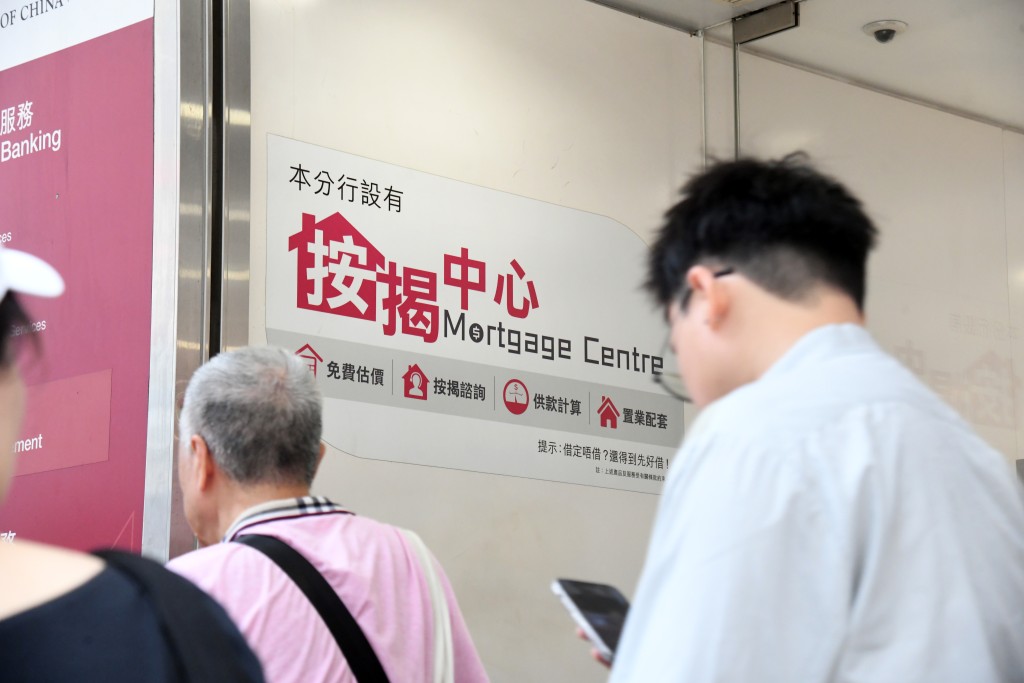
In a swift tug-of-war for mortgage customers, Miss Wong's HK$10 million flat purchase has sparked a rare cash-rebate showdown among Hong Kong banks.
Last week, offers languished below 1 percent. Then, this Monday, a small bank offered 1 percent. By Tuesday morning, two major banks countered with 1.05 percent and 1.1 percent. By afternoon, a rival small bank had seized the lead at 1.2 percent – turning the homebuyer's loan application into a daylong race for the highest rebate.
This came as lenders engaged in an intense battle for mortgage loans, driven by a robust local property market that boosted banks' confidence to expand their mortgage market share.
The two main types of mortgage plans in Hong Kong – H-plan and P-plan – refer to interest rates based on the Hong Kong interbank offered rates and the prime rate. Amid intense market competition, mortgage rates for these two plans across banks have largely converged, and the true competitive edge lies in cash rebates.
Bank of China Hong Kong has reportedly raised its mortgage cash rebates, becoming the first major bank to breach the 1 percent threshold. Cash rebate rate for loans exceeding HK$5 million surpasses 1 percent, with the highest reaching 1.2 percent of the total loan amount.
The prime rate has held steady since October 2025, while Hibor has consistently gone down, providing the banks with lower costs to expand their cash rebates, said Ivy Wong Mei-fung, managing director of Centaline Mortgage Broker.
She noted that there is further upside for cashback, citing historical precedents where rebates hit 2 percent to 3 percent of the total loan amount.
"BOCHK's increased cash rebates specifically target high-value borrowers, with the premium offers exclusive to loans exceeding HK$10 million," said Eric Tso Tak-ming, chief vice president of mReferral Mortgage Brokerage Services, adding that other major lenders are expected to follow the move.
In March, BOCHK retained the top spot with a market share of 25.3 percent, while HSBC held onto second place with 23.7 percent, followed by Standard Chartered and Hang Seng Bank.