The tragic crash of a B737-800 plane in Muan, South Korea, brought a very sad end to the year with 179 people killed.
Only two flight attendants guarding emergency doors at the tail end survived.
I have often said that major incidents like this are usually the consequence of a chain of mistakes and this aircraft incident, in my view, falls right into this category.
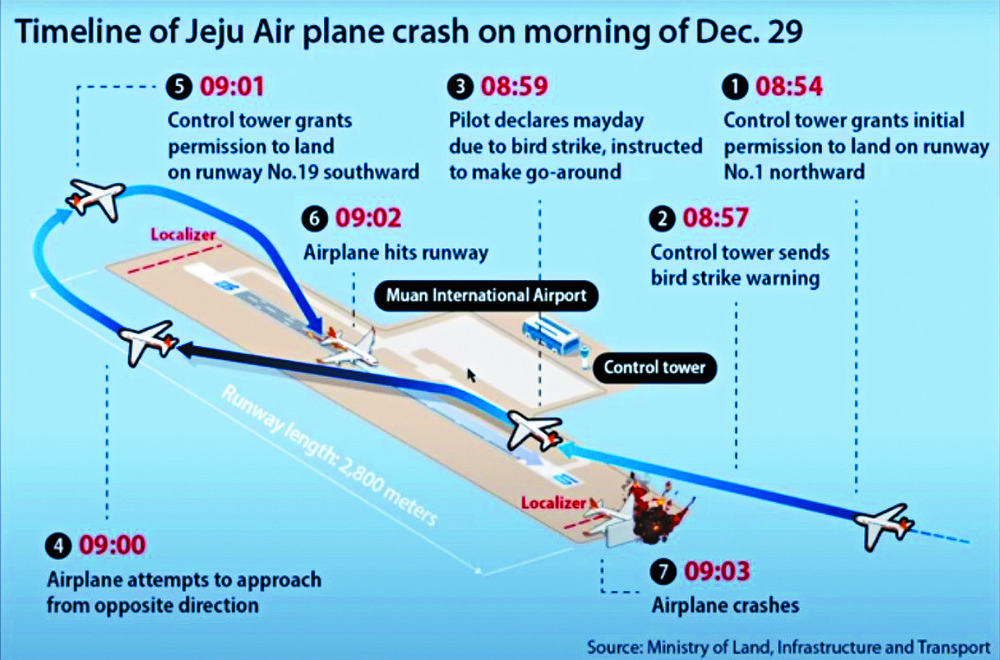
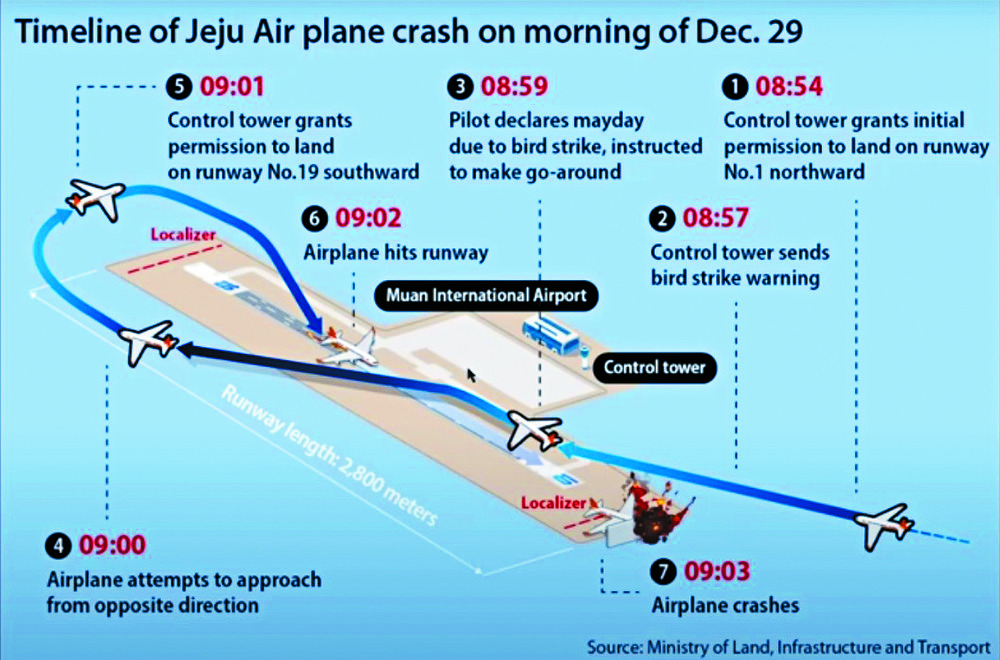
To recap, the Jeju Air pilot attempted an emergency landing on December 29 after an apparent bird strike disabled an engine.
He issued a mayday call soon after the reported bird strike, was given permission to make an emergency landing but was somehow unable to lower the landing gear, forcing him to conduct a belly-landing.
The pilot attempted one emergency landing but, for some reason, aborted it and did a quick 180-degree teardrop turn for a second attempt.
The landing attempt was initially successful as the plane slid along the runway in a straight line.
Unfortunately, it hit a concrete embankment built around 250 meters away from the end of that runway and burst into flames.
Planes, like all transport facilities for commercial use, have safety systems designed from the outset to protect passengers.
They have at least two engines to enable a safe flight in the event that one fails.
As for landing gear, the B737-800 has three wheel assemblies - one at the nose and two at each wing.
The landing gear is normally raised and lowered by a hydraulic system, which has a redundant power supply to ensure continuous operation in the event that one system malfunctions.
In addition, there is a manual release mechanism to allow the landing gear to be lowered in the event of total hydraulic system failure.
All pilots are trained to cater for these emergency scenarios, including how to restart a stalled engine and operating the landing gear in the event of a hydraulic failure through a manual release mechanism.
With manual releases, gravity ensures the landing gear is lowered into position.
What was communicated between the cockpit and air traffic control in the six minutes between the mayday alert and the plane landing will prove vital in the investigation.
However, it remains a mystery why Muan Airport decided to build a concrete berm near the end of the 2,500-meter runway instead of steel frames, which would have a lot more "give" and flexibility for aircraft that overrun the runway.
It purportedly hosts an installation of aerials to collect electronic signals from aircraft.
If the concrete berm were not there, the plane might have had a better chance of being brought to a halt by grass, which offers much greater frictional resistance.
An air traffic controller, upon receiving the mayday alert, should have barred all other aircraft movements, mobilized the entire fleet of fire engines at the airport and ensured a clear landing path.
Under such emergency conditions, the controller should carefully guide the plane to a safe landing, which would include instructions on the designated runway and direction to take.
Things are even more mystifying on the cockpit side.
First, the pilot did not burn off or dump excess fuel in the six minutes between the mayday alert and landing, which is normally the case for emergency landings.
Second, video showed no evidence that the rear flaps of the wings had been extended and raised to give more braking force, as would be normal for landings.
As a result, the B737-800 hit the ground at high speed near the halfway point of the runway rather than at the start.
With a huge load, it exploded in a fireball as it crashed into the berm.
Even more of a mystery is that on the same day, another 737-800, operated by KLM Airline, also suffered a hydraulic failure.
Fortunately, its pilot was able to land and bring it to a halt in grass outside the runway.
There were also reports of other airplanes suffering from hydraulic system failures on the same or next day.
Whether this was an everyday occurrence or a sudden surge in incidents due to the cold weather affecting critical components in hydraulic systems will be a focus for investigations.
Transport systems are designed for safe operation and with multiple redundant systems to allow the operator to keep passengers safe, with ample room for some unavoidable system failures.
But operators must be well trained in safety drills for safe transport.
Operational or maintenance neglect will sometimes compromise built-in safety systems and threaten lives.
We cannot avoid air travel and must depend on airlines to ensure a high standard of safety.
Engineers have designed sufficient safety systems in aircraft and airports to ensure safe operation at all times, especially given the high speeds and large number of passengers involved.
However, to ensure total safety, airport operators and pilots must be well versed with safety procedures and exercise them periodically to ensure passenger safety.
Hopefully this incident will serve as a wake-up call.
Veteran engineer Edmund Leung Kwong-ho casts an expert eye over
features of modern life
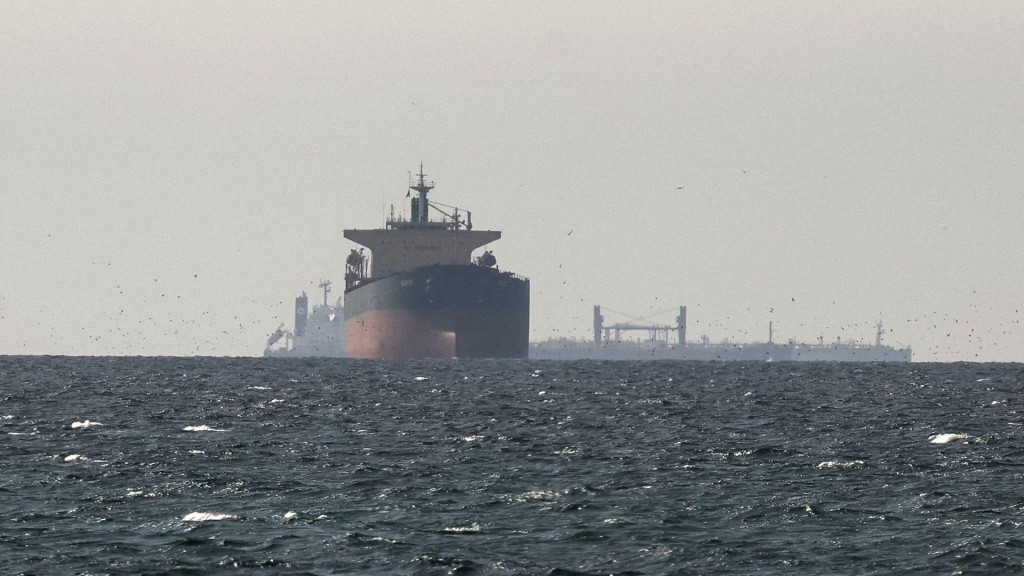
The bird strike that set off a catastrophic sequence of events that led to the deaths of 179 people. AFP