Having written on the proper use of escalators a few weeks ago, I see that MTR Corporation is now promoting a new code of escalator usage of "standing on both sides," replacing the established practice of "standing on the right and walking on the left."
This is obviously more in line with public safety requirements.
With public transport, whenever a passenger comes into contact with moving parts, there is always a safety risk that needs to be managed.
According to Electrical and Mechanical Services Department data, there were over 2,700 cases of escalator incidents in 2023.
What's alarming about this figure is that it far exceeds the 1,000 incidents that had occurred annually between 2016 and 2022.
Most of these incidents occurred as a result of "careless or improper usage" rather than machine failure or other causes.
Although walking on escalators has been common for many decades, the recent world trend is to discourage the practice.
In Taipei, walking on escalators in metro systems has been banned since 2005, and strong reminders are doled out, especially when there are crowds, to ensure they stand on both sides and not walk.
In Toronto, Canada, signs for "walking on the left, standing on right" have been removed since 2007.
In Shanghai, such signs were removed in 2012 and Nanjing followed suit in 2016.
London conducted an exercise in 2012 to ban walking on escalators and the number of people who do so has since been reduced by at least 28 percent.
In Saitama-ken, Japan, a new law banning walking on metro escalators was enacted in 2021 and Nagoya followed suit last year.
It is obvious that the practice of walking on escalators has raised worldwide concern and various cities have either legislated to ban it or at least strongly discourage it many years ago.
In response to a question from a Legislative Council member, then-secretary for transport and housing Frank Chan Fan, stressed the need to change the practice as early as 2017.
This issue will only become more severe with our increasing number of seniors as they are more prone to tripping or falling through careless walking or colliding with others carrying heavy loads in a hurry.
This is even more important as approximately 90 percent of daily travel is by public transport, of which about half is by railway. Thus, the risks apply to a significant proportion of residents.
Some people may argue that, with two persons standing on each step, it could overload the escalator. But I can assure you that railway system escalators are designed for heavy duty usage. In any event, that load will still be lighter than the stress imposed by passengers walking as a dynamic load can be at least two times that of a static one.
Also, the carrying capacity of escalators will be significantly enhanced as throughput will increase at least by two times with passengers standing on both sides.
Travel times should only differ by a few seconds and comfort, convenience and safety are assured for everyone.
To ensure safety, especially on long escalators, the MTRC has already slowed down some escalators.
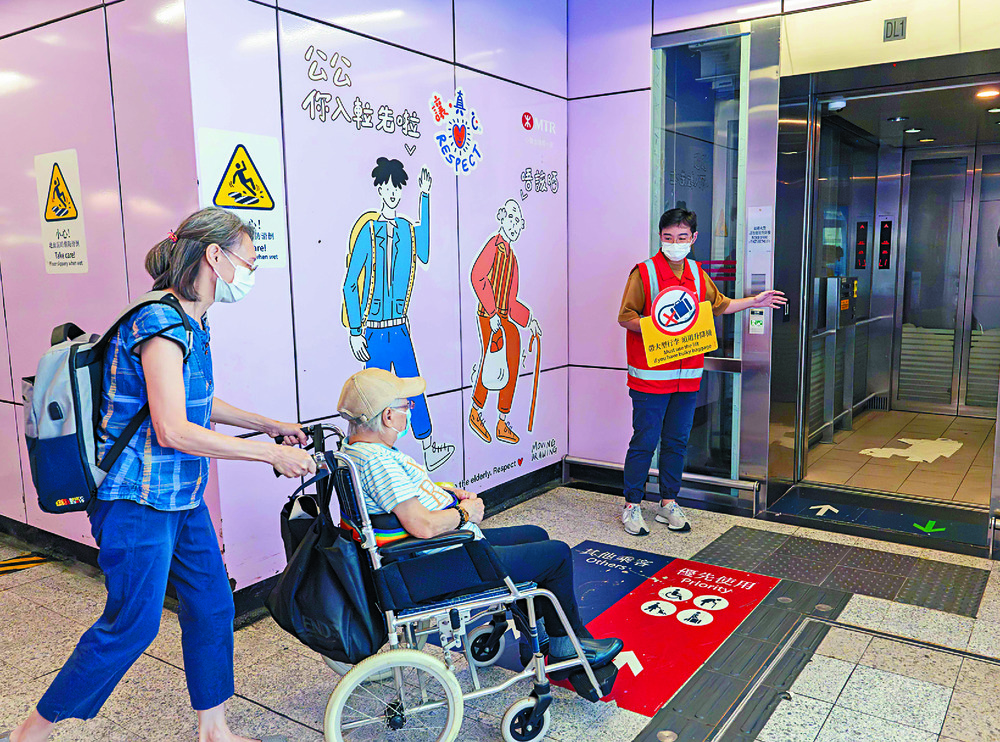
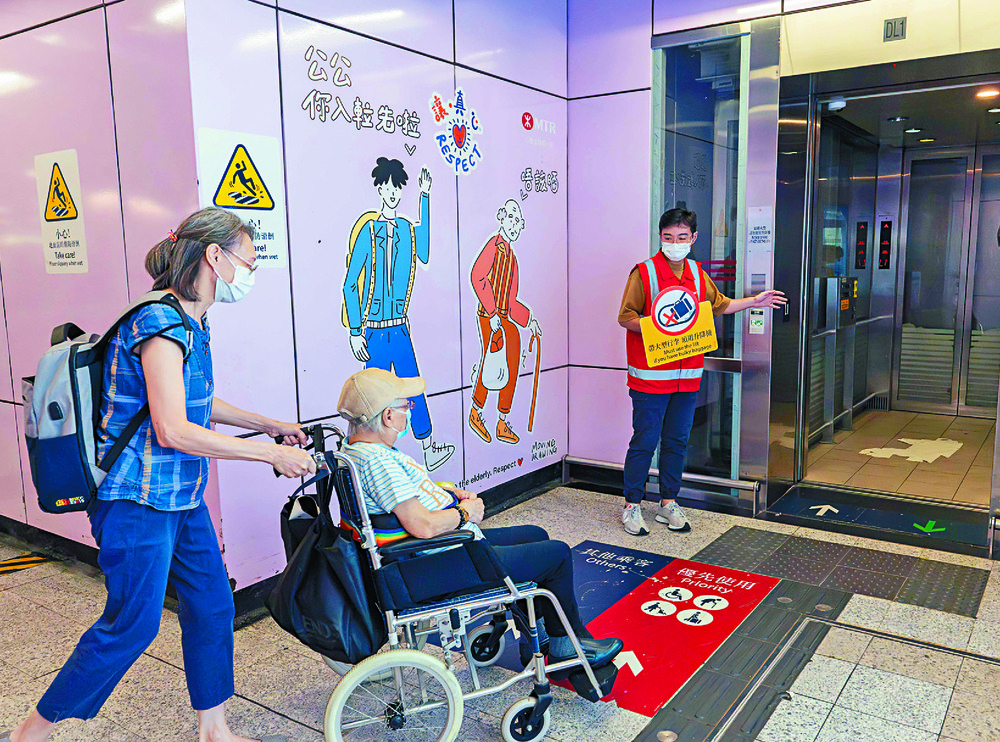
It will also mobilize station attendants to warn passengers not to run on escalators and not to use them when they are pushing prams or carrying large pieces of luggage.
Engineering systems are designed with safety and efficiency in mind, but operators must continuously monitor its actual usage by the public to ensure that safety will not be compromised. Unfortunately, user habits sometimes influence these objectives. I am sure all of us have experienced being pushed by impatient passengers while standing comfortably on the left.
To get the public to accept the change to their decade-old habit, focused and repeated encouragement with active promotion are required.
But I am optimistic that people who use public transport will eventually understand that these changes are for their own good and not intended to interfere with their convenience. When we must choose between safety and convenience, it is obvious that priority has to be on the former.
Edmund Leung Kwong-ho is a veteran engineer with a wealth of experience across the power, manufacturing and construction industries.