Shan Huang and Haitian Lu
The concept of "soft connectivity" - the alignment of policies, rules, systems and standards - is crucial in fostering effective cross-border cooperation.
As the global landscape of technology and innovation evolves, strategic collaboration between Hong Kong and Shenzhen has gained increasing significance.
Each city offers distinct advantages: Hong Kong, as a global financial hub, provides a robust international market environment, top-tier education resources and strong fundamental research capabilities, while Shenzhen, as China's first special economic zone, boasts numerous tech companies and burgeoning industrial clusters.
Their collaboration in science and innovation holds substantial promise.
In June 2022, Shenzhen unveiled its "20+8" industrial policy, and in December, the SAR introduced its "Blueprint for Hong Kong's development of innovation and technology."
These policy initiatives lay a solid foundation for the synergistic development of science, technology and innovation.
The partnership has evolved significantly over nearly three decades.
Notable progress has been made, with Hong Kong's top six universities establishing research institutes in Shenzhen.
They promote the transfer of scientific research outcomes in various fields.
Shenzhen also actively encourages enterprises to establish research and development institutions in Hong Kong.
Despite these advancements, a notable imbalance persists in the cooperation.
In Hong Kong, basic scientific research is predominantly conducted by universities, whereas in Shenzhen, enterprises lead in patenting activities.
The number and scale of investment deals involving high-tech enterprises in Shenzhen far surpass those in Hong Kong.
This imbalance can lead to issues such as asymmetric benefit distribution.
Collaborative innovation does not occur naturally due to 'institutional distance' - differences in social norms, cultural systems, industrial structures, stakeholder attitudes and regulatory strategies.
These disparities can create asymmetries in cross-border cooperation, leading to uneven benefit distribution, which can obstruct collaborative innovation.
Within the "one country, two systems" framework, Hong Kong maintains its own political and legal systems, which differ significantly from Shenzhen's institutional framework.
Variations in industrial structure, market design, and social and cultural norms further complicate the collaboration.
Specific challenges include inconsistencies in scientific research funding, application processes and restrictions on cross-border data and financial transfers.
The absence of a clear benefit distribution mechanism and a unified scientific research integrity system also hampers cooperation.
Addressing these issues requires a systematic approach to identifying and resolving differences.
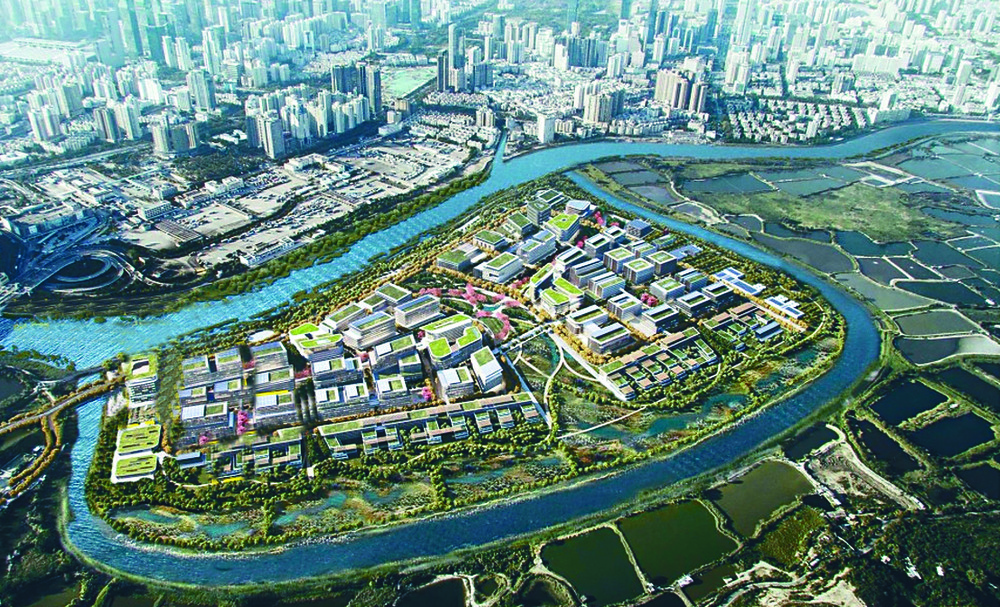
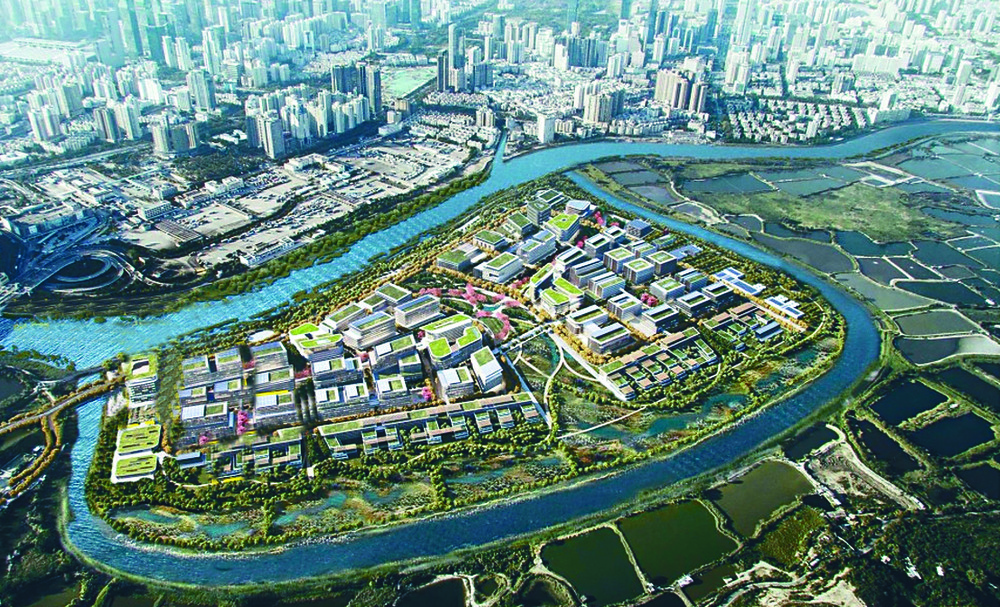
Initiatives such as the Shenzhen-Hong Kong University Research Institute, the Industry-Academia-Research Base and the Hong Kong-Shenzhen Science and Technology Park at the Lok Ma Chau Loop could serve as pilot projects for policy alignment.
By promoting the synergy of systems and rules, these efforts would enhance the "soft connectivity" between the two cities, providing stronger institutional protection and practical support for collaborative efforts.
Dr Shan Huang is a postdoctoral fellow at the Shenzhen Research Institute and the Policy Research Centre for Innovation and Technology, both of Hong Kong Polytechnic University
Professor Haitian Lu is Hong Kong SustainTech Foundation Professor at School of Accounting and Finance and core member at Policy Research Centre for Innovation and Technology,
Polytechnic University
An artist's general conception of the Hong Kong-Shenzhen Science and Technology Park at Lok Ma Chau Loop.