At a busy tricycle terminal in Manila, driver Edgar Soriano slips a coin into a karaoke machine and belts out his favorite song while waiting for passengers.
Karaoke is wildly popular in the archipelago nation where it's never too early - nor too late - to belt out a tune.
Machines can be found everywhere from cheap bars in far-flung villages to modern KTV joints in cities, and many families have their own or rent one for parties.
For as little as five pesos (HK$0.70) a song, many in the country can experience a few minutes of entertainment.
Soriano, 53, smiles as he stands in a tiny eatery on a hot weekday afternoon singing the lyrics of British musician Albert Hammond's When I'm Gone, which he seems to know by heart.
The karaoke machine is one of six at the terminal, but drivers and passengers waiting for a ride appear unbothered by the competing songs reverberating through speakers.
"I always sing that song, it's my favorite," said Soriano, wearing a long-sleeved Jordan top and tracksuit pants.
After consulting a well-thumbed plastic folder of songs, street-sweeper Bernardo Aguire, 67, settles on Frank Sinatra's My Way, and pops a coin into the slot.
It is a bold choice in a country where the song has reportedly got people killed - allegedly because they sang it poorly.
Aguire, unfazed by the stories that have become an urban legend, finishes his rendition unscathed.
Felomina Hernane, 52, owns the eatery where the machine cranks up at 8 am and doesn't stop until 10 pm or later every day.
She bought it to attract customers and it's been a boon to earnings, bringing in as much as 18,000 pesos a month.
"It's a huge help for business," she said, adding that singing makes the drivers happy. "It entertains them. It's a way to relax after driving."
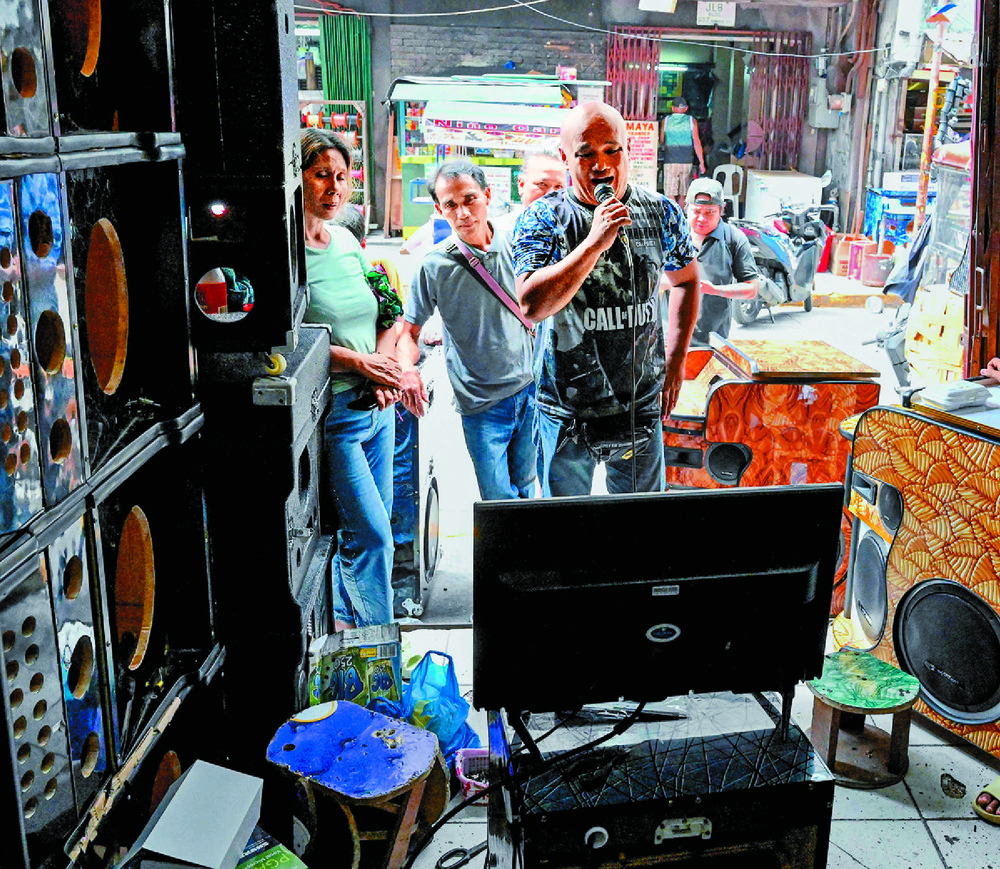
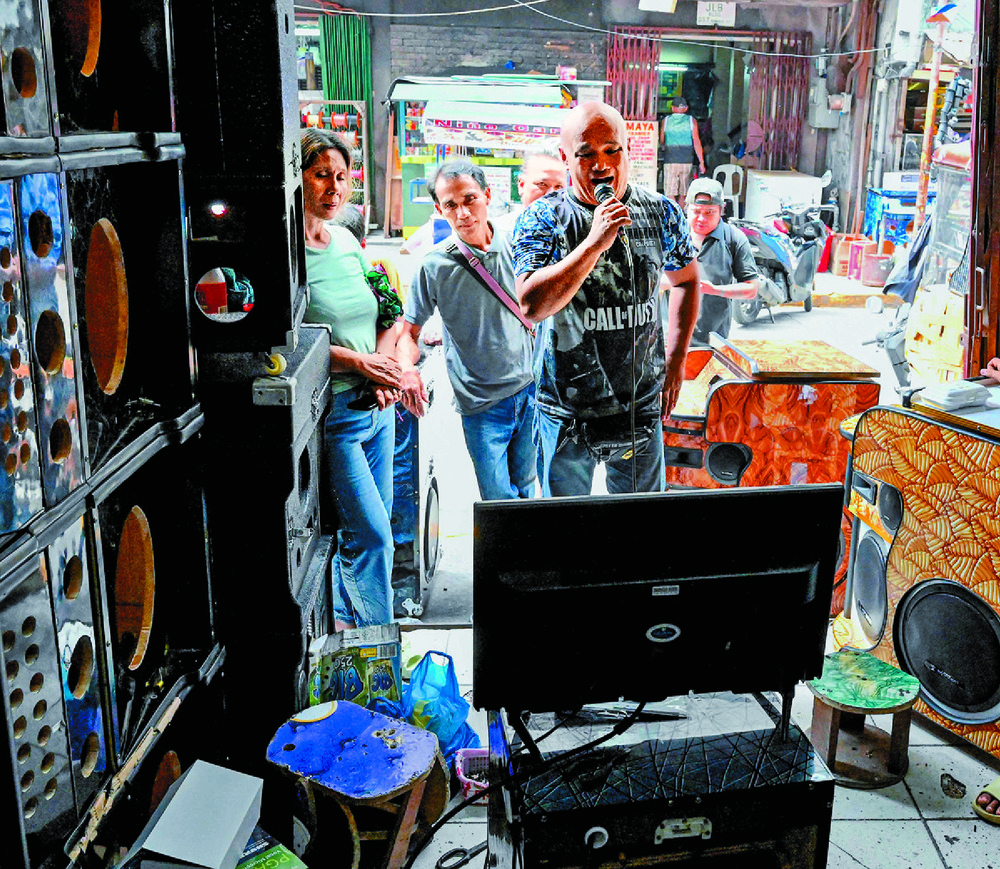
In a crowded neighborhood in Manila, tricycles deliver karaoke machine casings to stores where they are fitted with speakers, amplifiers and televisions.
Machine prices depend on the electronics, with a basic one starting at 19,000 pesos and a premium one topping 46,000 pesos.
Alfred Condez works at a store overflowing with machines in various stages of assembly. It takes a few hours to finish wiring one, and buyers are often happy to wait.
"We love singing," said Condez, 40.
As if to prove his point, he picks up a microphone and stands on the footpath to test an assembled machine's sound quality, his deep voice echoing into the noisy street.
The busiest period is November and December, when Filipinos hold Christmas and New Year parties, with Condez selling to 10 machines a day during those months.
Karaoke took off in the Philippines in the 1980s, said Krina Cayabyab, vocal instructor and assistant professor in the University of the Philippines' music department.
But she said the country's love of singing was deeply rooted in its Spanish and American colonial past.
Some parents send their children to music school to learn how to sing so they can develop the confidence to perform in front of others.
For many Filipinos, karaoke is one of the few affordable entertainment options.
In a hardscrabble district of Manila, children and young adults gather outside a small store where the karaoke machine is in high demand.
"My friends and I are just hanging out as it's boring at home," said Honey Servito, 24.
"I'm not really a singer, it's just that when we have nothing better to do at home, my friends and I come here and sing."
"It takes away my stress and boredom."
AGENCE FRANCE-PRESSE
A woman sings at a birthday celebration in Manila while a Quaipo man tests a karaoke machine at a shop.