Engen Tham, Clare Jim and Julie Zhu
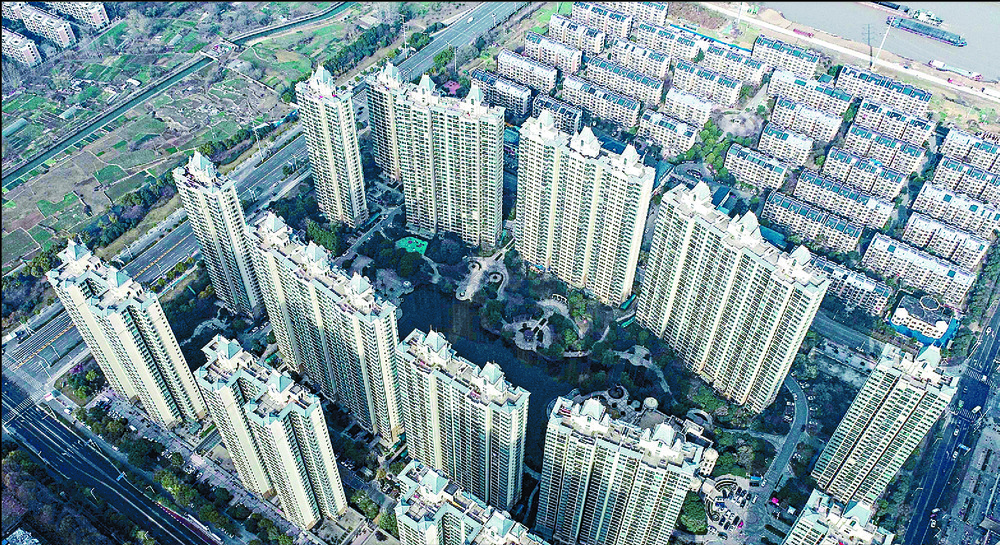
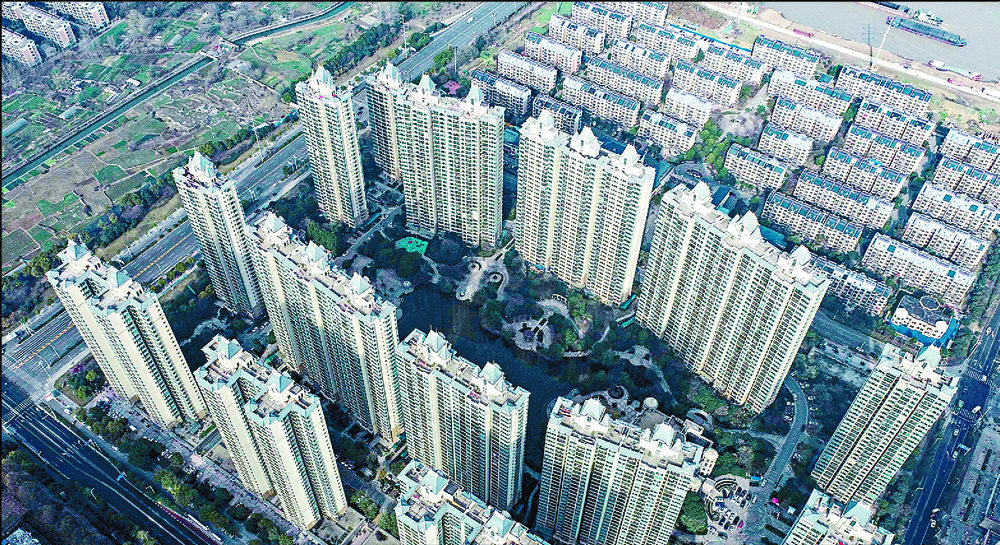
For more than a decade Chinese developers' debt-fueled boom enriched the country's shadow banks, eager to capitalize on the needs of a business desperate for credit and too risky for traditional lenders.
Now, in the wake of a clampdown on real estate firms' debt binges, that credit demand has collapsed - and so too has the single biggest revenue stream for shadow banks, also known as trust firms.
China's shadow banking industry, worth about US$3 trillion (HK$23.3 trillion), is scrambling for new business, including direct investment in companies, family offices and asset management.
It is also shrinking, with once-well-paid employees leaving after scavenging for new deals. Its plight is a sharp contrast to main street financial firms.
"Everyone was eating a mouthful of rice, surviving another day," says Jason Hao, who left a Shanghai trust firm this year after his pay plunged from up to four million yuan (HK$4.45 million) a year to 240,000 yuan. He now works at an asset management company.
Tracker Yanglee.com data shows 1,483 real estate-related trust products were sold in the first nine months of 2022, down 69.7 percent from 4,891 in that period last year.
The value of the 2022 deals was 117.2 billion yuan, down 77.9 percent from 531.3 billion. Real estate products accounted for 8.7 percent of all trust products in September, compared with about 30 percent in the same month the last two years.
The National Audit Office and the banking watchdog are said to have been reviewing trust firm accounts and deals this year for risk.
In an internal meeting in October, an executive at Shanghai Trust, a state-owned firm that once focused on property, said revenue was down by almost half this year compared with 2021.
The firm plans to focus on asset management and family offices to shore up its finances while pivoting from lending to developers - once its core business.
The top priority for all trust companies now is "how to transition, what will let you survive," says another trust firm employee.
Trust firms were dubbed "shadow banks" because of how they operated outside many of the rules that govern banks.
Banks in China sell wealth management products, with proceeds channeled by trust firms to developers and other sectors unable to tap bank funding directly.
Because of the risk, shadow banks could charge rates of up to 18 percent compared to the 2-6 percent seen at banks at the height of the boom.
Concerns about outsized exposure to have grown this year as the embattled sector has slowed rapidly.
Beijing has stepped up support of late to undo a liquidity squeeze that has stifled the market - a quarter of the Chinese economy and has been a key driver of growth.
At the trust unit of China Construction Bank and Zhongrong International Trust, previously one of the largest shadow banks, investing like private equity and venture capital funds has become more common.
CCB Trust wants to invest in leading firms in niche fields. It recently invested in Beijing Tianyishangjia New Material Corp, which makes materials used in train brakes.
Zhongrong has been working with local governments to source early-stage deals in intelligent manufacturing.
In some cases trust firms are buying projects from struggling developers.
Ping An Trust, Zhongrong International Trust, Everbright Xinglong Trust and Minmetals International Trust have bought project from developers in the past few months.
For Hao and other former trust employees, the search for stability feels familiar.
"My situation now is better than it was when I left the trust but will never be as good as it was at the height of the boom," Hao says.
REUTERS