My fellow columnist Edmund Leung has recently written about how efficient lighting systems can make drivers and other road users safer and more comfortable.
He is right to point out that safe night driving at high speeds is only possible with such extensive street lighting.
In addition to saving energy and reducing costs, smart street lighting can provide a backbone for innovative and cutting-edge smart city deployments.
The SmartAmerica Growth challenge - a White House Presidential Innovation Fellow project with a goal to translate IoT technologies into socio-economic benefits - estimates that local US city administrations will invest more than US$40 trillion (HK$312 trillion) over the next two decades for smart city programs that focus on waste management, community engagement and reducing energy costs.
In Europe there are as many as 90 million lampposts, says the European Union, and three quarters of them are more than 25 years old. Street lighting accounts for up to half of some cities' energy budgets and simply installing energy-saving LED lighting would save almost US$2.3 billion a year.
The EU is ambitious to upgrade 10 million lampposts, making them solar-powered smart lampposts able to deliver a range of smart city services.
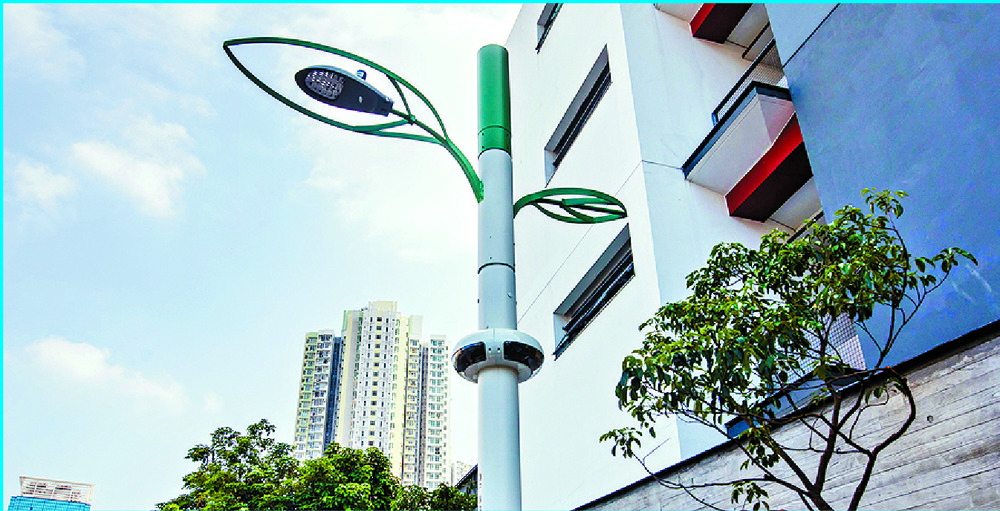
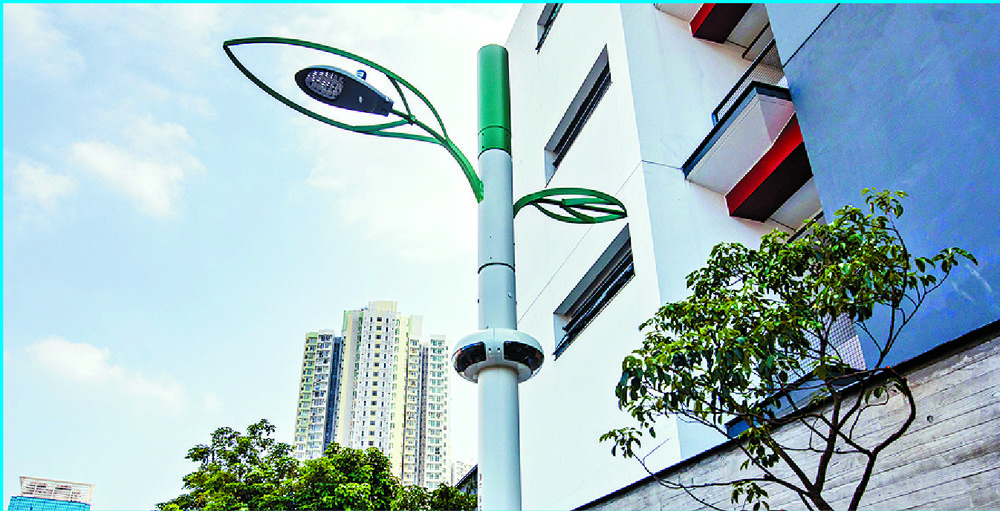
Smart lampposts have been transformed from a mono-functional infrastructure that provides illumination to a multipurpose smart city data platform worldwide.
I want to look at three business use cases of this super city platform: IoT-connected devices, small cells for 5G and free public Wi-Fi and EV chargers.
First, city planners could install IoT devices to sense, collect and share urban data. Among other things, smart lampposts can be used to collect real-time data such as meteorological data, air quality, traffic flow and safer footfall.
The City of London, the historic financial district of Greater London known as "The Square Mile," can show the impact that IoT-enabled street lighting can have on a community.
With just 9,400 permanent residents, but up to one million visitors at peak times, the City has a goal to take control of its rising energy costs, lower energy use and improve public safety by replacing 12,000 aging street lights.
It's already saved around 80,000 kWh over the past financial year and has laid the groundwork for other smart functionality, including environmental sensors on the Thames and other sensors as part of a zero-emissions pilot program.
Next, mobile network operators could install small cells to support the wireless city development.
Lampposts are ideal carriers for 5G installations that need many more cellular antennas, called "small cells," than 4G. That's because 5G uses higher, millimeter-wave frequencies, which carry much more data but have shorter ranges.
In parallel, free public Wi-Fi can be provided. Engineers found that the optimal height for Wi-Fi signals at about four meters above street level proved better with omni-directional antennas, whereas higher locations six or nine meters up were better for 5G using narrow-beam antennas.
Finally, smart lampposts can help more drivers switch to electric with accessible charging points.
It's vital to speed up the pace of EV charger installation, whether at home, at work or on-the-go.
Many people do not have parking spaces and EV owners must park and charge at the side of the road.
In January 2021, Shell announced the acquisition of Ubitricity, which is best known for its on-street electric car charging points integrated into lampposts. Shell is to install 50,000 Ubitricity charging points in the UK by 2025.
Monetizing smart lampposts implies a viable business model base, similar to flexible housing solutions for data center or server rooms based on tenants' needs.
Dr Jolly Wong is a policy fellow at the Centre for Science and Policy, University of Cambridge
Smart lampposts, like this one in Kai Tak, have been transformed from a mono-functional infrastructure that provides illumination to a multipurpose smart city data platform worldwide.