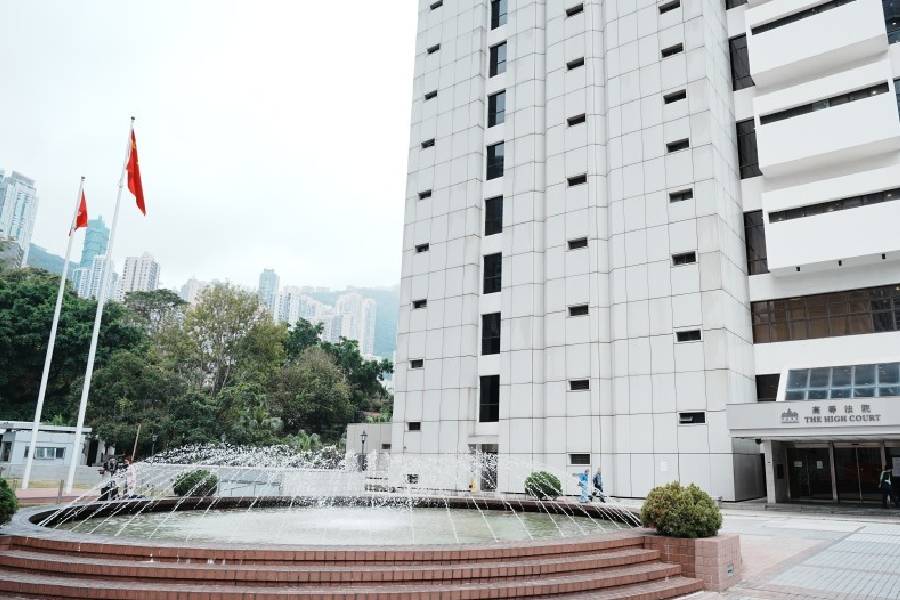
On Feb 9, 2026, the High Court sentenced Jimmy Lai to a total of 20 years in prison on three serious counts of conspiracy to publish subversion of government materials and conspiracy to collude with foreign forces. The dignity of the country has been demonstrated, the social order has been reorganized, and everyone in Hong Kong has celebrated. From the arrest of Jimmy Lai to today's sentence, it lasted more than 5 years, and after several ups and downs, the court finally made a fair verdict. This judgment has three noteworthy points and is an important case in jurisprudence.
First, how was Jimmy Lai's sentence determined? What is its legal rationale? Many citizens have expressed that life imprisonment should be imposed, while others have suggested the death penalty. This reflects the public sentiment of people. However, the rationality of the judge is often more rigorous. Considering the harm Jimmy Lai has inflicted on the Nation and Hong Kong Special Administrative Region over the past thirty years, including his suggestion for the U.S. to carry out a "nuclear attack" on China, he truly deserves the most severe punishment. However, the Hong Kong National Security Law does not have retroactive effect and only came into force on June 30, 2020, Jimmy Lai's sentence could only consider his actions after the National Security Law took effect. The 18-year imprisonment sentence this time corresponds to the second level of punishment for the crime of colluding with foreign or external forces to endanger national security under the Hong Kong National Security Law. While the first level of punishment is "imprisonment for not less than three years but not more than ten years," the second level is "imprisonment for life or not less than ten years" for more serious offenses. Jimmy Lai's sentence of 18 years was determined based on evidence collected after the law came into effect and his role as a principal offender, not on his actions over the past thirty years.
We have to notice that according to Article 29 of the Hong Kong National Security Law, "any act of requesting foreign or external institutions, organizations, or individuals to carry out any of the following acts constitutes a crime," including five offenses. Jimmy Lai's former publications, Apple Daily and Next Magazine, were almost involved in all of these crimes. However, the court's conviction was based solely on materials collected after the implementation of the National Security Law. Specifically, Jimmy Lai was convicted on two counts of using Apple Daily and the "SWHK(Stand With Hong Kong)" team to collude with foreign forces to "impose sanctions, blockades, or take other hostile actions against the Hong Kong Special Administrative Region or the People's Republic of China," as described in Article 29(4) of the Hong Kong National Security Law. The charges did not cover all offenses under Article 29. Although this may differ from public expectations, it demonstrates the objectivity, scientific approach, and legality of the court's conviction and sentencing.
Second, throughout the entire process from the legislation on the Hong Kong National Security Law to its implementation to Jimmy Lai's conviction and sentencing, the central government and the Hong Kong Special Administrative Region government exercised utmost restraint. During the drafting of the National Security Law, there were loud calls from the pro-establishment for the law to have retroactive effect, as most of the harm to national security caused by the "opposition," Jimmy Lai, and violent elements occurred before the law was enacted. Many believed that without retroactivity, these individuals would essentially be let off lightly. Of course, some also argued that the Hong Kong National Security Law must comply with Article 12 of the Hong Kong Bill of Rights Ordinance, which states that "no person shall be held guilty of any criminal offence on account of any act or omission which did not constitute a criminal offence at the time when it was committed." However, the Hong Kong National Security Law was made by the National People's Congress and its Standing Committee, and its legal status is far superior to that of the Hong Kong Bill of Rights Ordinance. The National People's Congress could have legislated entirely according to its own intent. Nevertheless, in the end, the Standing Committee of the National People's Congress exercised restraint by stipulating that the law would take effect from the date of its enaction, without retroactive effect. A correction is needed here: some promotional materials issued by the HKSARG claim that the Hong Kong National Security Law is in line with the Hong Kong Bill of Rights Ordinance. This is incorrect and misrepresents the hierarchy of laws. The National People's Congress is the highest authority in China, formulating constitutions and basic laws, and it has the right to create without obeying any regulations below its legal status.
Third, it is worth pondering that among the three judges presiding over this case, one had previously granted Jimmy Lai bail in December 2020. This bail decision created a risk of Jimmy Lai fleeing, necessitating an interpretation by the Standing Committee of the National People's Congress of Article 42 of the Hong Kong National Security Law, reaffirming the principle that "bail shall not be granted." However, the central government did not request the Committee for Safeguarding National Security to replace the judges, nor did the Chief Executive, as the chair of the committee, revoke the relevant judges' qualifications to hear national security cases. In the latter half of 2022, another incident occurred involving Jimmy Lai's attempt to hire foreign defense lawyer Tim Owen. At that time, the High Court and the Court of Final Appeal ruled that Jimmy Lai could hire foreign defense lawyers, leading to a deadlock in the proceedings. Many believed that hiring foreign lawyers posed risks of leaking state secrets and trial details, and they called for the central government to authorize the Office for Safeguarding National Security to exercise jurisdiction over the case under Article 55 of the Hong Kong National Security Law, which could be activated when "the case is complex due to the involvement of foreign or external forces, and it is difficult for the Hong Kong Special Administrative Region to exercise jurisdiction." This would have allowed the Office for Safeguarding National Security to transfer Jimmy Lai to the Highest People’s Court of China for trial. However, the central government did not take this approach and only provided an interpretation of the legislative intent of the Hong Kong National Security Law, requiring that defense lawyers must be registered in Hong Kong. This demonstrates the extreme restraint and respect for the law exercised by the central government and the Chief Executive throughout the trial process. This is a significant example in Hong Kong's history of the rule of law.
Dr, Grace Ling Yu Shih
Deputy to the 14th National People’s Congress of the HKSAR, Vice President of Chinese Association of Hong Kong and Macao Studies
February 12, 2026