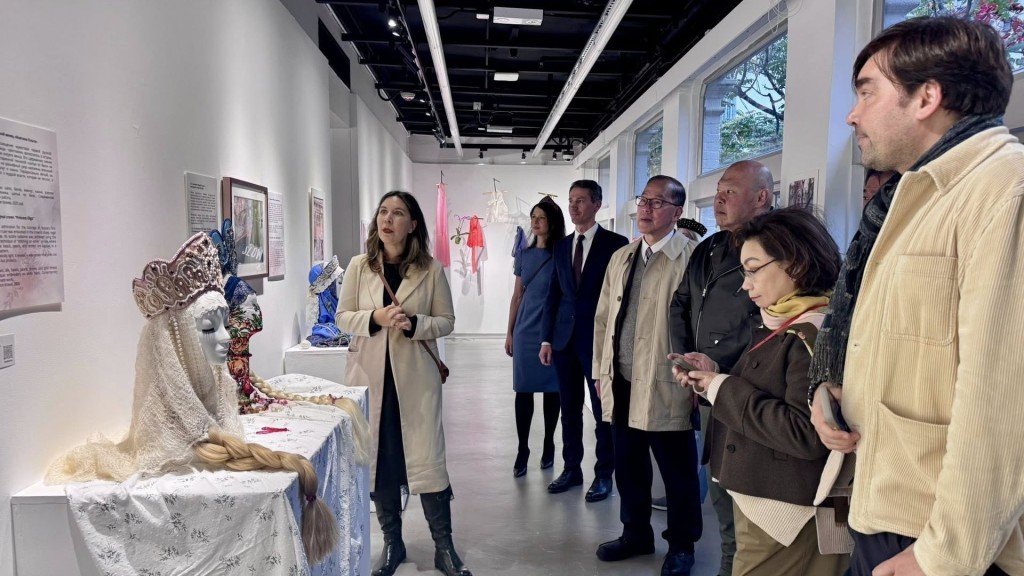
Last week at the Hong Kong Visual Arts Centre, visitors saw a new side of Russian culture at “Traditions Reborn: A Journey Through Russian Fashion & Art.” The exhibition did more than display beautiful objects. It used clothing, ornaments, and folk art to show how centuries of trade, migration, and cultural exchange shaped their styles and meanings. Instead of treating fashion as mere decoration, the exhibition presented it as a record of daily life, revealing how Russian traditions changed through contact with other parts of Eurasia.
The show traced how Russian clothing changed along trade routes that were once part of the Silk Road. Fabrics, designs, and patterns traveled in many directions, influenced by trade, weather, religion, and local traditions. Rather than presenting fashion as fixed, the exhibition highlighted it as a living record of connections between Russia, Central Asia, and the rest of the world.
Visitors saw traditional clothing and hair ornaments that showcased the rich variety of Russian culture. Embroidered blouses, patterned skirts, and kokoshnik headpieces were displayed alongside other handmade items, reflecting influences from steppe cultures, trade routes, and neighboring regions. The clothes also showed how local makers adapted foreign materials and techniques over time to fit their own traditions. For people in Hong Kong, this focus on craftsmanship made it easier to connect with Russian culture through everyday skills rather than distant history.
Artists and designers such as Anastasiia Kraeva, Anna Kardash, Anna Pastukh, Yulia Skrygina, and the Elissandro Fashion & Sewing School demonstrated that these traditions remain relevant today. Some pieces used local materials, blending Russian folklore with Hong Kong’s history as a meeting place for trade and ideas.
In Hong Kong’s burgeoning arts scene, “Traditions Reborn: A Journey Through Russian Fashion & Art” fits into a new group of shows that link fashion to questions of history and identity. Rather than simply showing clothes, it sparked a broader conversation about belonging and how traditions change and take on new meanings far from where they began.
Bernard Charnwut Chan is chairman of West Kowloon Cultural District