Read More
Staff reporters
ADVERTISEMENT
SCROLL TO CONTINUE WITH CONTENT
Hong Kong is expected to log yet another HK$67 billion deficit for the next fiscal year that will shrink reserves to under HK$600 billion as the city plans to bump up bond issuance to nearly HK$200 billion annually for the next five years.
The deficit for the current fiscal year ending March is estimated to be HK$87.2 billion, taking into account the remaining balance of about HK$15 billion from the Anti-epidemic Fund, Financial Secretary Paul Chan Mo-po said in his budget yesterday.
He had previously predicted a shortfall of less than HK$100 billion for the year.
Chan revealed that the government plans to bring back a total of HK$62 billion from six funds to its accounts in 2025-26, after setting aside resources to cover their expenditure for five years.
There are 42 such seed capital funds outside the government's account with an aggregate balance of nearly HK$180 billion.
Still, fiscal reverses are expected to fall to HK$580.3 billion in the next fiscal year, less than half the record HK$1.17 trillion in 2018-19.
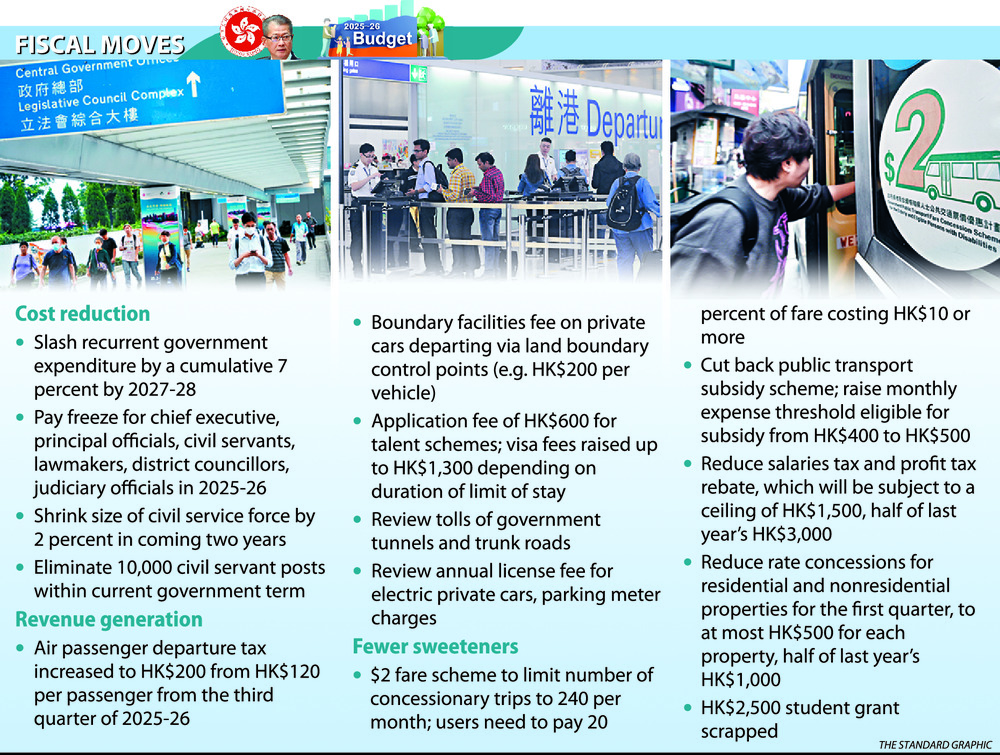
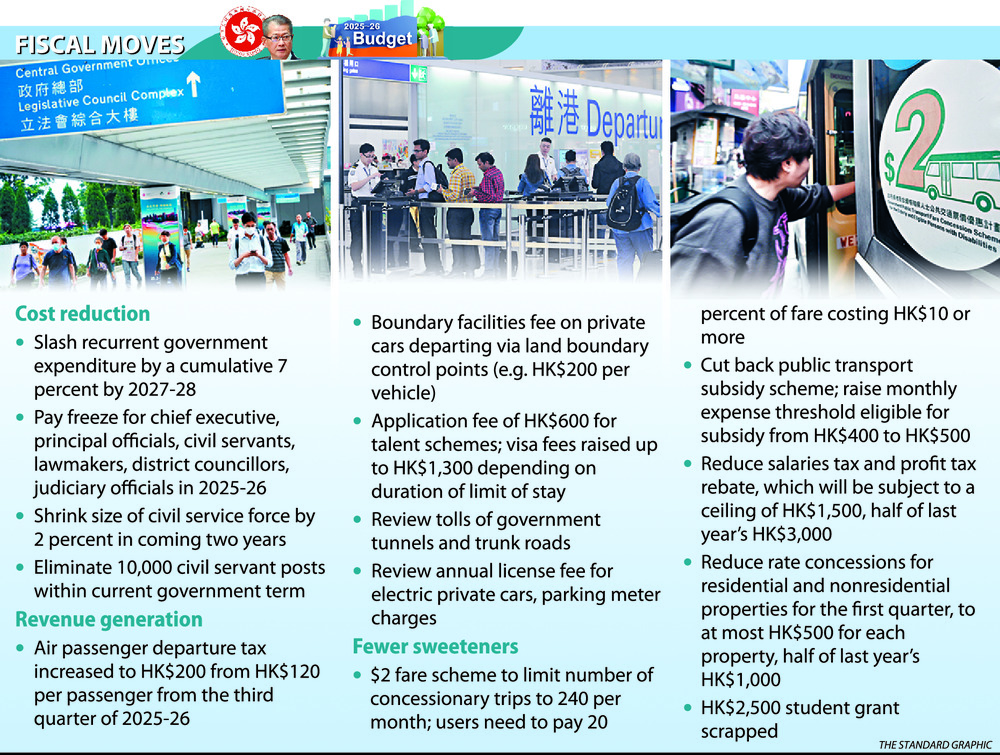
Chan pledged to cut recurrent expenditure by 7 percent, or HK$27.3 billion, through 2027-28, and take the operating account back to a surplus from 2026-27 onward. As important infrastructure projects - including those related to the Northern Metropolis - will be rolled out progressively in the future, the capital works expenditure is estimated to increase from HK$90 billion per annum on average to about HK$120 billion, Chan said.
To finance that, the city will expand the scale of bond issuance in the next five fiscal years to about HK$150 billion to HK$195 billion under the government sustainable bond and the infrastructure bond programs every year, Chan noted.
He said about 56 percent of the bonds issued will be used for refinancing short-term debts.
Hong Kong will also raise the borrowing ceiling of the two programs to HK$700 billion and the ratio of government debt to gross domestic product will stay at a "prudent" 12 to 16.5 percent, Chan said.
Proceeds will be used to invest in infrastructure, but not to fund government recurrent expenditure, which is the fiscal discipline that he has been strictly adhering to, Chan stressed, adding that the issuance will also foster the development of the local bond market.
Significant upfront investments are needed for projects in Northern Metropolis and the government will explore issuing long-term bonds to finance these projects, with returns being realized later years, Chan said.
Chan said authorities forecast that Hong Kong's gross domestic product will continue to grow moderately this year, rising 2 to 3 percent in real terms. The economy grew by 2.5 percent in 2024.
He also forecast that the economy will grow, on average, by 2.9 percent a year in real terms from 2026 to 2029, with underlying inflation expected to be at an average of 2.5 percent a year.
Regarding the bonds, lawmaker Kitson Yang Wing-kit suggested that the government allow people to purchase them using their Mandatory Provident Fund, which at present can only be withdrawn when account holders reach 65 years old.
This could effectively turn government bonds into "perpetual bonds" as the government would only need to pay interest without repaying the principal in the short term while providing MPF holders with stable interest income, Yang said.
According to the budget, support measures have been significantly reduced, with a tax rebate now halved to HK$1,500 and a rates concession for both domestic and commercial properties also cut by 50 percent to HK$500.
This salary tax reduction will benefit 2.14 million taxpayers, causing a revenue drop of HK$2.9 billion, while the rate concession will impact 3.12 million domestic properties, costing the government HK$1.5 billion.
These adjustments are expected to result in an additional HK$3.7 billion in revenue for the coming fiscal year from the current one.
Chief Executive John Lee Ka-chiu praised the budget, saying it will reinforce the government's financial strength and create new momentum and new advantages for Hong Kong's economic development.
Chief Secretary Eric Chan Kwok-ki said he "fully" supports the "comprehensive, well-balanced and pragmatic" budget.
Major local chambers of commerce said they support the budget, which not only fosters innovation and stimulates investment but also strikes a balance between cost-saving measures and investing in future growth amid a challenging economic environment.
Lawmakers generally welcomed the budget, saying it focuses on stronger fiscal consolidation and investing in future economic development - with the exception of Junius Ho Kwan-yiu, who criticized the "lack of efforts" in curbing expenditures.
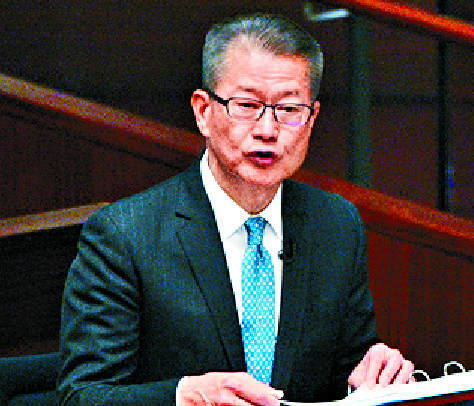
Paul ChanSING TAO