Read More
Agencies and staff reporter The official Xinhua news agency published a document yesterday that covers various social, economic, and political aspects, containing 60 points under 15 areas.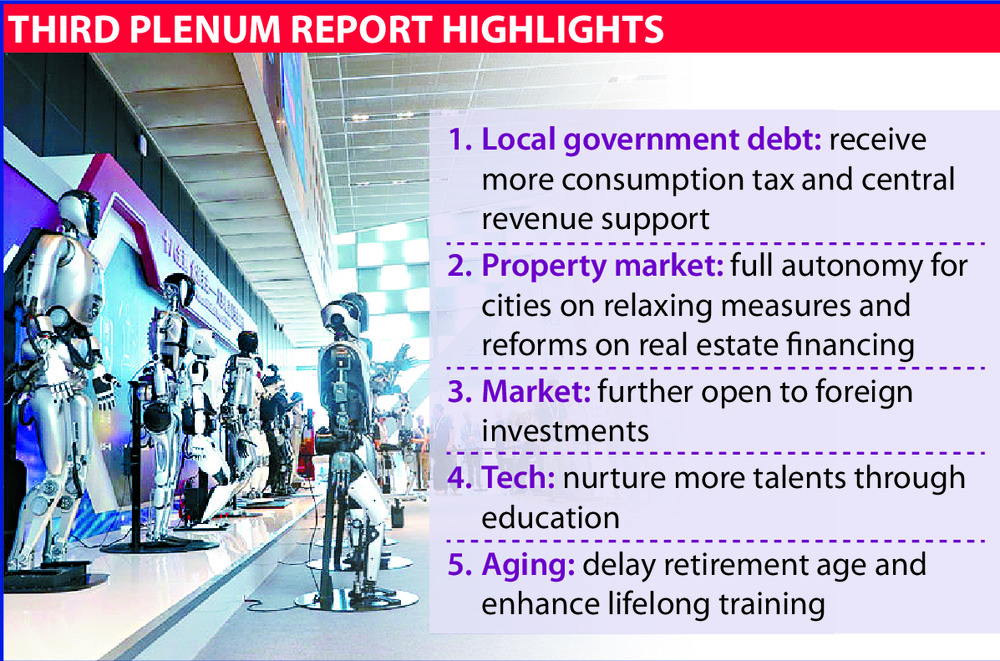
China has released a long-term blueprint following a key policy meeting last week in which top leaders pledged to give the local government more autonomy to handle their finances and debt, as well as an aim to further open up the economy.
ADVERTISEMENT
SCROLL TO CONTINUE WITH CONTENT
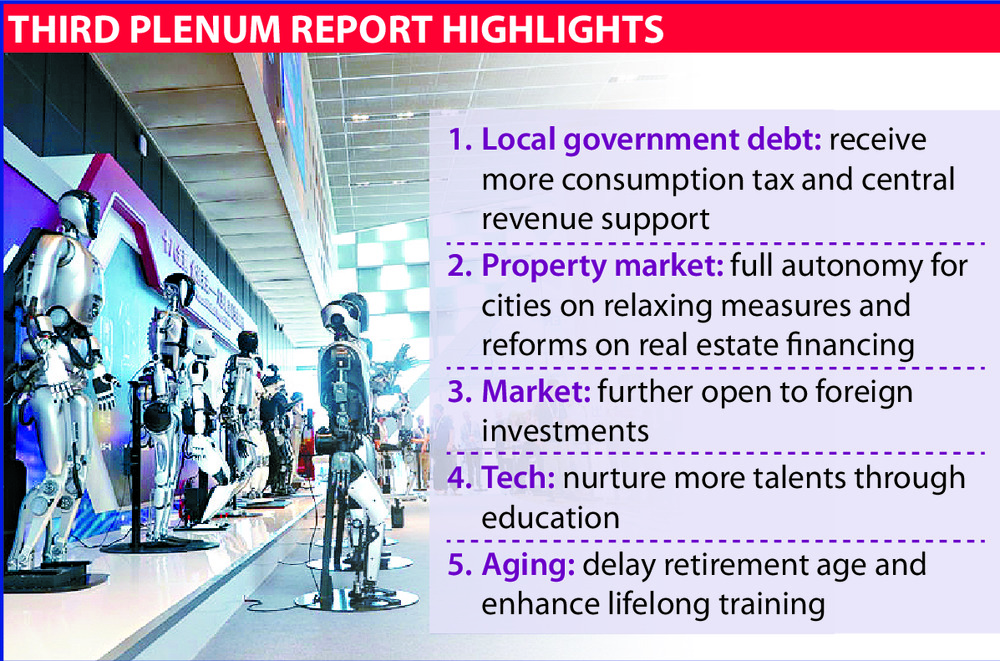
Central authorities pledged to gradually allow regional authorities to receive more consumption tax and signaling a shift in revenue from the central to local coffers.
The document comes after the closed-door Central Committee meeting, led by President Xi Jinping, which takes place roughly once every five years.
Officials will be able to "establish a central-local fiscal relationship that clearly delineates power and responsibilities, coordinates with the fiscal resources, and maintains regional balance," according to the document.
Beijing will also "increase local governments' autonomous fiscal resources and expand tax sources for local governments."Relying on land sales, they were hit by the bearish property market.
China's local government financing vehicles are battling a 66 trillion yuan (HK$70.9 trillion) pile of debt.According to the report, China will formulate financial laws to strengthen regulatory responsibilities and accountability.
Regulators will also support qualified foreign-funded institutions to participate in financial business pilot projects and optimize the system for qualified overseas investors. Authorities have stated that they will speed up efforts to enable Shanghai as an international finance center while promoting regional development, including the Greater Bay Area.On the private sector, it states that the country will build a "high-level socialist market economy" that allows flexibility while maintaining proper control.
It plans to break down barriers by further opening up the infrastructure and allowing private enterprises to participate in more national construction and technology projects.The document vows to use government funds to drive private investment. It also pledges to set up a "long-term mechanism" for expanding consumption.
In terms of technology and education, it vows to nurture more talent through educational reform in order to boost scientific and technological capabilities.The authorities plan on conducting a gradual reform on delaying retirement age and promoting lifelong vocational skills training.
Other policy targets include improving job opportunities for young people and standard of living for the elderly, as well as promoting green and carbon trading mechanisms.