Read More
Rachael NgChinese University's medical school researchers carried out a randomized controlled trial from January 2020 to the end of 2022, involving 112 55 to 75-year-olds who had subjective cognitive decline and a habit of practicing Chinese calligraphy. 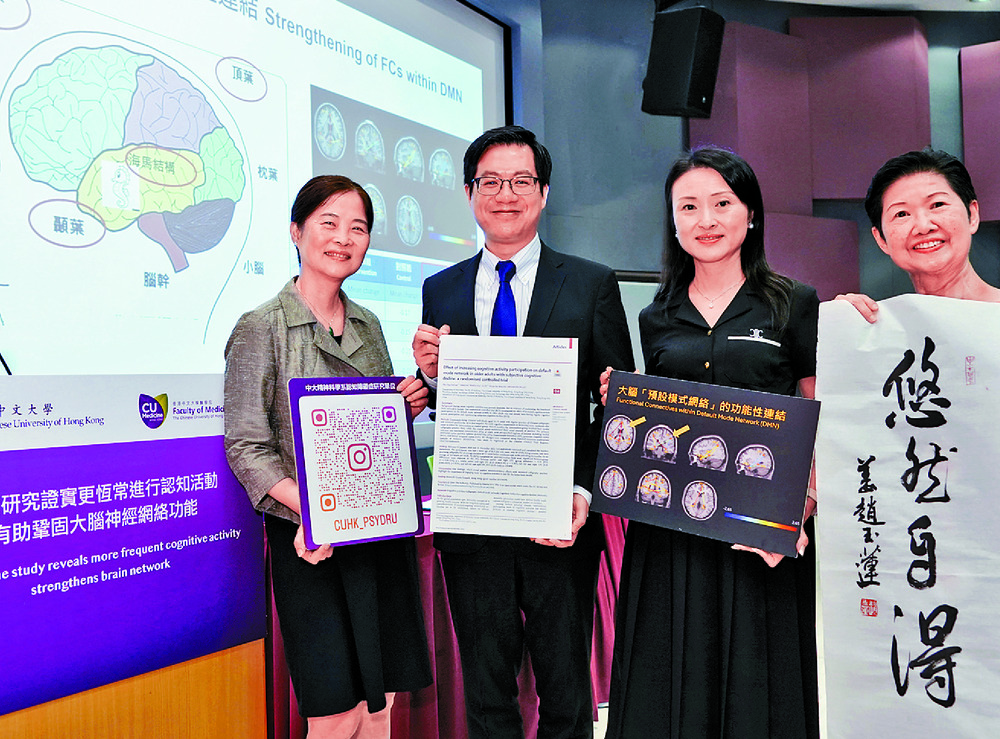
A university study has found that increased calligraphy practice can have a positive impact on the cognitive functions and brain health of the elderly.
ADVERTISEMENT
SCROLL TO CONTINUE WITH CONTENT
Participants were randomly assigned to either a control or an intervention group.
For six months, the calligraphy practice time of the intervention group was doubled, while the control group merely kept to their regular routines.
Before and after the interventions, both groups underwent magnetic resonance imaging on their brains to assess changes in the functional connectivity of the default mode network - a key brain network known to be impaired in conditions like Alzheimer's disease.
The results showed that participants in the control group experienced weakened functional connections in the brain's DMN, while those in the intervention group with increased calligraphy practice time had less weakening or even strengthened DMN functions."Calligraphy involves visuospatial coordination, focus and non-verbal memory," said professor Winnie Chu Chiu-wing of the department of imaging and interventional radiology. "Increasing calligraphy practice can strengthen the brain's DMN functional connections, independent of age, years of calligraphy experience and brain atrophy."
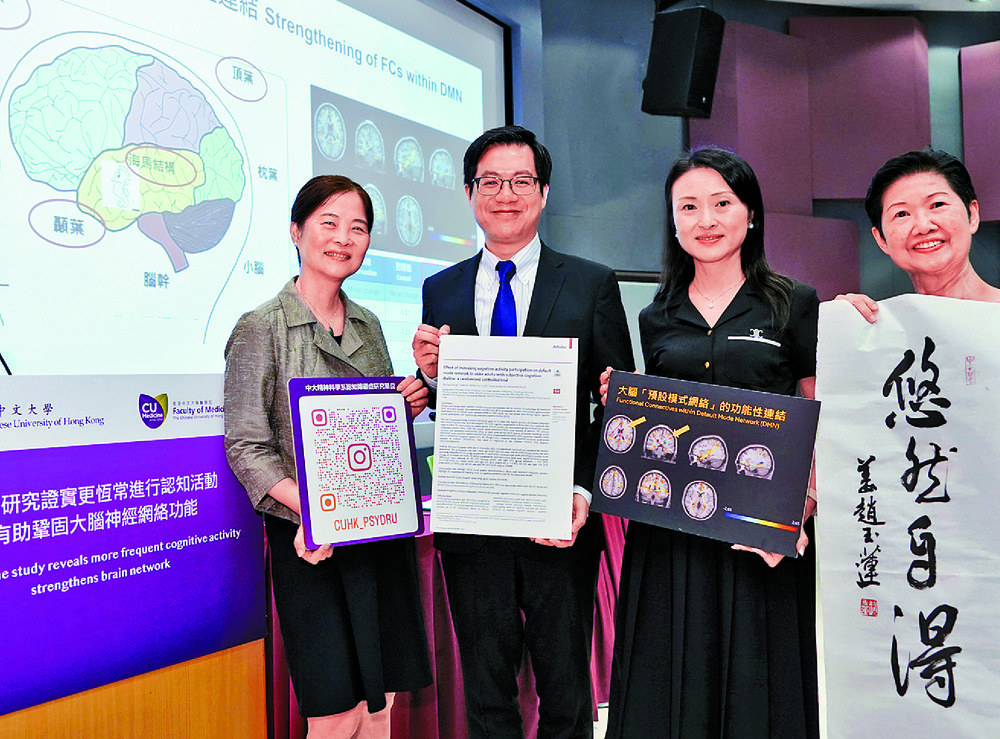
Principal investigator and associate professor Allen Lee Ting-chun from the department of psychiatry said participation in cognitive activities like calligraphy is a safe and effective non-drug intervention method to help the elderly consolidate their cognitive abilities and brain network functions.Scholars encourage elders who have not yet suffered from cognitive impairment to engage in similar conventional cognitive exercises more intensively, as they can promote overall brain health and potentially prevent the onset of conditions like Alzheimer's.Announcing their findings on the beneficial effects of calligraphy on the elderly are, from left, professors Linda Lam, Allen Lee, Winnie Chu and study participant Dr Keung.