Read More
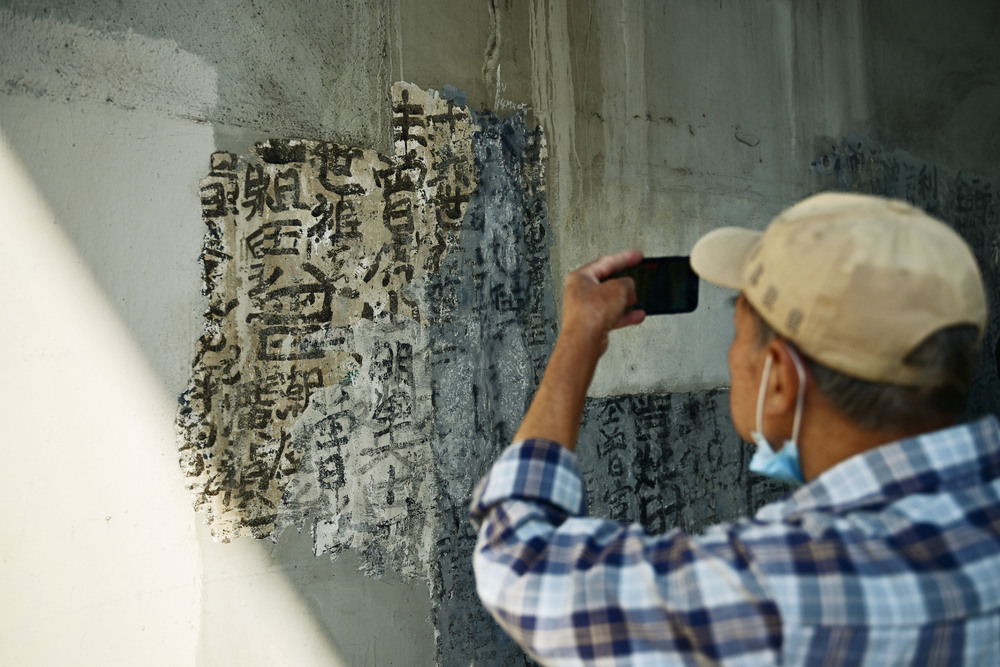
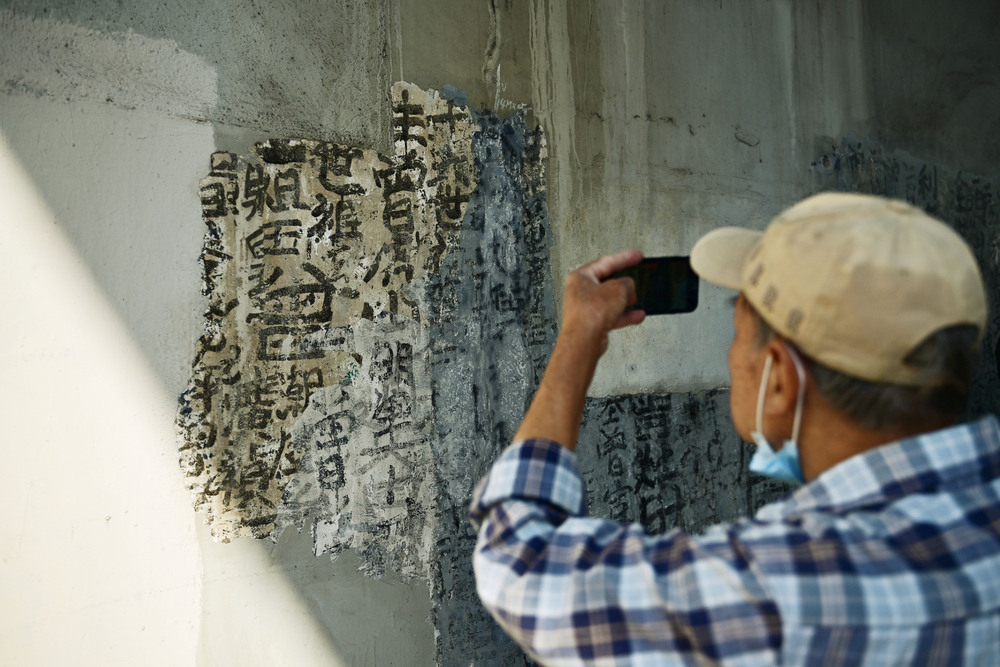
The black ink inscription by "King of Kowloon" Tsang Tsou-choi has been restored at the original site on a bridge barrier near Mong Kok East Station by the MTR Corporation, marking the largest artwork by the late calligrapher that is preserved at their original sites.
ADVERTISEMENT
SCROLL TO CONTINUE WITH CONTENT
The restored ink inscription is approximately 5 meters by 1.5 meters, doubling the size of the artwork originally discovered.
In April 2022, peeling paints on the railway bridge barrier revealed part of Tsang's work.
The railway giant then appointed a professional team to conduct research and restore the ink inscription at the original site.
It took the team two months to restore Tsang's work between October and December last year.
The team first removed the surface paint with a special solution, then used small shovels to remove the white plaster bit by bit.
During the restoration process, experts discovered a total of three layers of ink inscriptions left on the wall by Tsang at different periods.
John Lau Ka-hung, IDG Design and Engineering project manager, said the team decided to preserve the clearest ink inscription from each period for public viewing.
"[Tsang] repeatedly wrote his calligraphy on the bridge barrier from 1996 to 1997. But soon after he finished his artwork, his works were covered with paints by a government department. After that, Tsang came and wrote on [the bridge] again," Lau said.
The team also installed a drainage structure on the top of the bridge barrier and applied four layers of professional protective materials to the surface of the ink inscription to protect it.
A poster promoting Tsang's artwork has been placed at the Mong Kok East and Prince Edward stations, while a plaque was put up next to the inscription as an introduction.
Cheng Kwok-wai, MTR Corp senior project architectural manager, hoped the preservation project could allow the younger generation to know about the "King of Kowloon".
Restoration specialist Fong Tam who had participated in the restoration work said that instead of appreciating the context of his calligraphy, people should appreciate his persistence of "doing the same thing for 40 or even 50 years."
He reminded citizens not to touch the ink inscription with hard objects to avoid peeling off the special coatings.
Art commentator Lau Kin-wai, who is also a friend of Tsang, said the "King of Kowloon" is a piece of collective memory of Hongkongers.
"You could find a sense of innocence in his calligraphy," he said.
Residents nearby also welcomed the ink inscription being restored.
A man surnamed Chan said: "When I was young, I didn't know what he was writing, but I found his calligraphy interesting, and now it has become artwork."
Another man Szeto also felt the authorities should continue to preserve Tsang's ink inscriptions. "We should preserve our own culture so that youngsters can learn about his story," he said.
Since the 1950s, the streets in Hong Kong had become Tsang's canvas for his bold, brush-written calligraphy, which includes his family's biographical information. He passed away in 2007 at the age of 85.
The inscription at the bridge barrier near Mong Kong East Station is the largest of the three known artworks by Tsang that are preserved at its original sites in Hong Kong.
The other two works can be found in the Tsim Sha Tsui Star Ferry Terminal and a lamp post in Ping Shek Estate.
eunice.lam@singtaonewscorp.com