Read More



Amber rainstorm warning issued at 11am
2 hours ago

Iran demands transit fees in yuan, stablecoins for Strait of Hormuz passage
03-04-2026 02:45 HKT
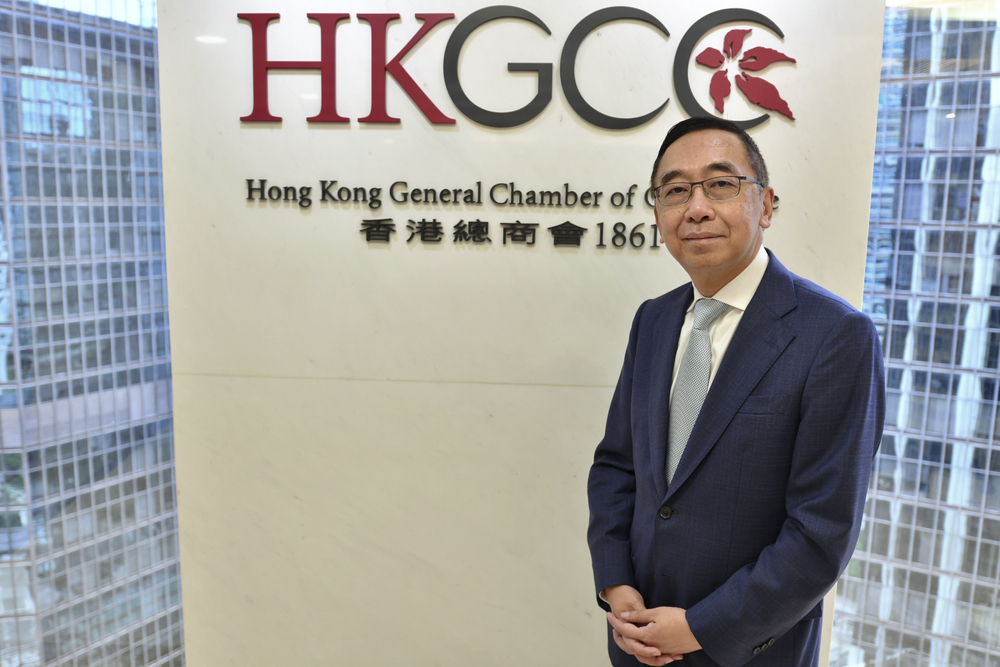
Hong Kong people should welcome mainland talent with open arms to ease an across-the-board manpower shortage, says George Leung Siu-kay, chief executive of the Hong Kong General Chamber of Commerce.
Speaking on radio yesterday, Leung said the brain drain is most serious among middle-rank employees, who are the most productive workers and the core management of companies.
"Hong Kong has a labor force of only three million, and there are only less than a million middle-rank employees. But the city has seen an exodus of more than 100,000 middle-rank workers, which shows the turnover rate is high," Leung said.
The turnover rate at many companies have reached 20 percent, which has a huge impact on operations he added.
Many companies have invested in digitalization but it still cannot solve the manpower shortage as many positions require brain power and cannot be replaced by artificial intelligence or new technologies, Leung said.
It is natural to attract mainland talent and make them stay in Hong Kong for a long time, he said.
"Hong Kong has almost reached full employment. We can attract a small group of jobless people to work by raising salaries but it still cannot bring enough employees to the market," Leung said.
Although the low tax rate in Hong Kong is attractive, the housing cost is too high for some nonlocal talent, he said, urging the government to provide more support on housing and education for their children.
Leung said the city has to find its role in Asia and look for new economic opportunities as the West is decoupling from China.
Meanwhile, the Hong Kong Institution of Engineers signed an agreement for reciprocal recognition of professional qualifications with the Chinese Society of Engineers, allowing engineers from the city and the mainland to practice in the two places.
Its president, Aaron Bok Kwok-ming, said there is a 20 percent vacancy in the industry and about 3,000 engineers are expected to leave the local industry every year in the coming five years.
Secretary for Development Bernadette Linn Hon-ho said the government will spend HK$80 billion to HK$100 billion a year on engineering projects in the future, including the San Tin Technopole, Northern Metropolis and Kau Yi Chau artificial islands projects.
"Northern Metropolis is the new engine that promotes the development of the innovation industry and we are pushing the research and construction work of the project," Linn said. "Regarding the artificial islands, we have developed a platform with five local professional groups, including the Hong Kong Institution of Engineers."
Financial Secretary Paul Chan Mo-po said nurturing talent with diversified career paths is the key for Hong Kong to have high-quality development, while vocational training could help improve the city's labor power.
"Sufficient talent supply is the key to social and economic development. Strengthening talent cultivation and improvement of the overall labor force's skills are fundamental to the city's productivity and creativity," he said.
wallis.wang@singtaonewscorp.com