Read More












With a majority of the races called, Republicans seemed on track to reclaim the House of Representatives for the first time since 2018, but the Senate was still in play, with forecasts tentatively leaning Democratic.
While the night saw wins by more than 100 Republicans embracing Trump's "Big Lie" that Biden stole the 2020 election, several high-profile, election-denying acolytes of the former president came up short.
But the only seat to change party hands so far went to the Democrats, with John Fetterman, a burly champion of progressive economic policies, triumphing in Pennsylvania.
In the House, early results suggested Republicans were on track for a majority - but only by a handful of seats, a far cry from their predictions.Top Republican Kevin McCarthy struck an upbeat note, telling supporters: "It is clear that we are going to take the House back."
But senator Lindsey Graham, a top Trump ally, bluntly conceded the election is "definitely not a Republican wave, that's for darn sure."The president's party has traditionally lost seats in midterm elections, and with Biden's ratings stuck in the low 40s and Republicans pounding him over inflation and crime, pundits had predicted a drubbing.
That would have raised tough questions on whether America's oldest-ever commander in chief, who turns 80 this month, should run again.Instead Biden stands to emerge in much better shape than either of his Democratic predecessors, Barack Obama or Bill Clinton, who both took a hammering at the midterms.
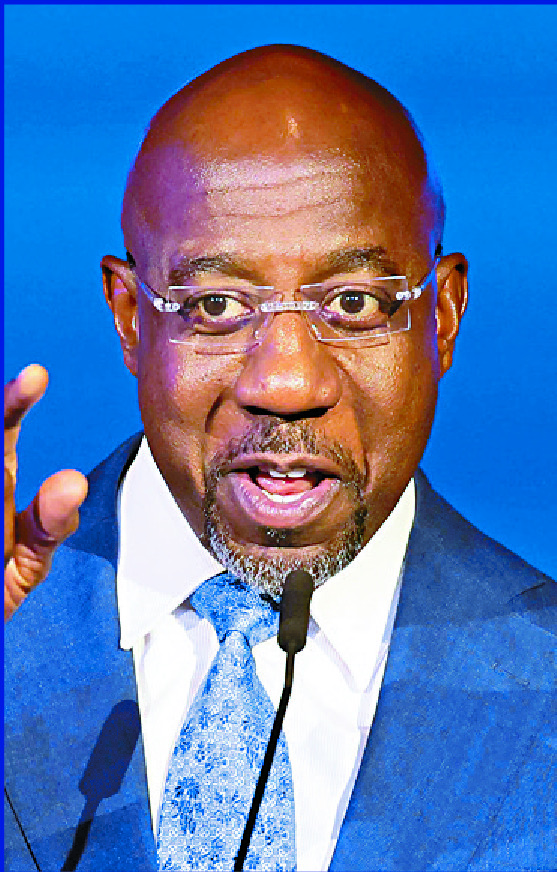
Control of the Senate hinged on four key races that were still on a knife-edge. Democrats need two more wins to successfully hold the chamber, while Republicans need three to flip it.In Georgia, Arizona, Nevada and Wisconsin, counting the remaining votes for Senate could take days. Incumbent Democratic senator Raphael Warnock led GOP candidate Herschel Walker by a few thousand votes in Georgia. That contest may be ultimately decided in a runoff on December 6 if neither candidate gets more than 50 percent of the vote.
One of the most decisive wins was for rising Republican star Ron DeSantis, who won overwhelmingly in Florida, cementing his status as a top potential White House candidate in 2024.But if the 44-year-old views his victory as a presidential mandate, he will likely face a stiff challenge from another Florida resident - Trump, who has teased an "exciting" announcement next week.
Among other races, Maura Healey, in New York, made history as the first openly lesbian US governor.In the House, several new Republicans were elected in redrawn Florida districts. Joining them will be 25-year-old Democrat Maxwell Frost, the first member of Generation Z to win a seat in Congress.
Far-right's Marjorie Taylor Greene, a top Trump ally, won reelection in Georgia.Without a unified agenda of their own, Republicans ran on threats of confrontations that could spark crises. They promised to cut federal spending, refuse to raise the nation's debt limit and balk at supporting Ukraine in the war with Russia. It all pointed to potential gridlock.
The Republicans could bring a new intensity to Capitol Hill with promises to end Biden's most ambitious plans and launch grueling investigations - even, potentially, impeachment of the president.AGENCE FRANCE-PRESSE, ASSOCIATED PRESS
Editorial: Page 4