Read More

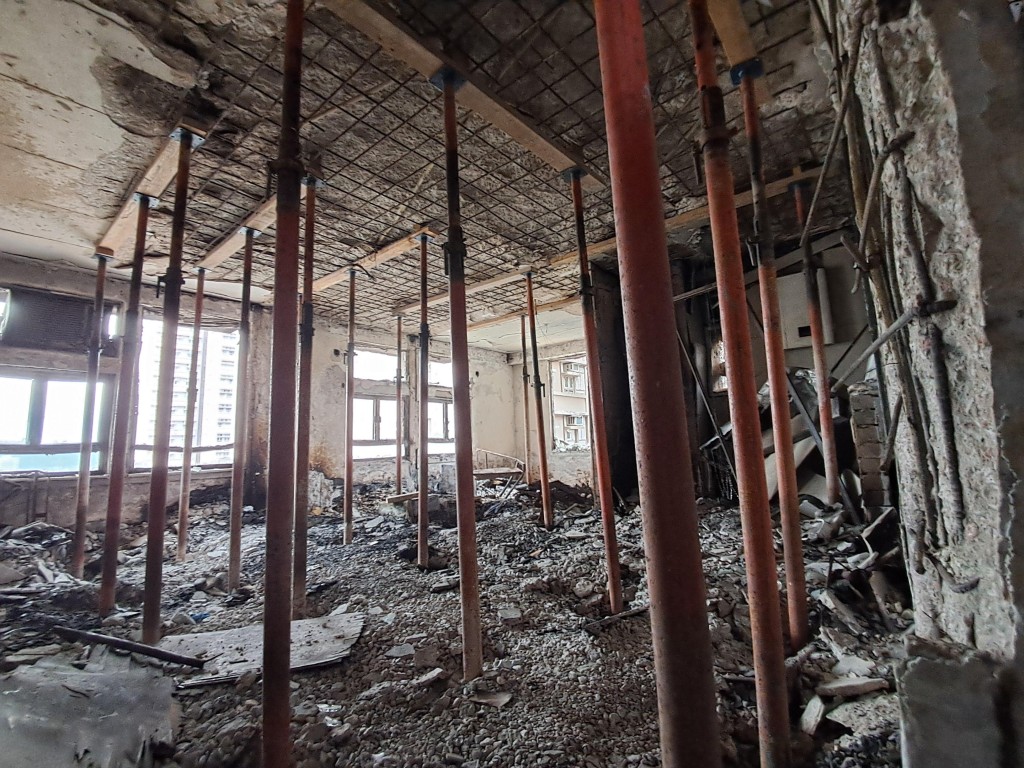







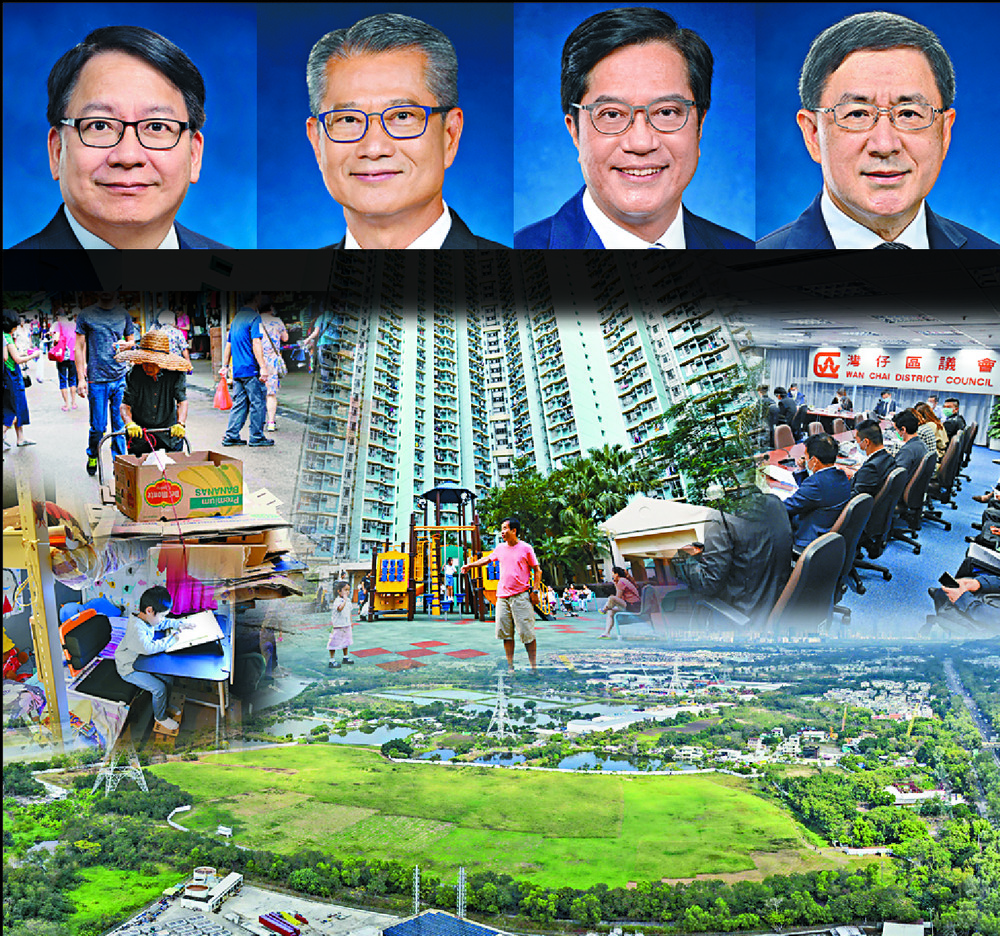
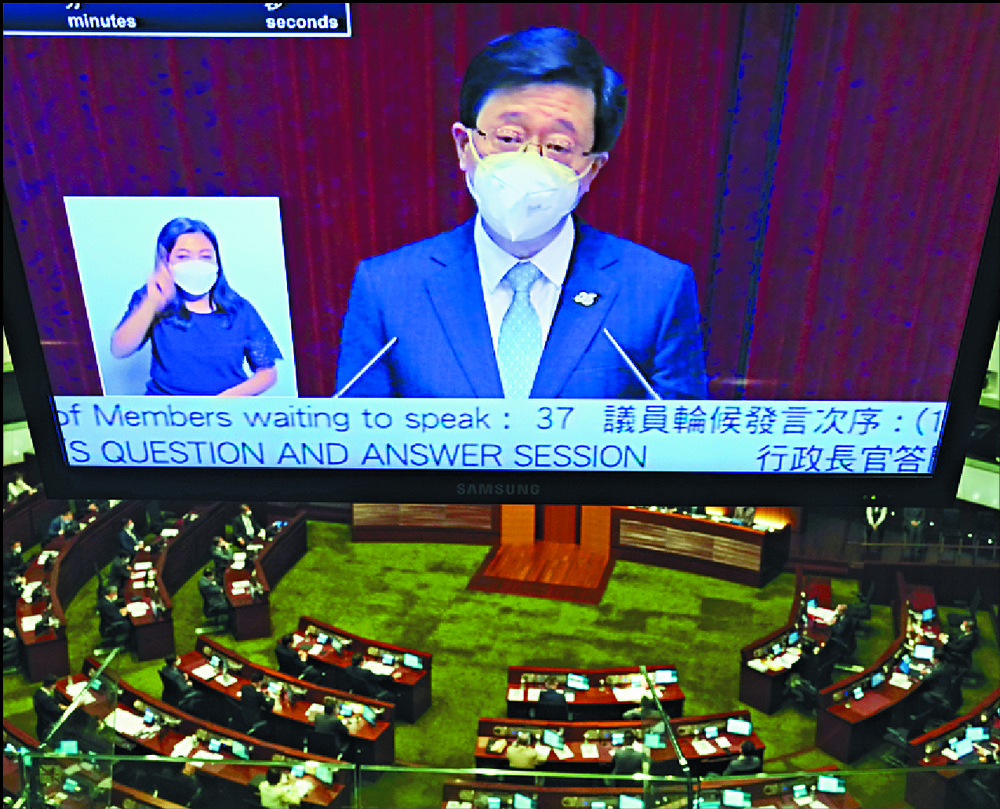
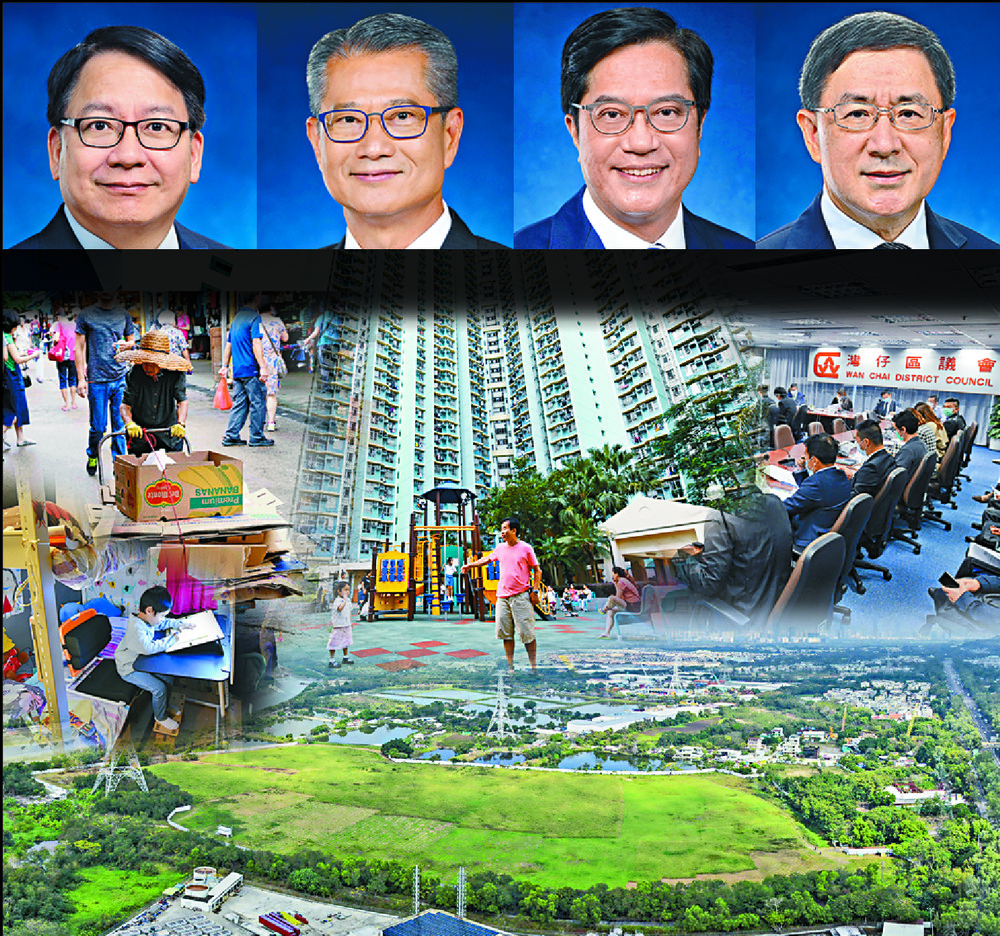
Four task forces will tackle cross-generational poverty, land supply, public housing and district affairs, Chief Executive John Lee Ka-chiu revealed at his first Legislative Council question-and-answer session yesterday.
He also told members that top officials will host monthly meetings with legislators to step up collaboration between the executive branch and the legislature.
And the defunct policy unit will be revived as the Chief Executive's Policy Unit to help shape comprehensive programs.
After the 90-minute Q&A session, the four officials who will head the task forces faced the media.
Chief Secretary Eric Chan Kwok-ki, who will lead the anti-poverty task force, said for openers that there will be financial support to 2,000 junior secondary school students living in sub-divided flats.
The students will also be paired with mentors to assist them with life planning and in best use of the financial support.
"It would not be ideal if the student uses the subsidy, for instance, to buy a new mobile phone," Chan said. So it will be up to the mentors to decide how the funds will be used.
"The task force hopes to entrust with mentors a subsidy that they will spend according to the needs of the students," Chan added.
And "students will participate in classes and training programs as their mentors see fit."
The land supply task force, led by Financial Secretary Paul Chan Mo-po, will analyze the SAR's land reserve and identify spade-ready plots on which housing will be built over the next 10 years.
"We will investigate how to increase land supply over the course of the next decade, focusing on transparency and public awareness of our plans for land use, such that our plans can benefit from public oversight," Chan said.
"The task force's scope is relatively broad since we will be dealing with land use in relation to private housing projects in addition to public housing." He added that the task force would also consider land use in terms of economic development as well as government and community facilities.
Deputy Financial Secretary Michael Wong Wai-lun will lead the task force on public housing, which will submit a proposal within 100 days on on how to speed up building public housing.
Wong estimates that about 100,000 public housing units will be built in the next five years and 230,000 in the following five.
Deputy Chief Secretary Warner Cheuk Wing-hing, who is to head the district affairs task force, said he will tackle hygiene and environmental issues as well as urban black spots in the SAR, aiming to organize and mobilize regional communities within the next two months.
Earlier, Lee told legislators that monthly meetings with them will be hosted by one of the top three secretaries or their deputies, who will be leading five to six bureau heads, to create more opportunities for policy discussion.
He said he would take the lead, bringing Chief Secretary Eric Chan, Financial Secretary Paul Chan, Secretary for Justice Paul Lam Ting-kwok and their three deputies as well as the director of the Chief Executive's Office, Carol Yip Man-kuen, to the first meeting.
Lee said he has also asked bureau heads to submit "key performance indicator" frameworks applicable to their activities by next month to help in evaluating progress of their work.
In reviving the policy unit, which was replaced by the Policy Innovation and Co-ordination Office during Carrie Lam Cheng Yuet-ngor's administration, Lee said he renamed the operation the Chief Executive's Policy Unit to emphasize his "dual role."
He explained: "As chief executive I answer to the central people's government then to the Hong Kong Special Administrative Region Government."
Top government policy adviser Lau Siu-kai, who is vice-president of the Chinese Association of Hong Kong and Macau Studies, said the Chief Executive's Policy Unit will act as a "compass" for the SAR administration's policy directions.
The unit would not be responsible for implementing policies, Lau said. "Rather, its function is to help the chief executive develop a macroscopic long-term vision that considers historical, national, international and strategic interests." He added that it would have to keep a close eye on international relations, global political economy and cross-strait relations.
Lau also said the unit could in collaboration with mainland think tanks and academic organizations conduct campaigns to raise public awareness of administration policies and garner support for them.