Read More

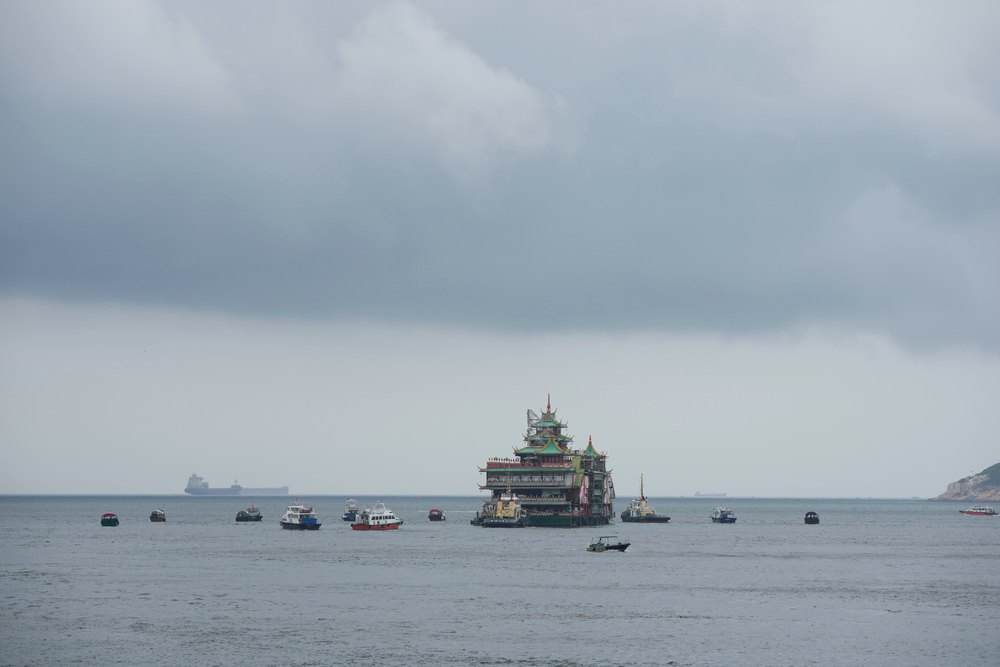
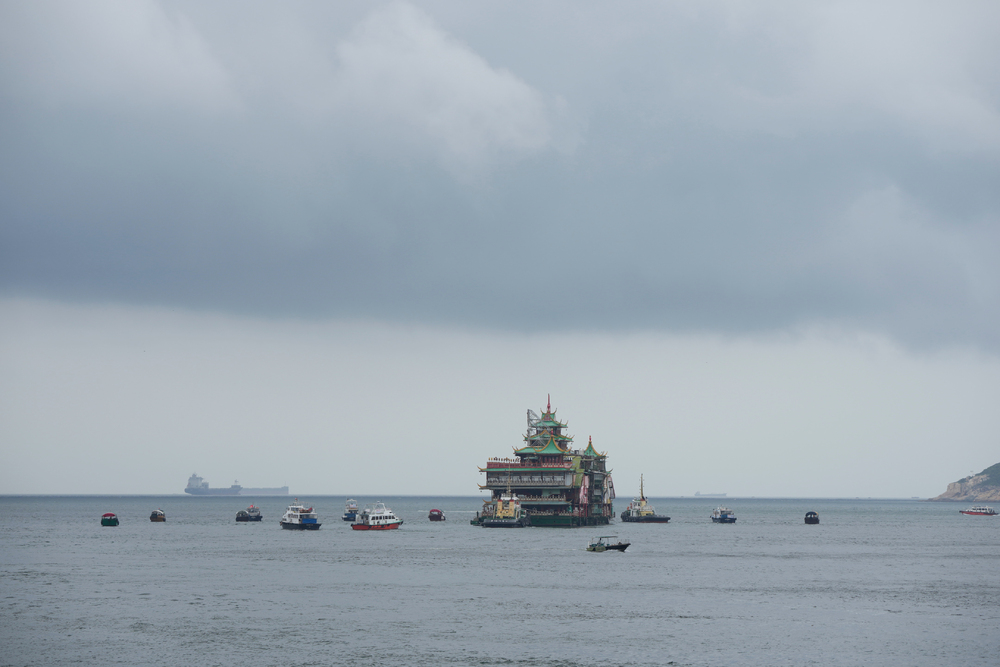
The parent company of the now sunk Jumbo Floating Restaurant continued to refuse to disclose the ship's original destination yesterday even as people voiced theories on its mysterious loss and called for an official investigation.
The 76-meter Jumbo capsized and sank during thunderstorms as it was passing the Paracel Islands in the South China Sea on Sunday, five days after it was towed from Aberdeen Typhoon Shelter.
The Jumbo's owner, Aberdeen Restaurant Enterprises, refused to reveal where the ship was going, its likely location on the seabed, an estimation of the cost of the loss and whether it will seek compensation from the tugboat company that was towing it.
But Bondy Wen Tsz-kit, chairman and executive director of Yun Lee Marine - the local tugboat firm responsible for towing the Jumbo from Aberdeen - said his company had handed over the vessel to another towboat company before it headed to the high seas.
Wen said the Jumbo "looked perfectly fine" when it was still in Hong Kong waters, but his team had not boarded the vessel and had no idea how it was on the inside.
He could not guess why the Jumbo sank, but he was extremely sad about the loss of a vessel that had been famous throughout its 46 years in Aberdeen.
Stephen Li Yiu-kwong, a professor at Polytechnic University's Department of Logistics and Maritime Studies, said it would cost millions of dollars to salvage Jumbo, which is now at a depth of more than 1,000 meters in the South China Sea.
"It would require deep diving equipment, and the weather in that area is rather adverse," Li added. That would make the cost of raising it prohibitive.
He added that equipment on the Jumbo has likely "been smashed by water pressure."
The 28-meter-tall, three-deck Jumbo had a large surface area, which would have made it susceptible to strong winds and waves.
Cheung Sai-teng, chairman of the Hong Kong Seamen's Union, described the loss as extremely rare, and he had never heard of a barge sinking completely.
As a barge Jumbo had no power of its own, he said, so it had to be towed.
"Chances of accidents are not high," Cheung added. "I don't recall a barge sinking entirely like this."
A veteran member of the Hong Kong Institute of Marine Technology, Lee Kin-kwong, said the towing method "does not make sense."
If there had been generators and a crew on the Jumbo, he said, then water could have been pumped out.
But he added: "If they're dragging Jumbo away like a dead ship, with all the devices switched off, the risk of capsizing is much higher and the tow ship has no choice but to leave it behind."
Insurance sources said the owner might not have purchased accident insurance for Jumbo, but it should have HK$10 million third-party insurance required by the Marine Department when renewing its license.
However, third-party insurance only covers casualties caused by accidents on the ship, and since no one was injured in Jumbo's capsizing there can be no claim in this case.
A green group official said the wreckage will become sea waste, but it will unlikely turn into a breeding ground for coral because it is too deep for sunlight to reach.
Hong Kong Tourism Association chairman Timothy Chui Ting-pong said he was both shocked and skeptical.
He called on the SAR to launch an investigation, including asking the Marine Department if it knew the Jumbo's route and destination. "Authorities had proposed preserving the Jumbo under Ocean Park management but in vain," Chui noted. "Many people raised proposals, but authorities did not take any of them. They should give us an explanation."
Legislator Peter Koon Ho-ming said it was "unbelievable" the Jumbo sank "all of a sudden," and he is curious about what happened.
"I hope the owner can elaborate on the matter and ease our concerns."
Meanwhile, people may still be able to visit the Jumbo in virtual reality of Metaverse during the Hong Kong Computer and Communications Festival in August. For six people including IT experts recorded its last days before it left Aberdeen.