Read More
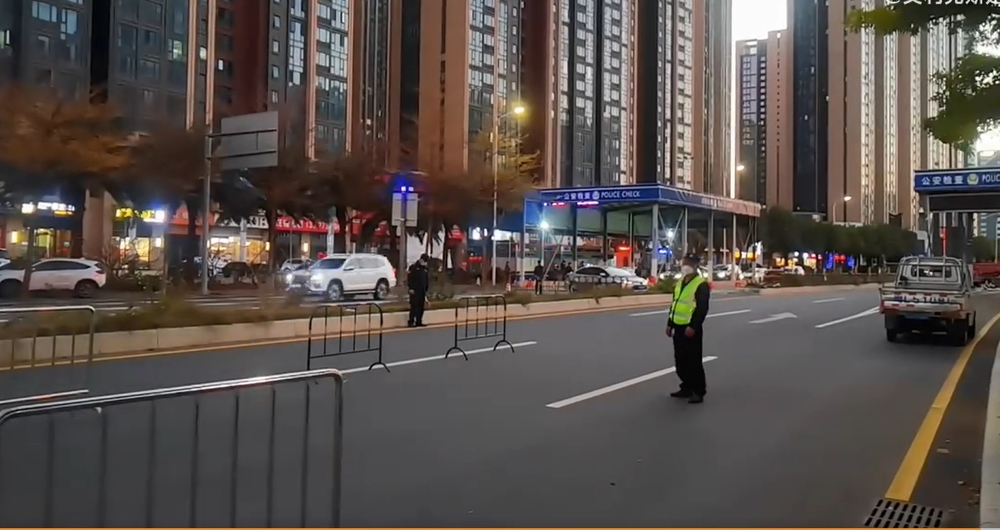
Tech hub Shenzhen was put under a citywide lockdown today, the local government announced, after it reported 66 new Covid-19 cases.
ADVERTISEMENT
SCROLL TO CONTINUE WITH CONTENT
Home to tech giants including Huawei and Tencent, the city of 17 million across the border from Hong Kong has told residents to stay home to tamp down an Omicron flare-up, having already closed non-essential venues and banned restaurant dining in recent days.
Chinese health authorities reported nearly 3,400 Covid-19 cases yesterday, double the previous day, forcing lockdowns on virus hotspots as the country contends with its gravest outbreak in two years.
In a statement yesterday, the Shenzhen government said the lockdown may end on March 20, depending on the pandemic situation, and there will be three rounds of citywide testing this week.
Workers of non-essential businesses must work from home. Except for supermarkets, pharmacies, medical institutions and eateries providing takeaways, all shops are ordered to close.
Only essential operations including water, electricity, fuel, telecommunications, environmental hygiene and food supply, as well as supplies to Hong Kong, will continue.
Public transportation in the city was also suspended, and all residential estates were subject to close-loop management, the Shenzhen government said.
But cross-border transport of daily supplies to Hong Kong will not be affected, it said.
Shenzhen residents were not allowed to leave the city, the government said. Those with special needs can only leave the city with a negative Covid-19 testing result within 24 hours.
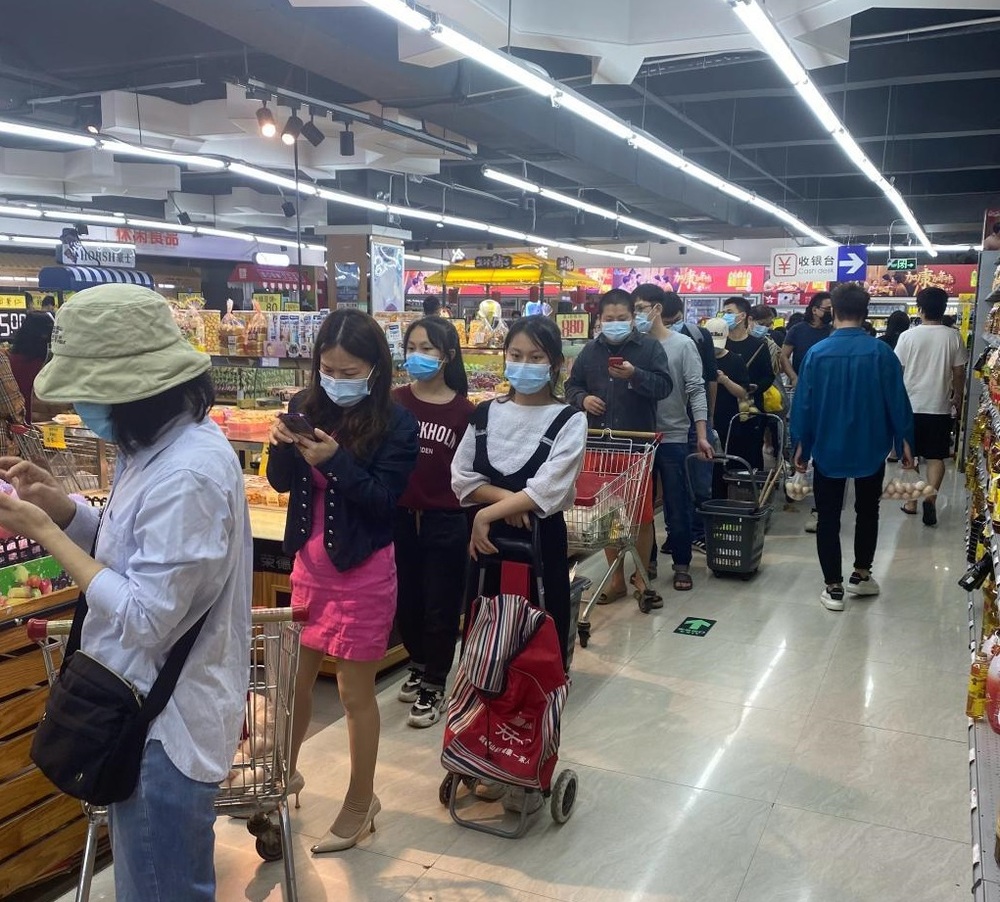
A Shenzhen resident, John, told The Standard that he did not store food and daily supplies earlier and ordered instant food and water online last night upon hearing the news.
"The supplies should be able to arrive today, but I'm not sure because supermarkets have been overwhelmed," he said.
John also said the work-from-home arrangement for citizens reduces the risk of transmission.
He added that Shenzhen has done a good job in controlling the pandemic as he has been undergoing daily Covid-19 tests for two weeks.
Another resident, Hu, who works in the video game industry, said the lockdown does not have a huge impact on him because he can continue his work at home.
Hu said he was prepared for the lockdown as the pandemic was becoming more serious in the city. Although Hu did not store food, he said he will order takeout food during the lockdown.
"The Shenzhen government has a good judgment of the pandemic situation and imposed reasonable measures when the infection number increases," he said.
A beauty salon owner in Longgang, Seren, said she was ordered to close shop yesterday. She was also told to stay home and barred from going out, not even to buy food. But goods were sent to her doorstep.
But another beauty salon owner, surnamed Ouyang, in Futian, said she could not open shop for 14 days from Saturday, but was allowed to go to buy food until yesterday.
From Saturday, all eateries in Shenzhen have prohibited dine-in services. Other public premises, including bars, cinemas, gyms and swimming pools, were also closed.
Meanwhile, Chief Executive Carrie Lam Cheng Yuet-ngor said mainland top epidemiologist Liang Wannian, who visited Hong Kong to help the SAR to fight the epidemic, returned to Beijing on Saturday.
Asked if the deteriorating pandemic situation in the mainland would affect the central government's support for Hong Kong, Lam said she is confident that the mainland can curb the virus transmission and it will not affect the SAR.
The only impact of the mainland's pandemic situation on the SAR is that Liang has returned to Beijing, Lam said. But she added Liang has already left many good opinions and suggestions before leaving.
Six Guangdong officials were dismissed yesterday due to an outbreak at a Dongguan prison involving more than 200 cases.
They included the deputy head of the Guangdong Provincial Public Security Department, Huang Shouying, and Dongguan's deputy mayor, Bi Hongbo.
A nationwide surge in cases has seen authorities close schools in Shanghai and lock down several northeastern cities, as almost 19 provinces battle clusters of the Omicron and Delta variants.
The city of Jilin has been partly locked down, with hundreds of neighborhoods sealed,, while Yanji, an urban area of nearly 700,000 bordering North Korea, was fully closed off.
Two officials in Jilin province - Changchun Health Commission head Gao Yutang and mayor of Jilin city Wang Lu - were also dismissed due to the outbreak there.
China, where the virus was first detected in late 2019, has maintained a strict "zero-Covid" policy enforced by swift lockdowns, travel restrictions and mass testing when clusters have emerged.
But the latest flare-up, driven by the highly transmissible Omicron variant and a surge in asymptomatic cases, is challenging that approach.
wallis.wang@singtaonewscorp.com
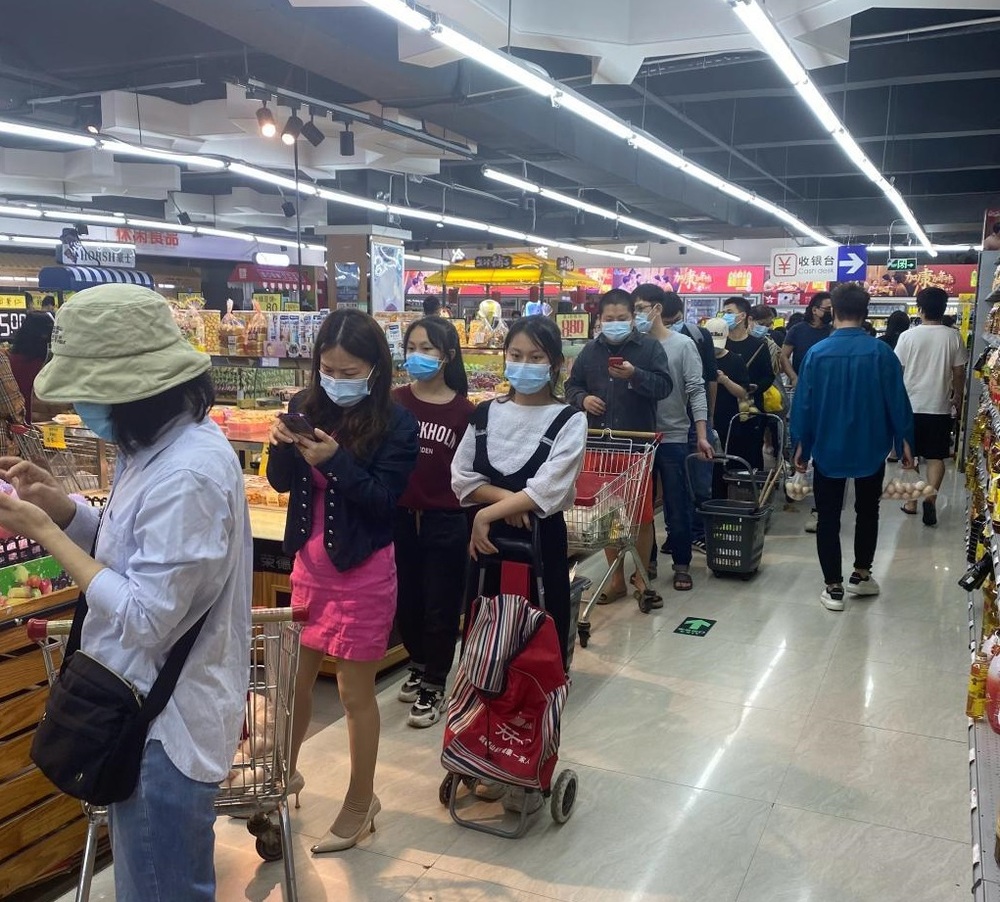
Shenzhen residents stock up on essentials as streets empty.