Read More
A pilot scheme that switches fuel use to renewable diesel at the airport will begin next year, the Airport Authority announced as part of a pledge to achieve net-zero carbon emissions by 2050.
ADVERTISEMENT
SCROLL TO CONTINUE WITH CONTENT
The move is part of the authority's carbon-management action plan launched in 2008, which also aims to reduce carbon emissions by 55 percent by mid-2035.
Airfield general manager Chapman Fong Shui-man said using renewable diesel fuel could cut down the airport's carbon emissions by 90 percent.
He said that by adopting the "multipronged approach," combining the use of renewable diesel fuel and the electrification of ground service equipment and vehicles, "direct" carbon emissions could be brought down by 45 percent as well.
The airport, he said, has been using electric ground service equipment - container loaders, belt loaders and passenger boarding bridges - on the apron since 2018.
Fong said 270 sets of such equipment had replaced a portion of ground service equipment running on diesel at the airport, adding that the authority would ramp up the number of electrical ground service equipment to 580 next year.
Likewise, Fong said the authority had widened the electrification of vehicles in the restricted area since 2017.
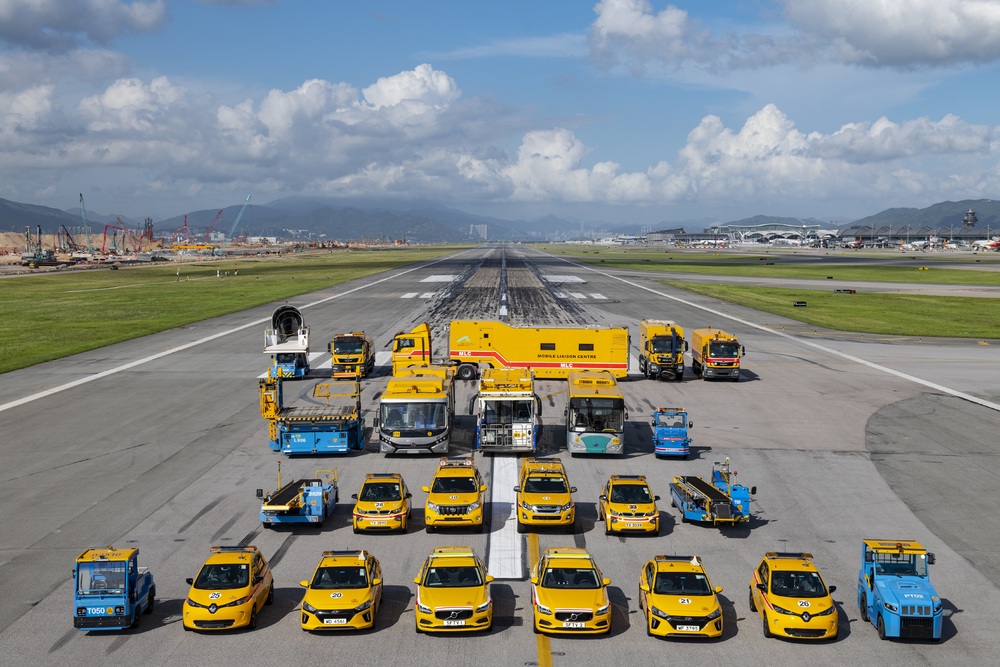
"There are 360 EVs in the restricted area so far, which account for 20 percent of all vehicles at the airport," he said. "Sedans were the first batch of vehicles to be electrified But we will soon electrify other vehicles in phases."
General manager of technical services infrastructure Amen Tong Yuen-king also said about 16,000 sets of lights on the runway would be switched to LED ones next year.
Tong said this would help cur power use by 20 million kilowatt-hours and lessen carbon emissions by 10,000 tonnes.
The switch to LED lights had begun as early as 2015, Tong said, and they can be seen in the passenger terminal buildings and facilities on the apron - high mast lighting, taxiway markings and lampposts.
He said six sets of air-conditioners at Terminal 1 had been morphed into four sets of energy-efficient ones earlier.
Carbon-neutral architecture, like heat-isolating glass in the passenger terminal buildings and solar panels on the rooftop, had been installed.
General manager of sustainability Peter Lee Chung-tang said a carbon support program catering to aviation business partners had been launched, backed by HK$20 million from the Green Innovation and Technology Fund.
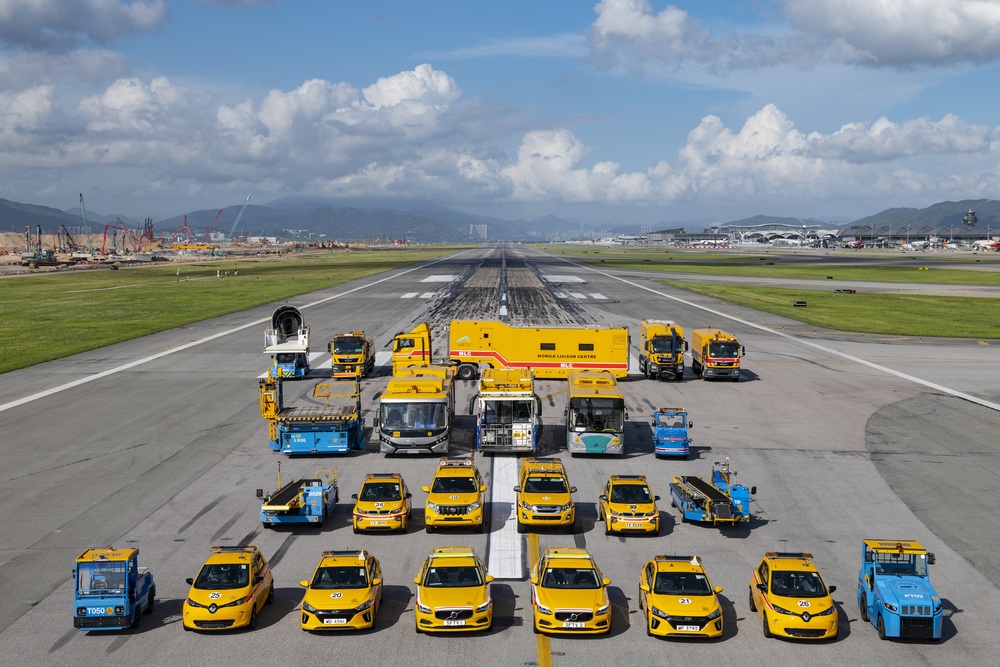
The airport's fleet of electric vehicles.