Read More
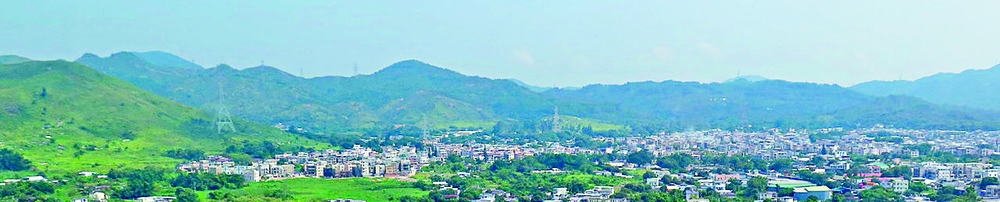
The focus of Hong Kong development appears to be shifting to the northern part of the SAR as Chief Executive Carrie Lam Cheng Yuet-ngor proposed a new Northern Metropolis in the last policy address of her first term of government.
ADVERTISEMENT
SCROLL TO CONTINUE WITH CONTENT
The 30,000-hectare Northern Metropolis, expected to be finished in 20 years to accommodate 2.5 million people, was unveiled yesterday - three years after she proposed constructing an artificial island from a 1,700-hectare reclamation near Lantau to ease the city's housing shortage.
With the Lantau Tomorrow Vision yet to be realized, Lam yesterday proposed a much more ambitious plan in the New Territories with a total of 905,000 to 926,000 residential units, including the existing 390,000 units in Yuen Long and North District.
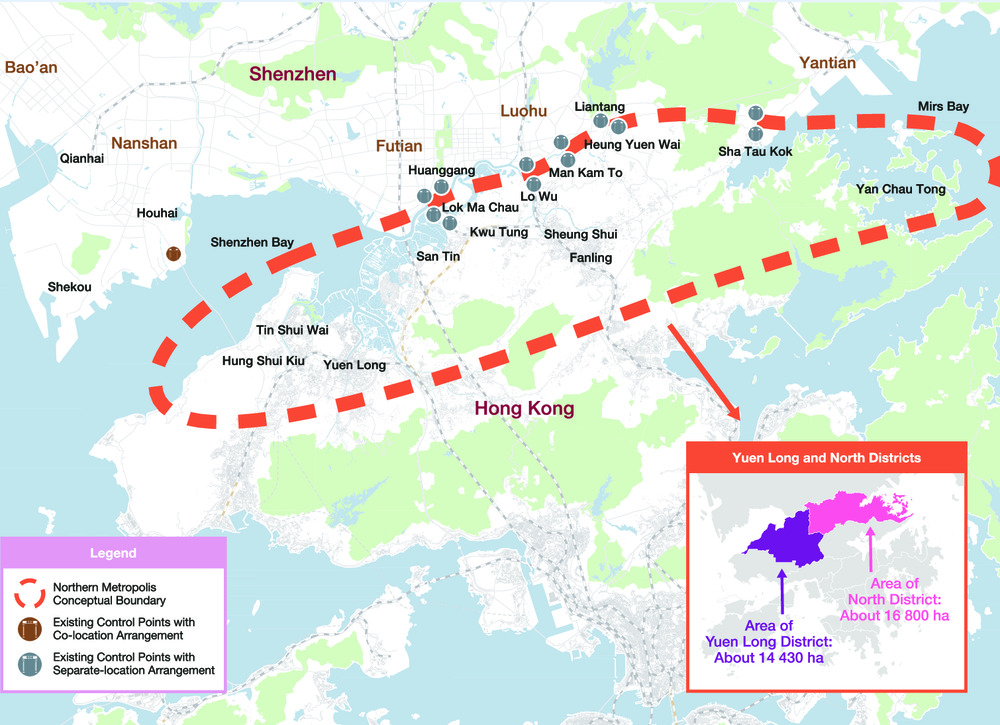
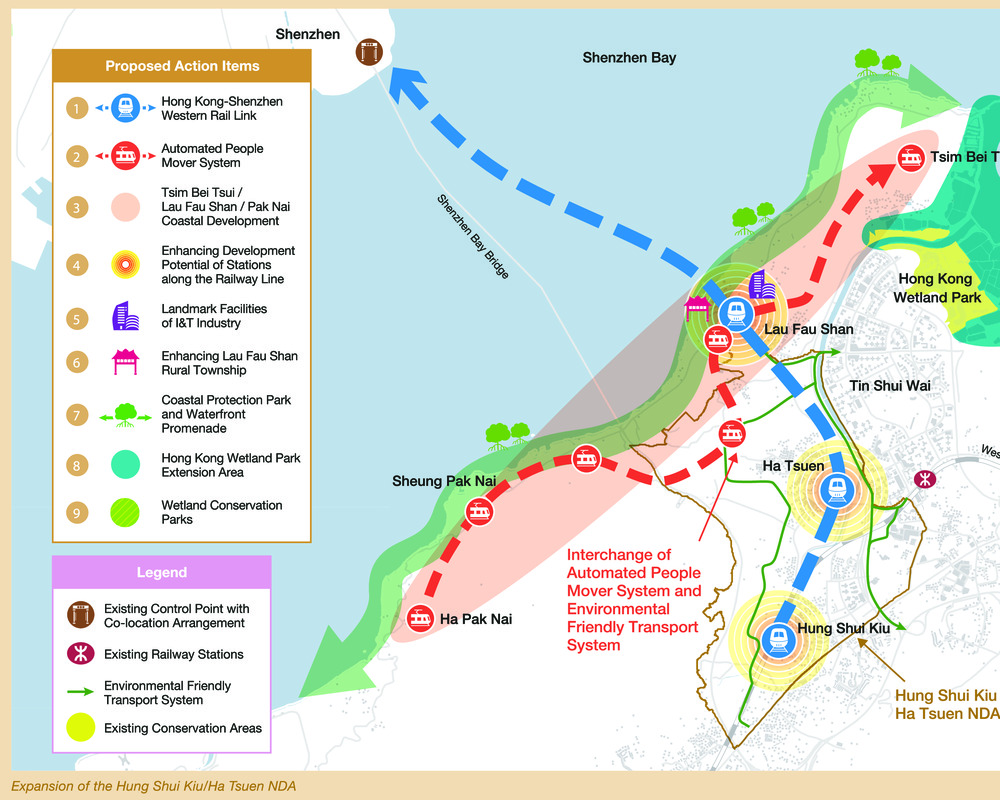
It will cover the mature new towns in Tin Shui Wai, Yuen Long, Fan Ling, Sheung Shui and neighboring rural areas, as well as six new development areas - Kwu Tung North and Fan Ling North, Hung Shui Kiu and Ha Tsuen, Yuen Long South, San Tin and Lok Ma Chau, Man Kam To and the New Territories North new town.
But Lam said pushing forward the mega plan in Northern Metropolis is not a replacement of the Lantau Tomorrow Vision. Instead, it will be complementary to the Harbour Metropolis derived from her Lantau proposal, with extended reclamation near Kau Yi Chau.
"Not only will the government not give up on the reclamation at Kau Yi Chau, we will start the reclamation in 2026, which is earlier than scheduled," Lam said.
However, the Northern Metropolis plan did not come with a budget, which is expected to cost much more than the HK$624 billion Lantau Tomorrow Vision.
But Lam was confident the metropolis would not bring any financial problem to the SAR.
"According to my experience, Hong Kong's wealth comes from land and housing, and it's impossible to lose money. We can earn profits even from construction of public estates," she said. The mega project could be funded from the issuance of green bonds as the metropolis would involve many green infrastructures.
Government sources said the study on the Lantau Tomorrow mega-development plan will be done by 2024. Citizens will be consulted on the area of reclamation, financing model, land use and routing of railways and highways by the fourth quarter next year.
"The two metropolises located in the north and south of Hong Kong will provide massive land and enhance the spatial layout of Hong Kong," Lam said, adding they will support Hong Kong's status as an international financial center. "These two metropolises, spearheading their respective economic engines and complementing each other, will drive the future development of Hong Kong."
The Northern Metropolis will be developed as an international innovation and technology hub, offering 650,000 jobs, including 150,000 in the IT sector.
Lam said it will also be an important part of the "twin cities, three circles" concept, which will facilitate close collaboration between the governments of Hong Kong and Shenzhen.
The "twin cities" refer to Hong Kong and Shenzhen, whereas the "three circles" include the Shenzhen Bay Quality Development Circle, the Hong Kong-Shenzhen Close Interaction Circle and the Mirs Bay and Yan Chau Tong Eco-recreation and Tourism Circle.
The concept will facilitate close collaboration between the governments of Hong Kong and Shenzhen in areas such as economic development, infrastructure, IT, people's livelihood and ecological environment.
"It is the most vibrant area where urban development and major population growth of Hong Kong in the next 20 years will take place," Lam said.
"By joining hands, we will be able to achieve the synergy effect of 'one plus one is greater than two'."
The metropolis will include Yuen Long and North District, covering around 30,000 hectares from west to east along Hong Kong's border with Shenzhen, which will be developed into housing for 2.5 million citizens.
Land supply will also be critical to ensuring that the Northern Metropolis offers a "home-job balance" in the area, according to Lam.
As there are currently 390,000 residential units in the northern New Territories, and development projects under planning and construction can bring in 350,000 units, the new development strategy actually increases by as much as 186,000 units.
But former director of planning Ling Kar-kan - now strategic planning advisor for Hong Kong and Shenzhen cooperation at the government's policy innovation and coordination office - said the increase in the number of residential flats is not the only thing that matters.
"Apart from the quantity of residential flats, we should also focus on the quality, as not only have we made the SAR an innovative technology 'engine' but [we should] also make a better living environment for citizens," Ling said.
He refused to spell out the cost and a timeline for the plan, saying the development strategy was different from a blueprint. The strategy report is to provide an overall direction and garner citizens' approval.
But Ling said under the development strategy, the government will reclaim 700 hectares of wetland, with most conserved and only 70 hectares of fishponds and rural land used for the development of San Tin to make a complete plot for innovative technology.
Chief Secretary for Administration John Lee Ka-chiu said the proposal was "forward-looking and innovative."
"The proposal fully provides spaces for accommodation, commercial activities, innovation and technology as well as tourism," Lee said. "It is a diverse proposal covering development and conservation."
Lee believed the Northern Metropolis would complement the metropolis around Victoria Harbour, taking Hong Kong's overall development and landscape to another level.
"These two metropolitan areas, when working together, will bring unlimited opportunities," he said.
"The Northern Metropolis can also complement the development of the Greater Bay Area and Qianhai, as well as consolidate Hong Kong's existing advantages and help the SAR develop new advantages."
Also welcoming the proposal was Ryan Ip Man-ki, head of land and housing research of think-tank Our Hong Kong Foundation, who said the government's proposal aligned with the foundation's visions.
Ip said for the proposal to succeed, three challenges must first be solved - the lack of infrastructure, the conflicts of interest between various stakeholders and low procedural efficiency.
However, green group The Green Earth worries that the government will prioritize housing construction over the ecosystem within the metropolis, which will account for 27 percent of the city's total area and accommodate 34 percent of the SAR's entire population.
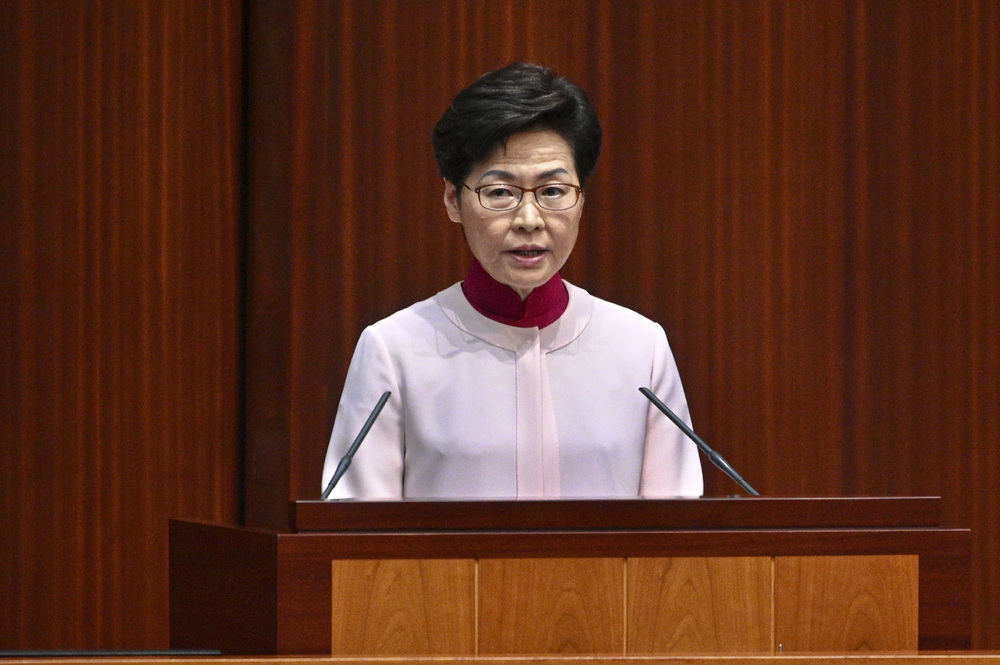
Carrie Lam outlines plans for a massive development of the northern New Territories. Sing Tao