
Read More



Night Recap - August 13, 2026
1 hour ago







HK swaps scorching sun for a rainy week, possible typhoon ahead
12-08-2026 15:08 HKT
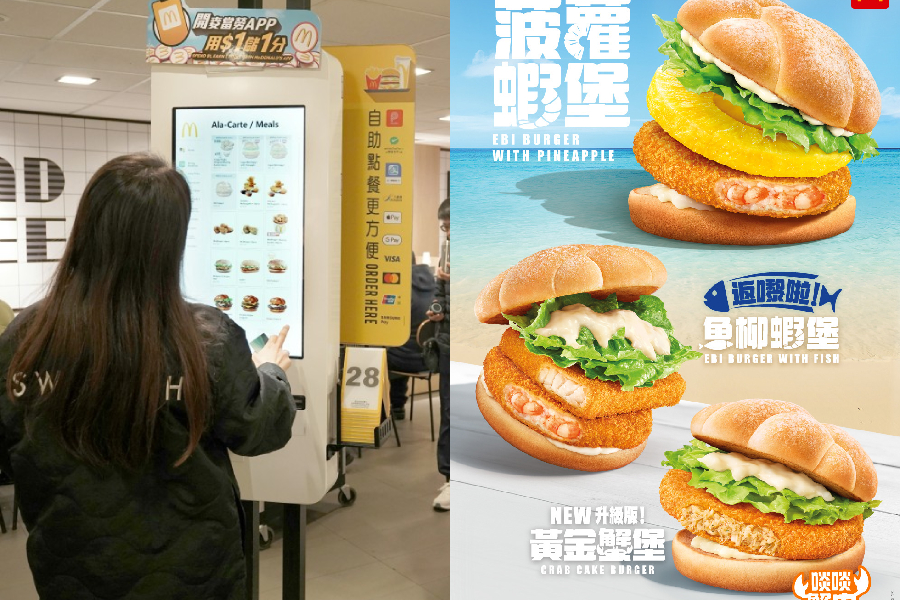
Hong Kong McDonald's has voluntarily suspended the sales of its entire shrimp burger lineup after a similar product was pulled from shelves by authorities in Taiwan due to detection of a banned antibiotic.
Customers using the local McDonald's mobile application discovered that the popular “Ebi Burger”, “Double Ebi Burger” and “Ebi Burger with Pineapple” were labeled as "currently unavailable," while newly launched crab burgers remained on sale.
The response followed news from Taiwan, where McDonald's halted two shrimp-based burgers on Wednesday after import testing detected 0.7 parts per billion of nitrofurans—a synthetic antibiotic strictly prohibited under regional food safety laws.
In a statement to Sing Tao Daily, The Standard's sister publication, Hong Kong McDonald's confirmed that its shrimp patties are sourced from a global supplier based in Thailand.
The company emphasized that the recipe and specific ingredient batches used in Hong Kong are entirely different from those distributed to Taiwan franchise locations.
However, the chain decided to initiate a "preventative suspension" of all related shrimp products immediately to alleviate public concern and ensure consumer confidence while they monitor the situation.
The chemical group in question, nitrofurans, carries significant health risks when introduced into the human food chain. Dr. Fong Lai-ying, Food Project Director of Hong Kong Food Innovation and Technology Hub, explained that the synthetic antibiotic is classified as a "Group 2B possible carcinogen" by the International Agency for Research on Cancer (IARC).
Animal studies show that its metabolites can bind to DNA, demonstrating carcinogenic properties.
Beyond cancer concerns, Dr. Fong warned that exposure can trigger allergic reactions in sensitive individuals, such as hives, skin rashes, and difficulty breathing.
Prolonged exposure or ingestion of high doses can also lead to liver and kidney toxicity, resulting in impaired organ functions.
She added that the misuse of such antibiotics in animal farming contributes to global antimicrobial resistance, driving the rise of dangerous "superbugs."
The presence of nitrofurans in processed shrimp patties typically traces back to illegal veterinary practices.
Although historically used in aquaculture to treat bacterial infections in fish and shrimp, the chemical class has been banned internationally for food-producing animals.
Despite global bans, some aquaculture farms continue to illegally add the drug to animal feed or use it as a water treatment, leaving chemical residues behind in the harvested seafood.
According to Hong Kong's *Centre* for Food Safety, there is no established safe residual level for nitrofurans, including furazolidone and nitrofurazone, in food.
Based on international guidelines from the Codex Alimentarius Commission, regulatory bodies are advised to prevent any food containing these residues from entering the market, a standard achieved by ensuring the drugs are never administered to food-producing animals.