Read More


Morning Recap - September 16, 2026
2 hours ago







Night Recap - September 15, 2026
11 hours ago




Seven arrested over Kwai Chung illegal gathering
14-09-2026 12:33 HKT


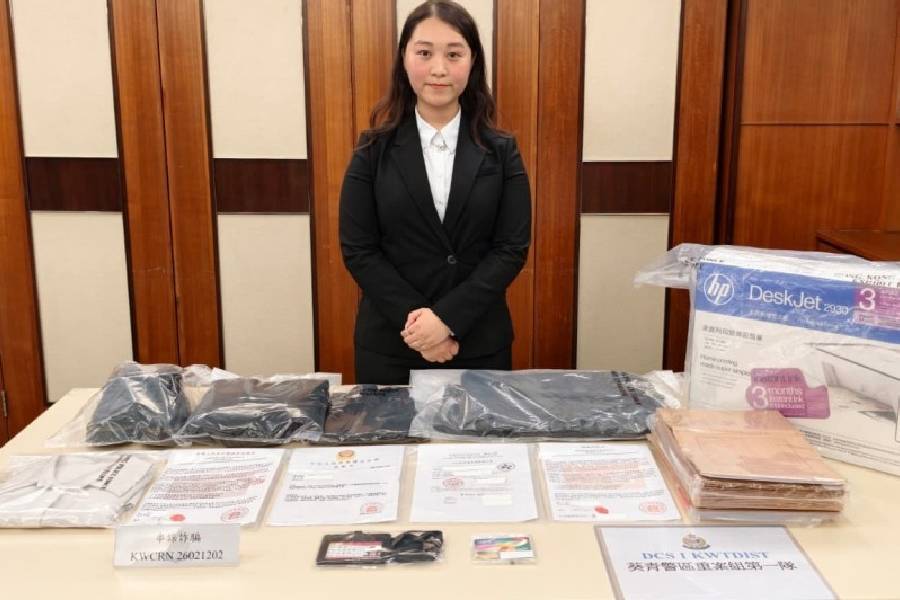
A 25-year-old mainland Chinese woman has been arrested for allegedly posing as a special investigative agent and using a fake police identification card to defraud victims.
The unemployed woman, who holds a two-way permit, is suspected of being involved in four cases of obtaining property by deception.
The total financial loss across these cases reached approximately HK$2.94 million.
A senior inspector from the Kwai Tsing police district explained that the investigation began in late July when a victim reported receiving a call from someone claiming to be a mainland law enforcement officer.
The caller falsely accused the victim of being involved in criminal activities across the border.
Eager to prove their innocence, the victim followed the scammers' instructions to report their daily whereabouts and eventually met with the arrested woman.
The victim was pressured into signing a fake non-disclosure agreement and transferred guarantee money to designated bank accounts in about ten separate transactions.
The victim only realized it was a scam after the Anti-Deception Coordination Centre intervened.
Following the initial report, regional intelligence and crime units launched a joint investigation.
By reviewing extensive security camera footage, officers successfully identified the suspect and arrested her in Yau Ma Tei shortly after.
During a search of her residence, police discovered a fake auxiliary police identification card and a printer believed to have been used to manufacture the forged documents.
Investigators suspect the woman is merely one member of a larger criminal syndicate.
Further inquiries revealed her connection to other similar scams, leading police to contact three additional victims.
While one had already reported a loss of HKk$630,000 to the Sha Tin police, the other two were entirely unaware they were being scammed until officers intervened just in time to stop their pending bank transfers.
Police detailed how the scammer used fake documents to gain the trust of victims, making them believe they were genuinely implicated in mainland crimes.
The use of fake confidentiality agreements was a calculated move to isolate the victims, preventing them from discussing the situation with others or seeking help.
Authorities strongly reminded the public that neither local nor mainland law enforcement agencies will ever request cash handovers, bank transfers, or remittances.
Anyone suspecting a scam is urged to call the anti-scam hotline for assistance. Police also reiterated that obtaining property by deception is a serious offense that carries a maximum penalty of ten years in prison.