Read More






Night Recap - September 15, 2026
8 hours ago





Seven arrested over Kwai Chung illegal gathering
14-09-2026 12:33 HKT


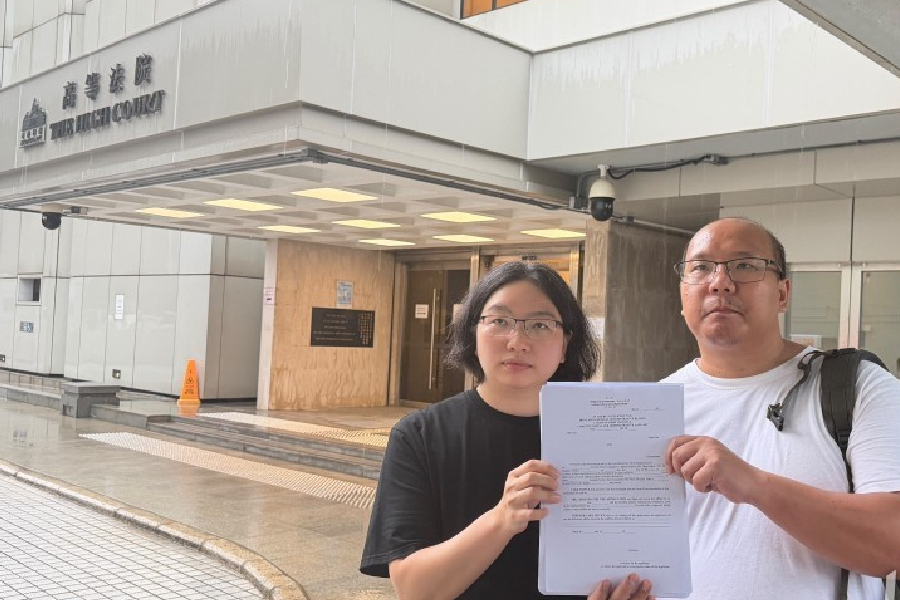
The Hong Kong parents of a child named Danny filed an application for a writ of habeas corpus at the High Court on Friday, challenging the Social Welfare Department's protective custody and strict visitation restrictions.
The father, Tsang, stated that the writ of habeas corpus is a constitutional safeguard designed to prevent citizens from being subjected to arbitrary government detention.
He questioned the department's decision to place Danny under what he described as torture-like isolation and severe contact bans, arguing that the measures violate family rights and fundamental civil liberties without sufficient evidence or professional backing.
Speaking outside the High Court, Tsang asserted that the Social Welfare Department bears the burden of proof to demonstrate that parental contact would harm the child before imposing any restrictions.
He argued that the department has failed to provide any professional medical or psychological reports to justify the separation.
He criticized authorities for limiting visits to just once or twice a week for 15 minutes per session without any reasonable explanation.
Tsang called the measure unlawful and a severe misinterpretation of the court order, which only mandated that the department arrange visits rather than prohibit them.
In addition to visitation limits, Tsang accused the department of creating an unfair legal process.
He revealed that crucial documents from professional meetings regarding the child protection order were heavily redacted with black ink, making it impossible for the parents to review the specific allegations or evidence of child neglect used against them.
Tsang said that he had challenged these redactions in court as a violation of international fair trial standards but was only told by the judge to wait 40 days to request the data under personal privacy laws.
After the long wait, the newly obtained records remained heavily blacked out, which Tsang described as an absurd basis for any judge to make a ruling.
Clarifying the nature of Friday's filing, Tsang explained that they were not submitting a standard legal appeal but were instead invoking the constitutional mechanism of habeas corpus.
While a traditional appeal disputes the legal or factual findings of a prior judgment, a writ of habeas corpus allows the court to immediately intervene and review whether an individual's detention by a government agency is legally valid and justified.
Through this review, the parents hope to prove that the state's ongoing custody of their son constitutes an unlawful deprivation of personal liberty.
Acknowledging their lack of legal representation, Tsang admitted that they do not have the financial resources to hire professional legal teams and could not guarantee that their submitted paperwork is completely free of errors.
He expressed that if the court proceeds to a hearing, they would likely face highly experienced government attorneys and risk defeat.
Rather than expecting an easy victory, Tsang stated that their primary goal in personally delivering the application is to bring the case to the public's attention and urge the government to listen to the concerns of ordinary citizens.