
Read More
About 33,000 residents have participated in a government-subsidized hepatitis B screening and care scheme since its launch in February, reaching about 10 percent of its target quota and drawing a positive response.
ADVERTISEMENT
SCROLL TO CONTINUE WITH CONTENT
Under the Primary Healthcare Commission’s Hepatitis B Co-care Scheme, family doctors provide hepatitis B risk assessments, screening, and long-term care for high-risk individuals.
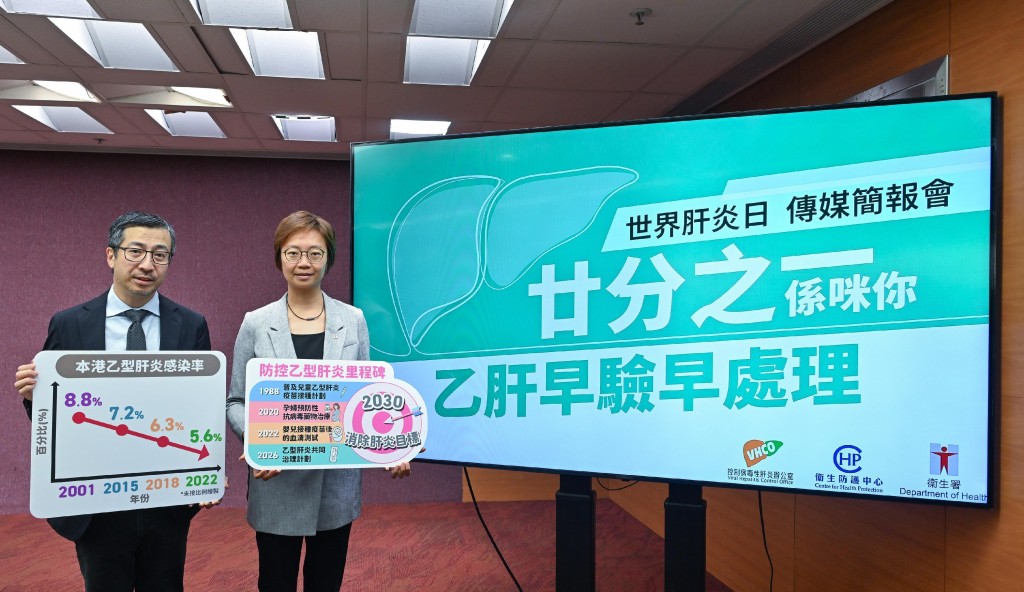
Bonnie Wong Chun-kwan, consultant of the Centre for Health Protection’s Public Health Services Branch, said that about 5.6 percent of Hong Kong’s population, one in every 20 people, has chronic hepatitis B, based on an estimate derived from the Population Health Survey 2020-22.
This leaves an estimated 410,000 people living with chronic but often “silent” infections, mostly among those born before 1988 who were not vaccinated during infancy.
The survey also found that around 40 percent of chronic hepatitis B carriers are unaware of their condition, while about 70 percent are not receiving regular medical follow-up.
Wong said that chronic hepatitis B can remain asymptomatic for years, yet 15 to 40 percent of untreated cases may progress to liver cirrhosis or liver cancer.
Liver cancer is currently the city’s third most deadly cancer, claiming around 1,400 lives annually.
She urged people in high-risk groups, including those born before 1988 or individuals with family members or sexual partners who are infected, to get tested to ensure early detection and treatment.
She added that current antiviral medications are safe and effective for long-term use to suppress the virus and significantly reduce the risk of cirrhosis and liver cancer.