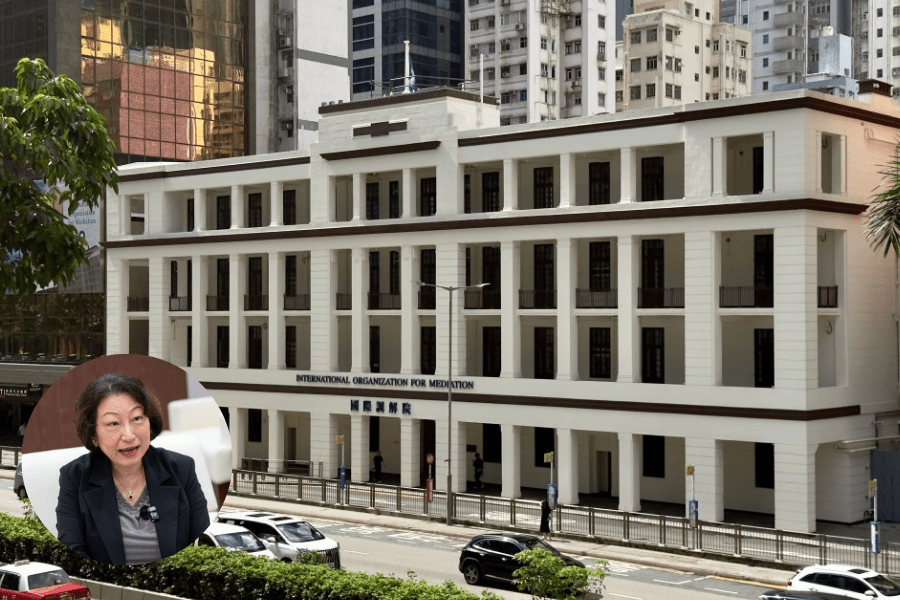
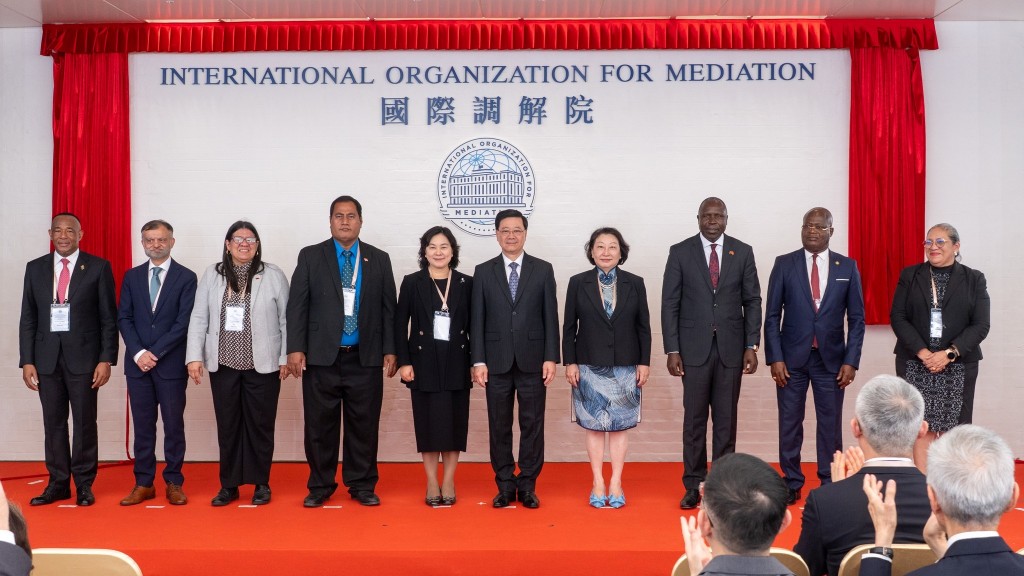
The International Organization for Mediation is exploring the expansion of its services into emerging fields, including the space economy, after successfully resolving its first maritime dispute, Secretary-General Teresa Cheng Yeuk-wah said.
Speaking on a radio program on Sunday morning, Cheng said the number of signatory states had risen from 37 to 46 since the organization was launched last October, while the number of contracting states had doubled from eight to 16.
Citing confidentiality and without-prejudice principles, Cheng said she could disclose only limited details about the settled case, with the consent of the parties involved.
The dispute concerned a charter-party chain involving a Chinese company and a Singaporean company.
Although Singapore has not joined the IOMed, Cheng said the case showed that companies from non-member states could still use its mediation services if both parties agreed.
She added that the settlement demonstrated Hong Kong’s potential as a secure and resilient alternative to London for resolving maritime disputes.
Cheng said Hong Kong’s position as an international legal and dispute resolution center would continue to strengthen as more businesses and jurisdictions became familiar with the IOMed’s work.
To promote mediation services, the organization has adopted what Cheng described as a “going out and bringing in” strategy. Its representatives have engaged with government officials and businesses in Riyadh, Dubai, Algiers, Rabat and Vienna, while also receiving overseas delegations in Hong Kong.
Following the Global Mediation Summit in May and its first online state-to-state training session in June, another online session is scheduled for November. In-person workshops will also be held in Hong Kong later this year.
With the government planning to establish the Hong Kong International Commercial Court alongside the city’s existing legal framework, Cheng said Hong Kong was developing a “one-stop” dispute resolution mechanism integrating mediation, arbitration and litigation.
Apart from a “mediation-first, arbitration-later” approach, parties may introduce mediation at any stage of arbitration proceedings or seek court assistance with enforcement, giving clients greater flexibility.
Looking ahead, Cheng said the IOMed was studying dispute resolution mechanisms for emerging sectors, including commodity markets and the space economy. A dedicated committee may also be established to examine disputes arising in these new areas.