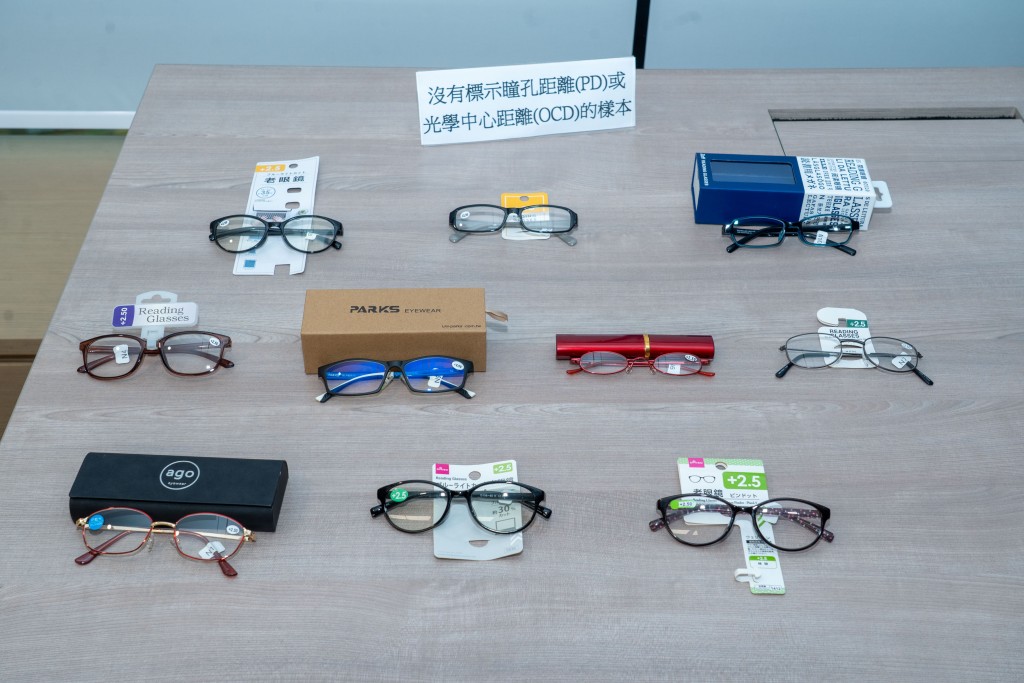
The Consumer Council has found that many ready-made reading glasses on the market lack sufficient labeling, with four models exceeding the standard limit for horizontal prismatic power.
The watchdog tested 17 models of off-the-shelf reading glasses and found that all performed well in safety and durability tests, including mechanical strength, resistance to ignition and nickel release.
However, most samples failed to provide the labeling and warning statements required under European standards. Ten models did not state the applicable pupillary distance, making it difficult for consumers to choose glasses suitable for their eyes.
Among the seven models that did indicate pupillary distance, four exceeded the horizontal tolerance of prismatic power. The council said the results were unsatisfactory, as excessive prismatic power may cause prism effects.
Such effects may force the eye muscles to work continuously to compensate for image deviation. Prolonged use could lead to severe eye fatigue, eye discomfort, headaches and even double vision.
The council also found that many samples only carried power information on stickers attached to the lenses, which could easily fall off. Some products also failed to state that the glasses were not suitable for distance vision or for use while driving.
The watchdog urged manufacturers to improve product labels and user instructions.
It also reminded consumers that ready-made reading glasses usually have the same lens power on both sides. They may not be suitable for people whose two eyes require different prescriptions.
Consumers were advised to have their eyes checked by a registered optometrist or other qualified eye-care professionals before buying reading glasses, so they can better understand their vision needs.