While Bluetooth trackers promise a convenient way to find lost items, the Consumer Council on Thursday has revealed that their performance may be less reliable than expected.
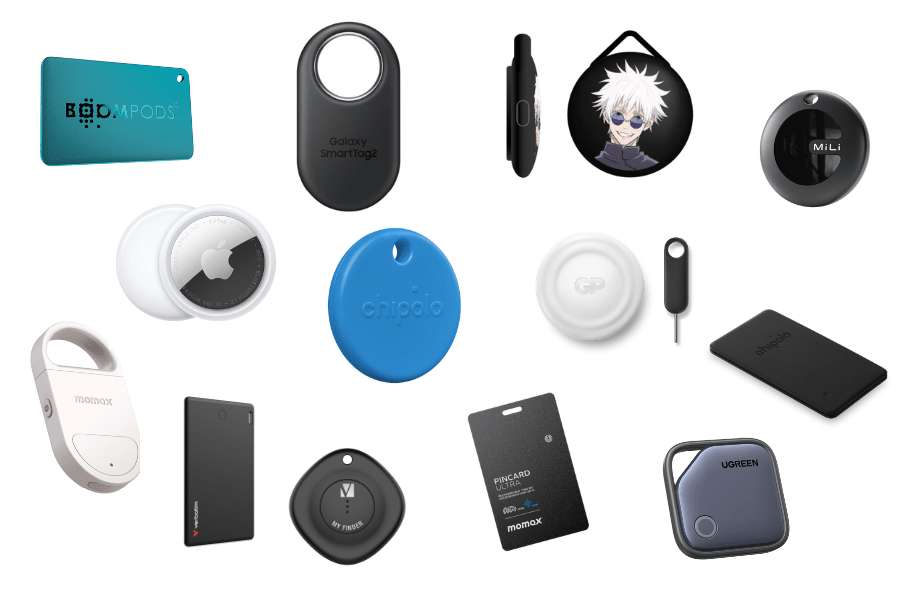
In its first-ever test of such gadgets, the watchdog examined 14 popular models, including the Apple AirTag and Samsung Galaxy SmartTag2, with all samples scoring a mediocre 3 to 3.5 out of 5 for overall performance.
The test assessed position tracking, notification functions, design, and usability.
Notably, six of the corresponding applications were also evaluated for data security.
Better accuracy in the city
In real-world simulations across various environments—from busy city centers to hiking trails—all samples demonstrated weak tracking performance, scoring only 1.5 to 2 points. The council noted a significant time lag in location updates.
However, it stated that factors such as the surrounding environment, app design, the number and distribution of nearby smart devices, and the situation of the tracker itself could affect accuracy.
While trackers performed better in densely populated urban areas when stationary, their accuracy dropped significantly in less populated areas or on moving public transport.
Slow reaction over anti-loss alerts
Although most samples feature an anti-loss alert to notify users when a tracker goes beyond Bluetooth range, the function was found to be slow, with most taking three to five minutes to issue a notification.
Last known location performed satisfactorily
On a positive note, all samples performed satisfactorily in recording the "last known location," providing a crucial clue for users trying to retrace their steps.
Despite the "lost mode" feature that allows owners to store contact details on the tracker via the app when an item goes missing, it was pointed out that the feature only works if the finder knows how to use near-field communication (NFC), limiting its effectiveness.
Design and features varied among models
Notably, all samples were found varied in design and features, with three samples scoring 4.5 points.
The Boompods Boomcard and Samsung Galaxy SmartTag2 offered longer effective Bluetooth ranges, while the Momax Pin Buzz had the loudest buzzer for locating items by sound.
Meanwhile, Chipolo Card Spot has raised environmental concerns over its disposability after the battery dies.
The GP eTag Smart Tracker also scored poorly due to its short effective Bluetooth range.
Product usability
As for usability, most users found the trackers reasonably convenient to operate, with scores ranging from 3.5 to 4.5 points.
Among the samples, the Apple AirTag (both first and second generations) does not come with a built-in hole or loop, requiring consumers to buy an additional accessory to attach it to keychains or bags—an extra expense and inconvenience.
Additionally, changing batteries on the GP eTag Smart Tracker and Samsung Galaxy SmartTag2 was rated as "not very easy."
Buying tips for Bluetooth trackers
To assist consumers in finding the most suitable tracker, the council offered several key considerations.
Shoppers should first check for device compatibility to ensure the tracker works with their smartphone's operating system.
In a densely populated city, it is also beneficial to choose a product with a broader user network to increase the success rate of locating items.
Furthermore, the design should be chosen based on the item being tracked—for instance, card-shaped trackers fit well in wallets, while water-resistant models are good for outdoor items.
Finally, consumers should check whether the battery is replaceable or requires recharging to avoid future inconvenience.