
Read More
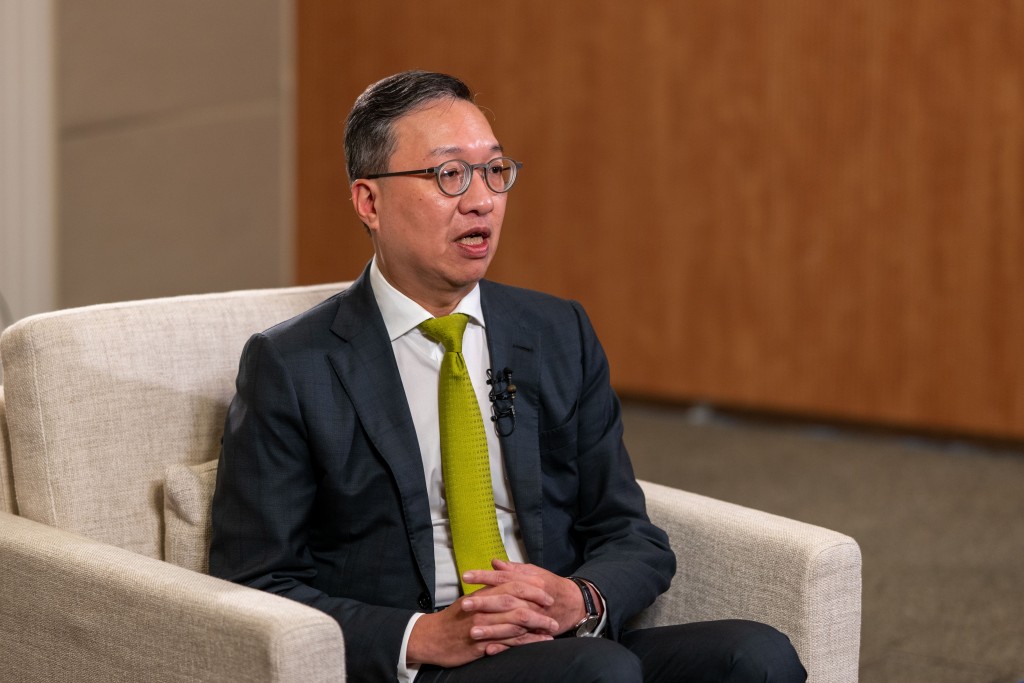
Secretary for Justice Paul Lam Ting-kwok said Hong Kong has clear advantages in the development of space law, as the country’s aerospace sector continues to make breakthroughs and demand for related legal services grows.
ADVERTISEMENT
SCROLL TO CONTINUE WITH CONTENT
Speaking at an international law forum, Lam said the public’s understanding of the space industry has increased significantly following recent advances in the national space program, particularly the participation of Hong Kong astronaut Lai Ka-ying in the Shenzhou-23 mission.
He said the space industry is no longer distant from everyday life, as the development of satellites and other space-related technologies has made demand for legal services in the field increasingly urgent.
Lam noted that the country’s 15th Five-Year Plan attaches importance to space development, adding that Hong Kong, as part of the country, has both opportunities and responsibilities in the sector.
He said Hong Kong has several strengths that can support the development of space law. Local universities have demonstrated capabilities in aerospace hardware research and development, including the Tianyun Camera developed under the lead of the Hong Kong University of Science and Technology, which Lai is expected to operate as part of her mission.
Lam added that Hong Kong’s common law system, international arbitration advantages and the establishment of the International Organization for Mediation headquarters in the city can help provide effective dispute resolution services for space-related matters.
He also pointed to the Hong Kong International Legal Talents Training Academy, saying the city is well placed to nurture legal professionals with the expertise needed for emerging areas such as space law.
Deputy Commissioner Zhang Changwei of the Office of the Commissioner of the Ministry of Foreign Affairs in Hong Kong said at the same forum that, with the country’s support, Hong Kong can provide flexible financing channels for global space start-ups and develop tailored space insurance and risk management products.
Zhang said the city can also serve as an international hub for space cooperation, helping mainland commercial space companies connect with global markets while attracting international non-governmental space organizations to set up a presence in Hong Kong.
He added that Hong Kong could play a role as a mediator in space-related disputes.
Zhang projected that China’s commercial space market would reach 3.5 trillion yuan this year, saying the country places international cooperation in space among its priorities.
He said China supports the United Nations Committee on the Peaceful Uses of Outer Space as a key platform for addressing challenges such as space debris and orbital congestion, so as to ensure the sustainable development of space activities.
Zhang also said strengthening the rule of law in space requires the proper interpretation of existing rules and their application to new and emerging areas.