Read More
The new movie censorship regulatory framework "chips away" at the city's "dwindling status as an Asian film hub," says a Hongkonger who studied film in the United States.
ADVERTISEMENT
SCROLL TO CONTINUE WITH CONTENT
The Film Censorship Ordinance announced on Tuesday will give more legal power to the Film Censorship Authority to censor films that are "contrary to the interests of national security."
The bill will be gazetted tomorrow and tabled in the Legislative Council on Wednesday for the first and second readings.
Speaking to The Standard anonymously, the fresh film graduate said she is disappointed with the proposed amendment as a retroactive ban on films and the vague interpretation in the proposed new law could result in the loss of meaningful cultural works.
"That is a huge blow to an industry already in decline," she said.
Under the amendment, the chief secretary for administration could direct the censorship authority to revoke approval previously issued for films if their exhibition would be contrary to the interests of national security.
The film graduate said the increasingly narrow media landscape in Hong Kong was part of the reason that made her decide to study film overseas.
"Creativity was lackluster and the opportunities were scarce," she said. She added that the stiffer penalties in the amendment could create a negative climate that keeps budding artists on their toes.
"I couldn't have asked for a clearer signal that I made the right choice four years ago in deciding to take my creative studies abroad," she said.
The government proposed raising the maximum penalty for exhibiting films that are not approved to three years in jail and a fine of HK$1 million, from one year and HK$200,000.
"Events in the past months suggest that any influential medium would be subject to heavy scrutiny under the [security law]," the film graduate said.
Mabel Cheung Yuen-ting, a film writer and director, said on a radio program she does not believe the local film industry would have any intention to endanger national security. She added they are concerned the amendment would cause films to be stuck in the review process indefinitely.
Cheung said it is unclear how many times authorities could grant an extension for movie assessment as the amendment states that the secretary for commerce and economic development may grant an extension up to 28 days each time.
No method has been set to appeal for films that would be revoked for being contrary to the interests of national security, she said.
The film sector could conduct a judicial review for the revoked decision but it would take a long time and cause the film to miss the premiere, she said.
Kenny Ng Kwok-kwan, associate professor at the Academy of Film in Baptist University, said on the same program the term "contrary to the interests" is broader than "endangering" national security.
He added the red line for what is contrary to the interest of national security is blurry and that the amendment could cause a chilling effect to the sector.
But pro-Beijing legislator Ma Fung-kwok of the sports, performing arts, culture and publication sector said on another radio program that the amendment would provide more assurance to the industry.
maisy.mok@singtaonewscorp.com
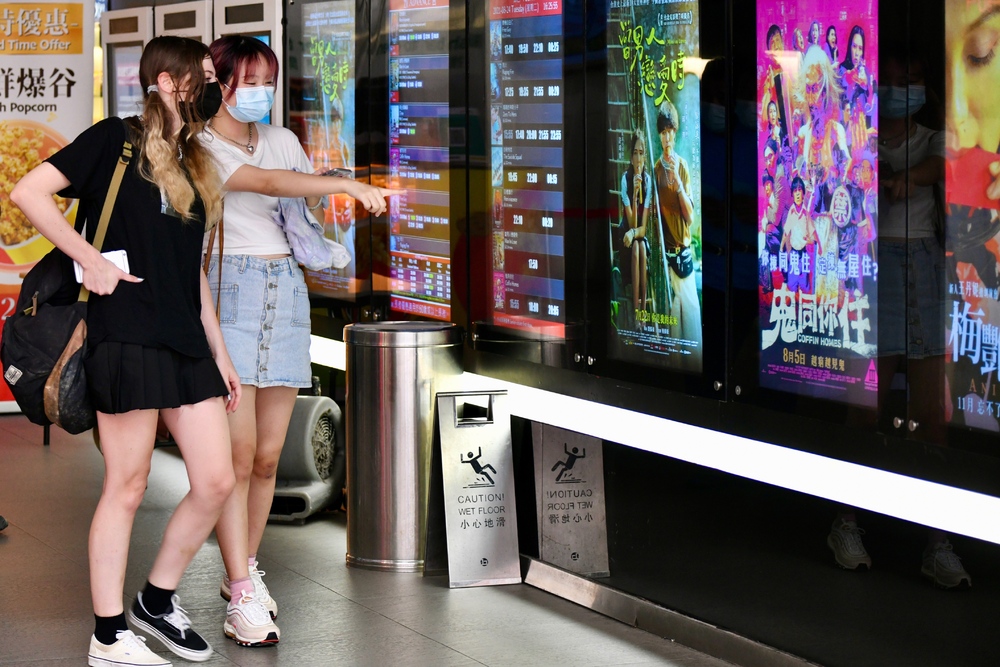
Among the top concerns of insiders is that films could be stuck indefinitely in the review process. Inset: Mabel Cheung and Kenny Ng. SING TAO