
Read More
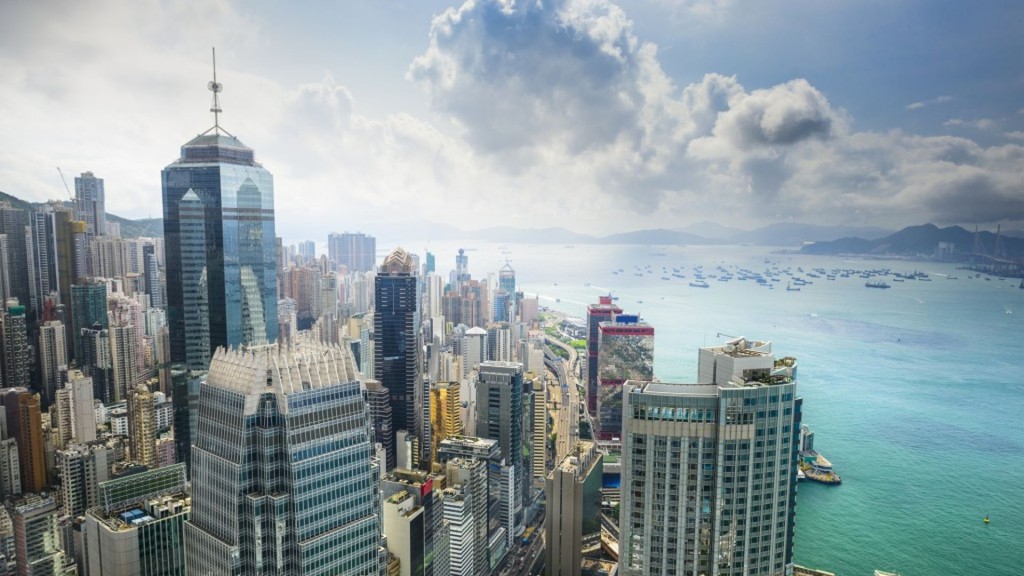
Meteorologists are urging Hong Kong residents not to let their guard down as a strong El Niño pattern shapes up in the Pacific, warning that while fewer storms may head toward the city, any that do make landfall could carry unprecedented destructive power.
ADVERTISEMENT
SCROLL TO CONTINUE WITH CONTENT
The U.S. National Oceanic and Atmospheric Administration (NOAA) recently estimated a 63 percent chance that a "super El Niño"—potentially the strongest on record—will develop by the end of this year. Traditionally, a powerful El Niño pushes typhoon formation further east into the Pacific.
This shift typically causes storms to veer north toward Japan and Taiwan rather than entering the South China Sea, leaving Hong Kong relatively unscathed.
This trend appears to be playing out already, with two active tropical cyclones, Mekkhala and Higos, currently projected to bypass Hong Kong entirely as they steer toward the Ryukyu Islands and the seas south of Japan.
However, local experts warn against relying on a single climate phenomenon to predict the season's safety.
Leung Wing-mo, spokesperson for the Hong Kong Meteorological Society and former assistant director of the Hong Kong Observatory, explained that while El Niño is a major driver, it is only one of many complex factors influencing storm activity.
He anticipates that Hong Kong will experience higher-than-average annual rainfall and warmer overall temperatures, but expects the total number of typhoons threatening the territory to remain near normal.
Historically, the relationship between El Niño and Hong Kong’s storm frequency is nuanced.
During the last major El Niño event in 2023, the city was battered by Super Typhoon Saola, which triggered a rare Hurricane Signal No. 10, and was subsequently drenched by a historic deluge dubbed a once-in-five-hundred-years rainstorm.
Observatory statistics confirm that while Hong Kong sees significantly fewer storms during El Niño years compared to La Niña years, the numbers are virtually identical to normal, neutral climate years.
The real danger for Hong Kong during an El Niño year lies in storm intensity rather than frequency. Because these typhoons spawn much further east in the Pacific, they spend far more time traveling over warm ocean waters before reaching land.
This extended journey gives them ample time to feed on ocean heat and intensify into exceptionally powerful super typhoons.
While neighboring regions like Taiwan and Japan face a higher statistical probability of being struck this year due to the northern-veering paths of these storms, Hong Kong remains vulnerable.
If a highly developed, ultra-strong typhoon does track directly toward the southern Chinese coast, the resulting damage could be catastrophic.
The Hong Kong Observatory currently projects that four to seven tropical cyclones will come within five hundred kilometers of the city this year, and forecasters will continue to monitor whether the strengthening El Niño will require further adjustments to these estimates.