
Read More
Hong Kong has officially overtaken Switzerland to become the world’s leading offshore wealth management hub, bolstered by a massive influx of private capital and landmark strategic backing from Beijing’s national development plan. The milestone coincides with a highly successful trade mission led by Chief Executive John Lee to Central Asia, which yielded nearly one hundred cooperative agreements worth upwards of $1.65 billion.
ADVERTISEMENT
SCROLL TO CONTINUE WITH CONTENT
A historic shift in global wealth
According to the latest Global Wealth Report released by the Boston Consulting Group (BCG) in late May, Hong Kong’s cross-border wealth management scale surged by over ten percent year-on-year to reach US$2.95 trillion, securing the top spot globally. Financial experts and international media have described the achievement as a historic power shift toward the East. Industry analysts project that Hong Kong's lead will continue to widen over the coming years, with its annual growth rate expected to outpace Switzerland’s significantly through the end of the decade.
The city's rapid rise is largely driven by proactive local policies designed to attract high-net-worth individuals. Local authorities successfully met their target of attracting at least two hundred family offices well ahead of schedule, with thousands of single-family offices now established in the city. Additionally, a newly launched investment immigration program has already drawn thousands of applications, translating into billions of dollars in projected capital inflow.
Beijing Backing and Regulatory Optimizations
The central government has provided strong strategic reassurance by explicitly pledging support for Hong Kong’s asset and wealth management sectors in its latest national five-year development blueprint. Local financial officials have emphasized that the city will continue to leverage its unique positioning under the one-country, two-systems framework, offering a stable and transparent economic environment. To maintain this competitive edge, the local administration plans to introduce legislative proposals aimed at optimizing tax structures for investment funds, family offices, and carried interest, ensuring the city remains an attractive destination for international capital.
Central Asian trade mission yields multibillion-dollar results
Building on its financial momentum, the local government has actively pursued new international markets.
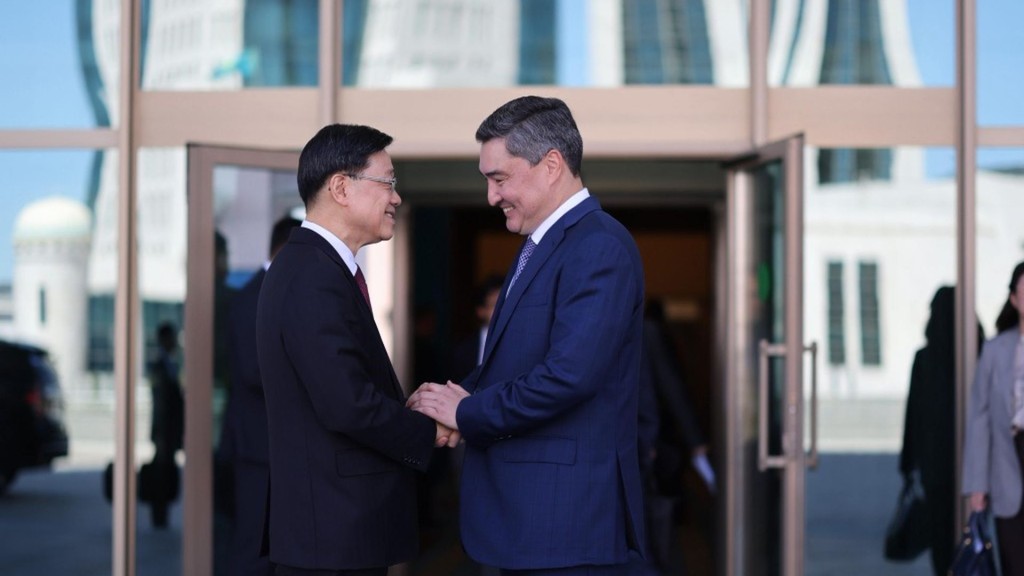
The Chief Executive recently led a high-powered business delegation composed of dozens of business representatives and professionals from both Hong Kong and mainland China to Kazakhstan and Uzbekistan. The historic visit aimed to explore new trade and investment opportunities under the Belt and Road Initiative.
The trade mission concluded with major breakthroughs, securing nearly one hundred agreements and memorandums of understanding across sectors such as aviation, trade, technology, and green energy. Beyond financial transactions, the diplomatic trip established stronger governmental ties, with Uzbekistan agreeing to set up a consulate general in Hong Kong.
The delegation also facilitated enhanced travel convenience, including plans to launch direct flights to Kazakhstan early next year, initialed civil aviation agreements, and extended visa-free travel periods.
On the cultural front, major museums in Hong Kong and Uzbekistan established new partnerships to promote cultural exchange. Local leaders emphasized that these achievements demonstrate Hong Kong's valuable role as a super-connector and super-value-adder, linking mainland China with vital emerging markets in Central Asia.
Eight major outcomes of the Chief Executive’s mission to Central Asia
1. Establishing high-level government contacts and connections
Consensus was reached on cooperation across multiple fields, and Uzbekistan will establish a Consulate General in Hong Kong.
2. Signing multiple agreements
A total of 96 agreements and memorandums of understanding (MoUs) were concluded—covering business, education, finance, and technology—with a total value exceeding US$1.65 billion.
3. Launching bilateral agreement negotiations
Both governments agreed to initiate negotiations on cooperation frameworks across various sectors.
4. Deepening industrial alignment
Project matching and scientific research cooperation will be significantly strengthened.
5. Serving as a platform for going global
Marking the first overseas mission of the special delegation for mainland enterprises "going global," a total of 81 cooperative agreements were secured.
6. Enhancing the convenience of personnel exchanges
Direct flights to Kazakhstan are set to launch in the first quarter of next year, a civil aviation transport agreement has been initialed, and the mutual visa-free entry period will be extended to 30 days.
7. Promoting cultural and people-to-people exchanges
The Hong Kong Palace Museum and the State Museum of History of Uzbekistan have established a partnership to co-organize exhibitions.
8. Committing to hub-to-hub cooperation
Both sides agreed to expand regional cooperation space, drive high-quality development, and increase high-level reciprocal visits.