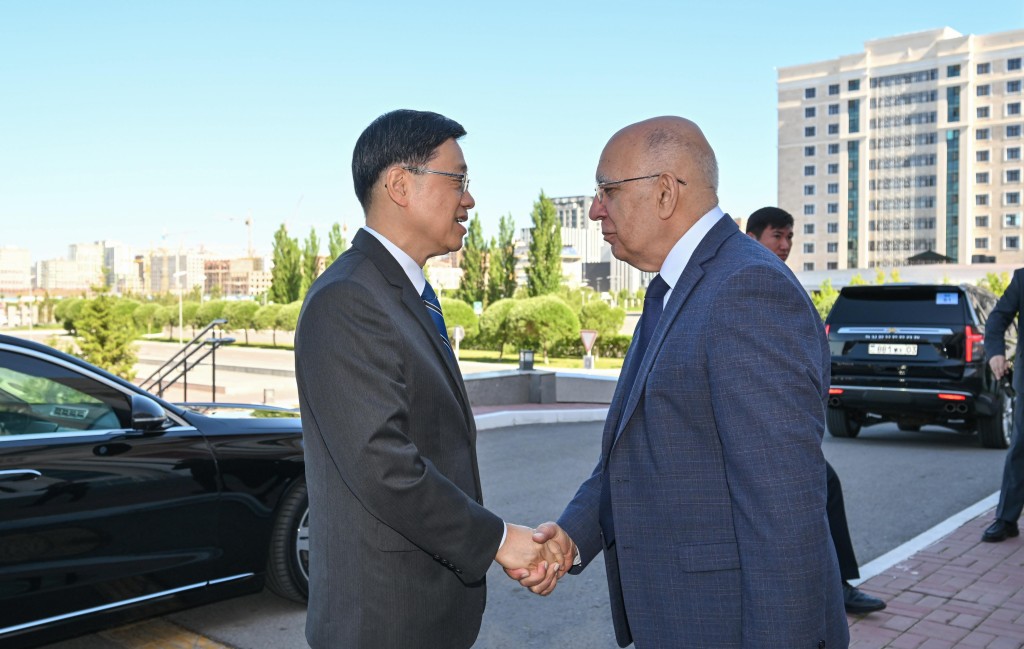
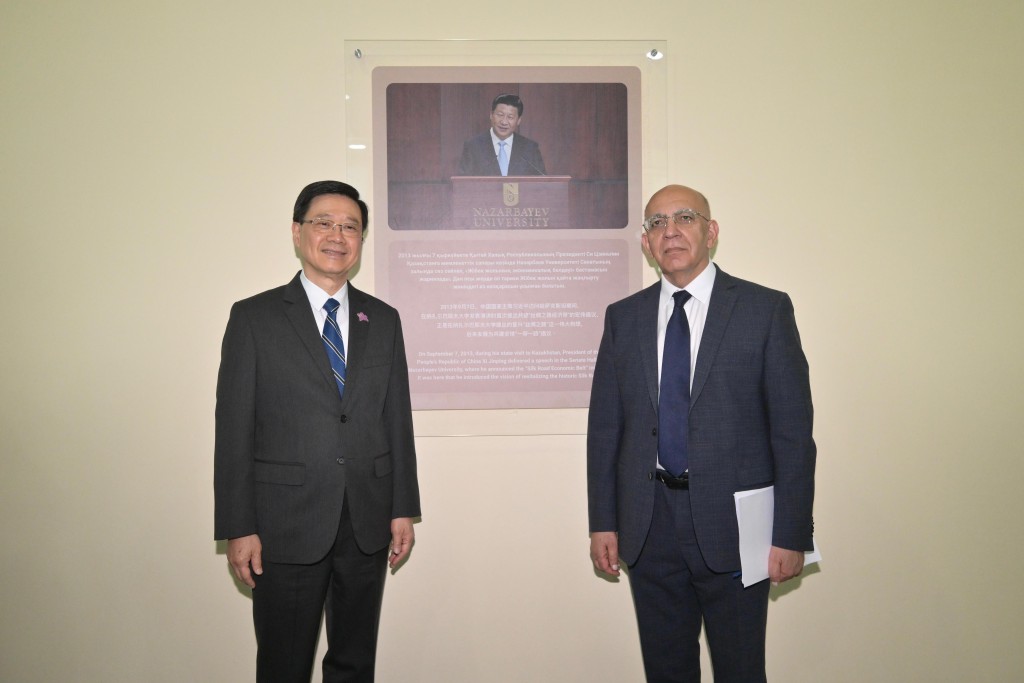
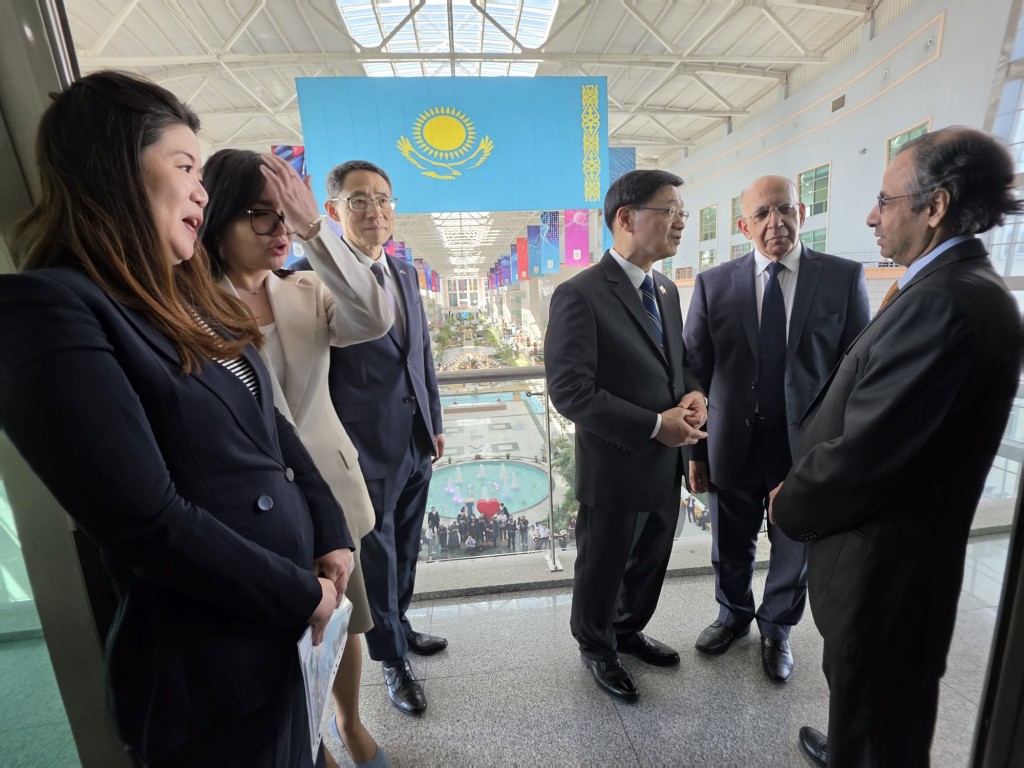
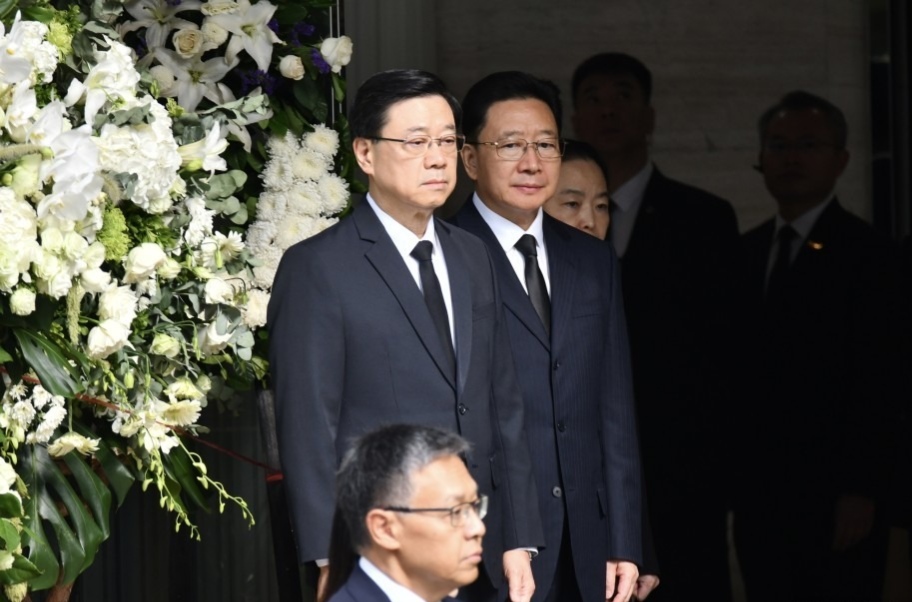
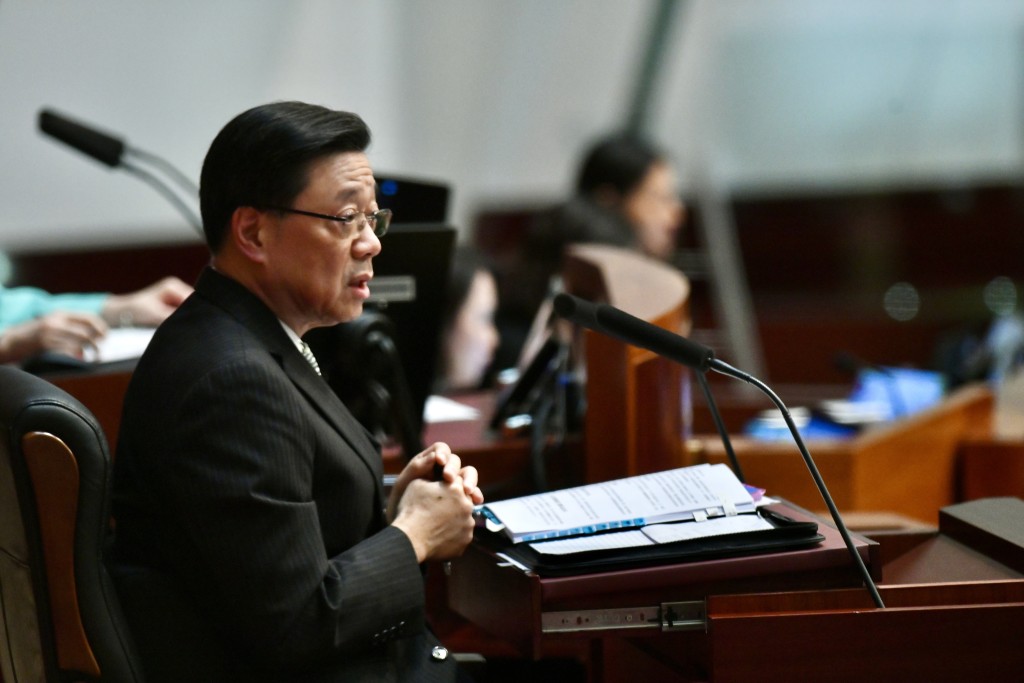
Lee (left) meeting with the President of Nazarbayev University, Professor Waqar Ahmad (right)
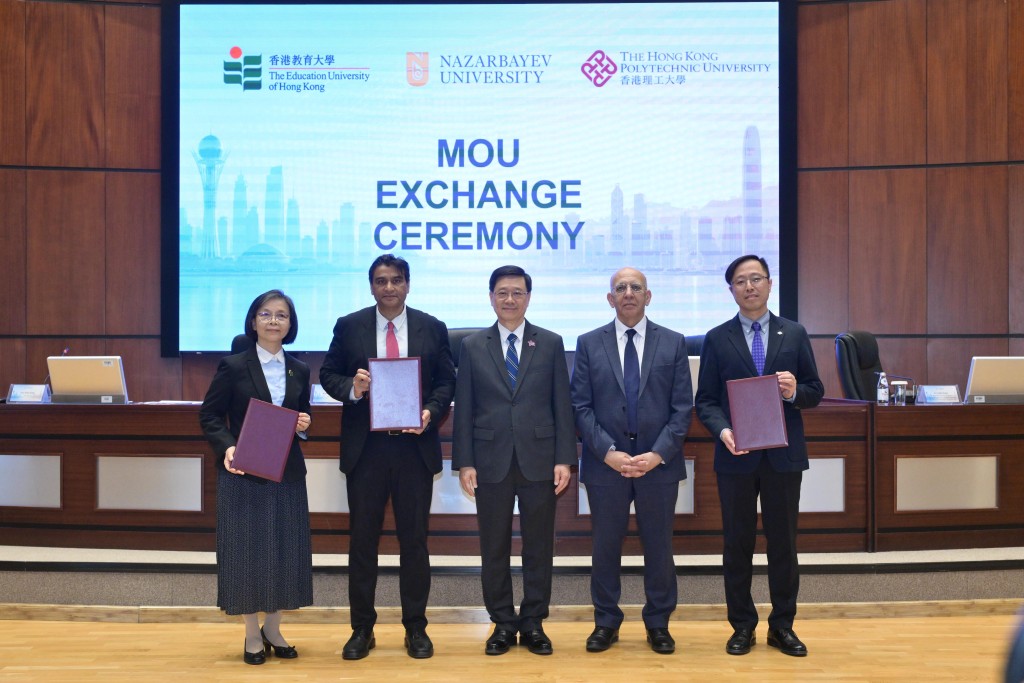
Chief Executive John Lee Ka-chiu described Hong Kong as an ideal partner for academic exchanges after the Education University of Hong Kong and the Hong Kong Polytechnic University signed memoranda of understanding with Nazarbayev University in Kazakhstan on Wednesday.
ADVERTISEMENT
SCROLL TO CONTINUE WITH CONTENT
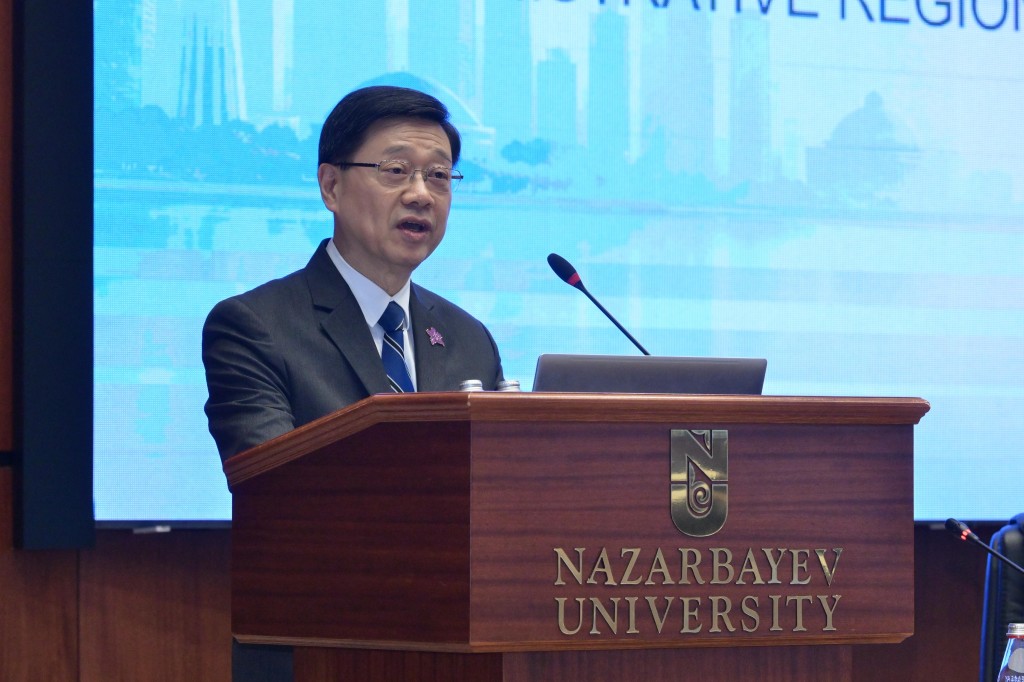
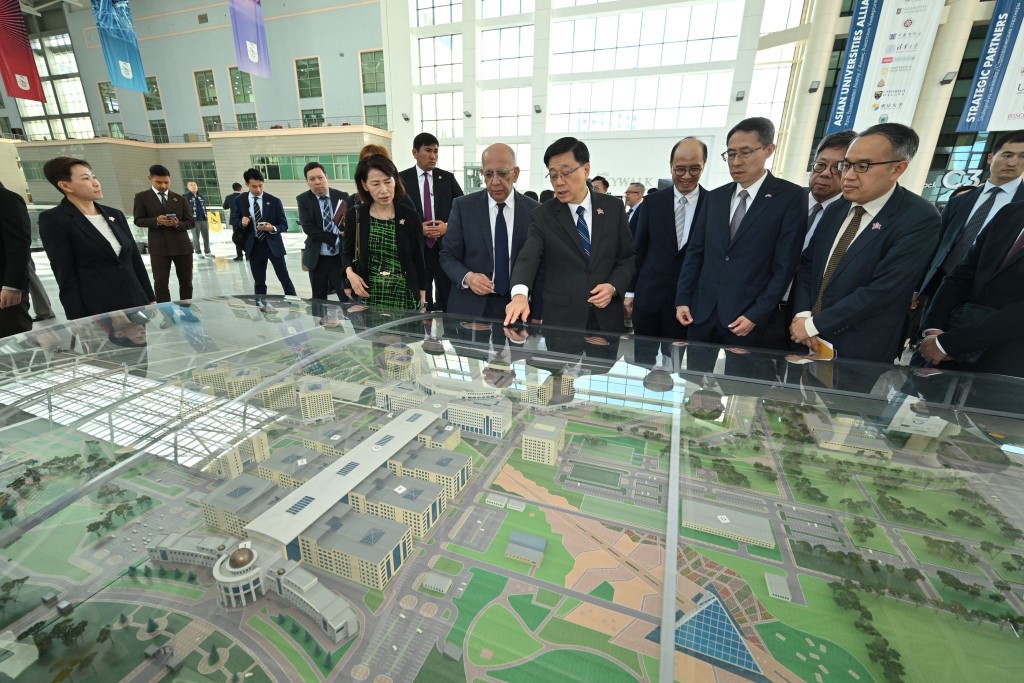
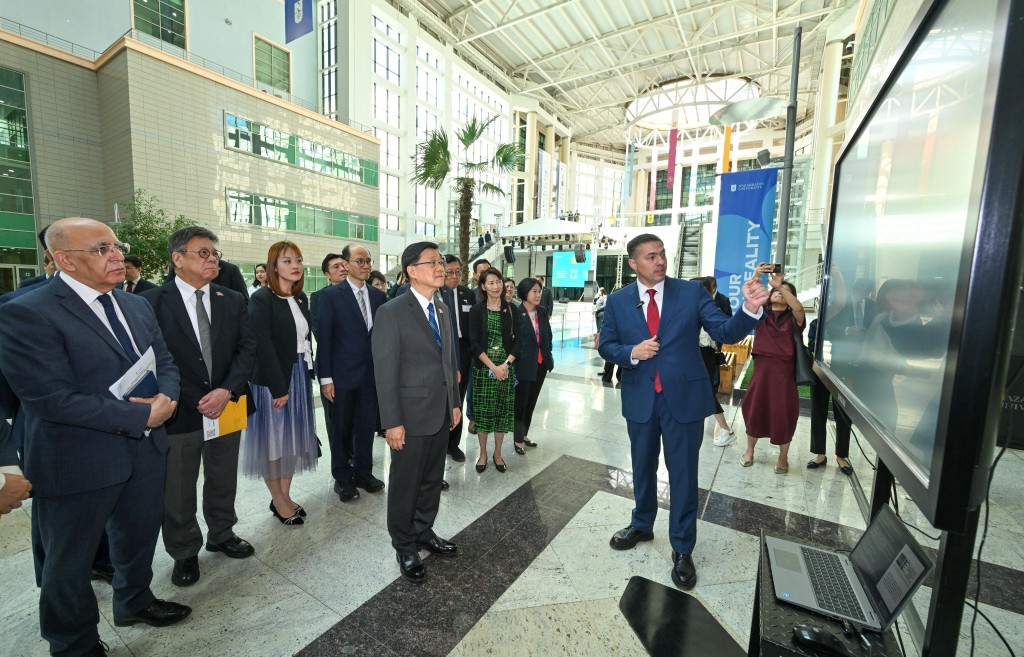
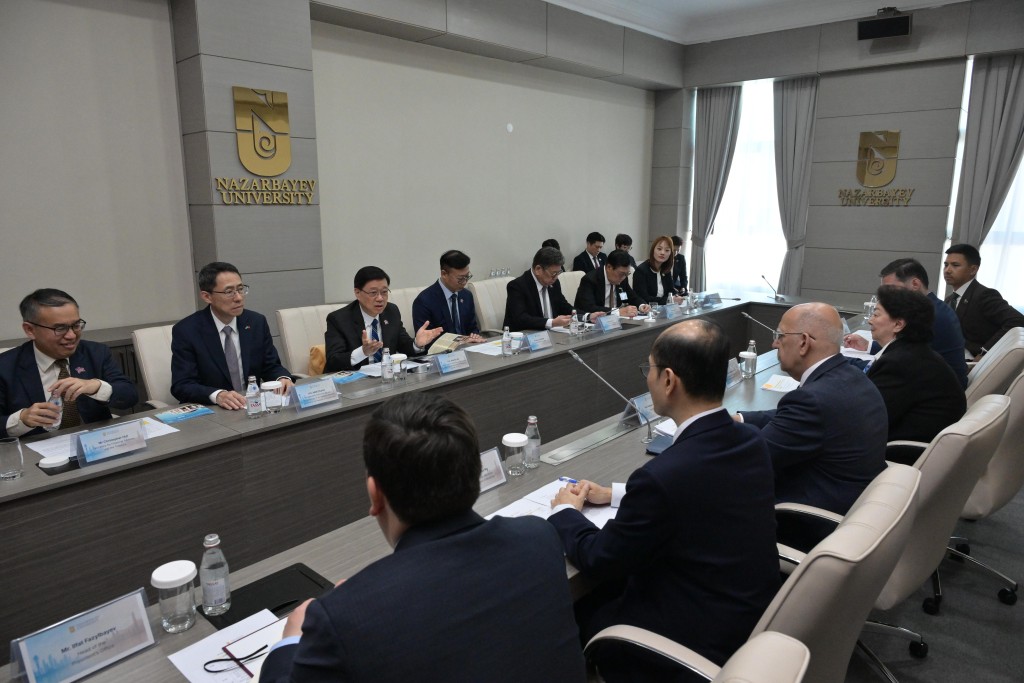
On the final day of his visit to Kazakhstan, Lee visited Nazarbayev University, where he met its president, Professor Waqar Ahmad, to exchange views on strengthening cooperation in higher education between the two places. The university is the site where Chinese President Xi Jinping first proposed the joint building of the Silk Road Economic Belt in 2013, marking the significant genesis of the Belt and Road Initiative.
Lee also witnessed the exchange of memoranda of understanding and cooperation agreements between Nazarbayev University and Hong Kong higher education institutions.
He noted that Hong Kong is the only city in the world with five universities ranked among the global top 100. He said cooperation between the two Hong Kong universities and Nazarbayev University would foster exchanges between the people of Hong Kong and Kazakhstan, while building long-term partnerships.
Lee said Hong Kong, like Kazakhstan, is an active participant and beneficiary of the Belt and Road Initiative.
Under “one country, two systems,” Hong Kong plays the role of a “super connector,” he said, adding that everything the city does brings added value to cooperating economies, enterprises and institutions.
“I wish for the cooperative relationship between Hong Kong and Kazakhstan to grow stronger year by year,” Lee said.
+1
Lee said the city is moving forward with major initiatives, including the construction of the Northern Metropolis University Town, the promotion of the “Study in Hong Kong” brand, and the introduction of the Belt and Road Scholarship.
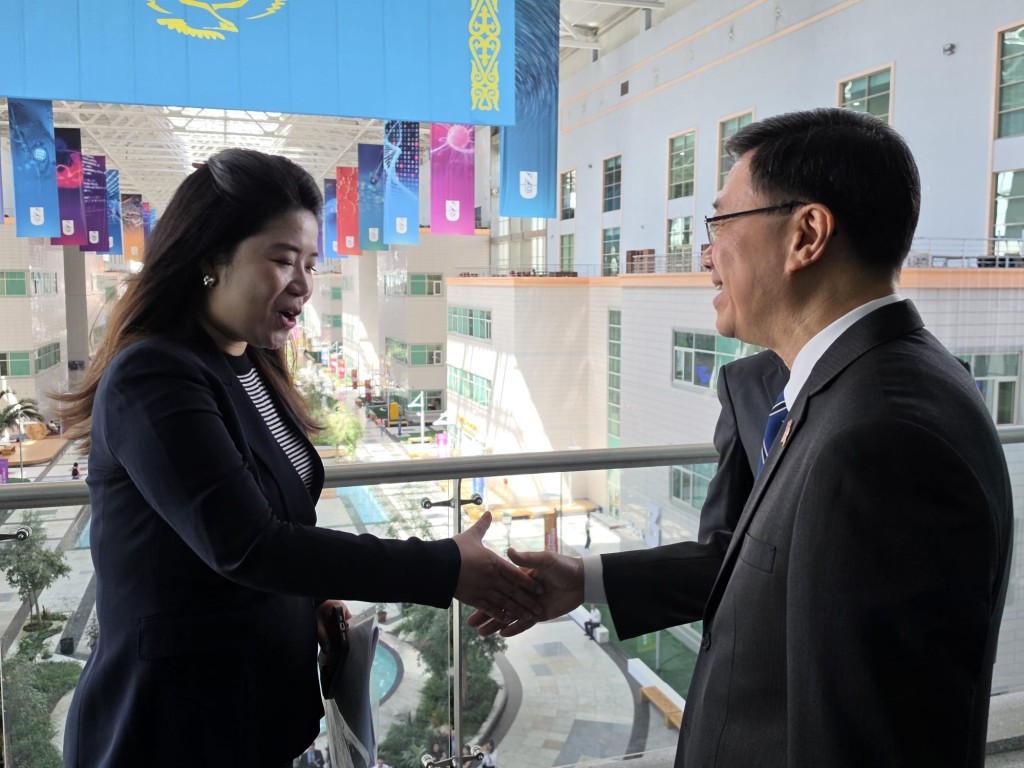
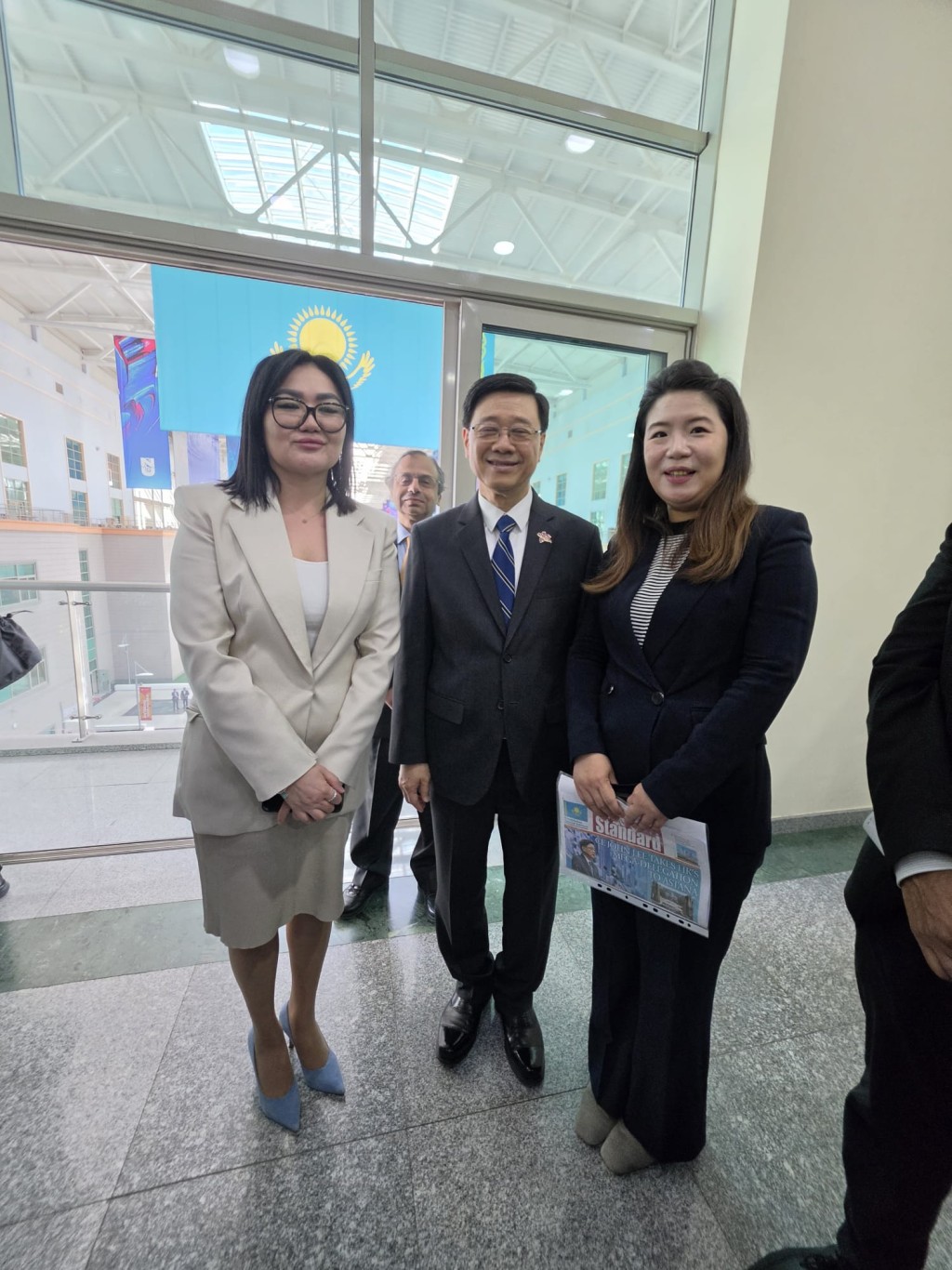
Lee also chatted with professor Annie Ng from Hong Kong, who is serving as an associate professor at Nazarbayev University’s School of Engineering and Digital Sciences. She relocated to Kazakhstan eight years ago after being awarded over US$2 million (HK$15.6 million) in research funding.
Ng highlighted the international atmosphere at the university, noting that the School boasts students from 60 countries, including India, Iran, Israel, and Pakistan. The diverse environment, she says, fosters collaboration and harmony among students and faculty.
She was long-overdue for Lee’s visit and felt excited to meet him in person. Ng believes the cooperation built during Lee’s visit could encourage people from Hong Kong to explore and pursue opportunities in Kazakhstan, especially as the country plays a key role in the Belt and Road Initiative.
Lee described Ng as a prime example of the bridge being built between Hong Kong, Kazakhstan, and the wider Central Asian region, expressing hope that more Hongkongers would follow in her footsteps.
Abid Nadeem, another associate professor at the university’s School of Engineering and Digital Sciences for 12 years, said the opportunities in Kazakhstan rival those in Hong Kong. He has since made Kazakhstan his permanent home along with his family.
Nadeem said he is a The Standard reader and keeps himself updated with Hong Kong affairs by reading the news.
Around 500 students from Kazakhstan are studying in Hong Kong, making them one of the largest groups among the city’s Belt and Road student community. Lee extended a warm welcome to more Kazakhstani students, encouraging them to pursue opportunities in Hong Kong.
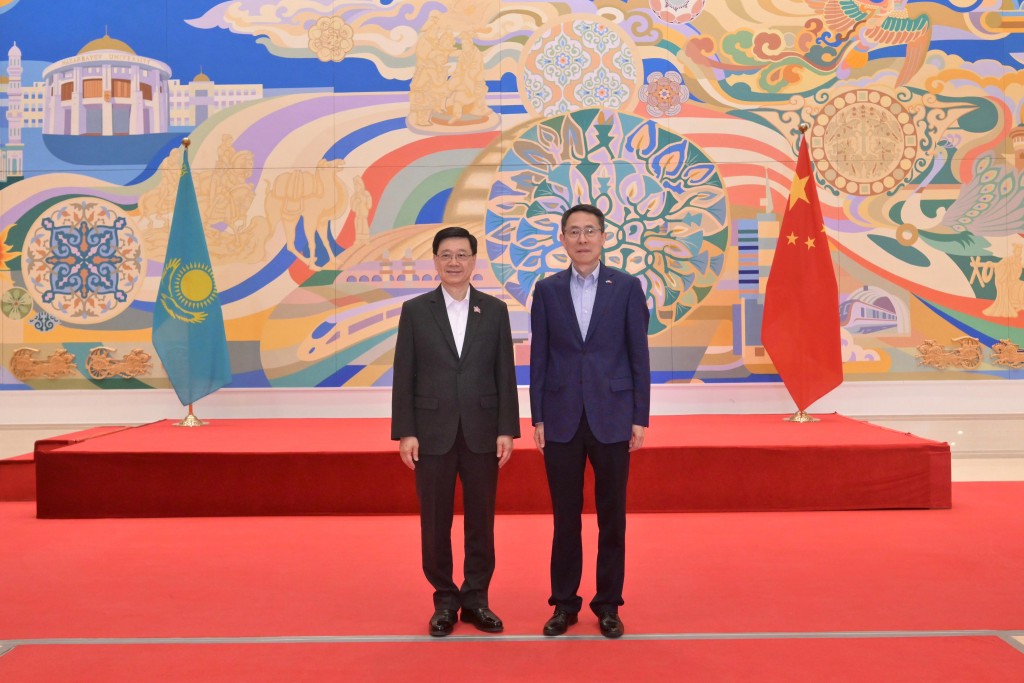
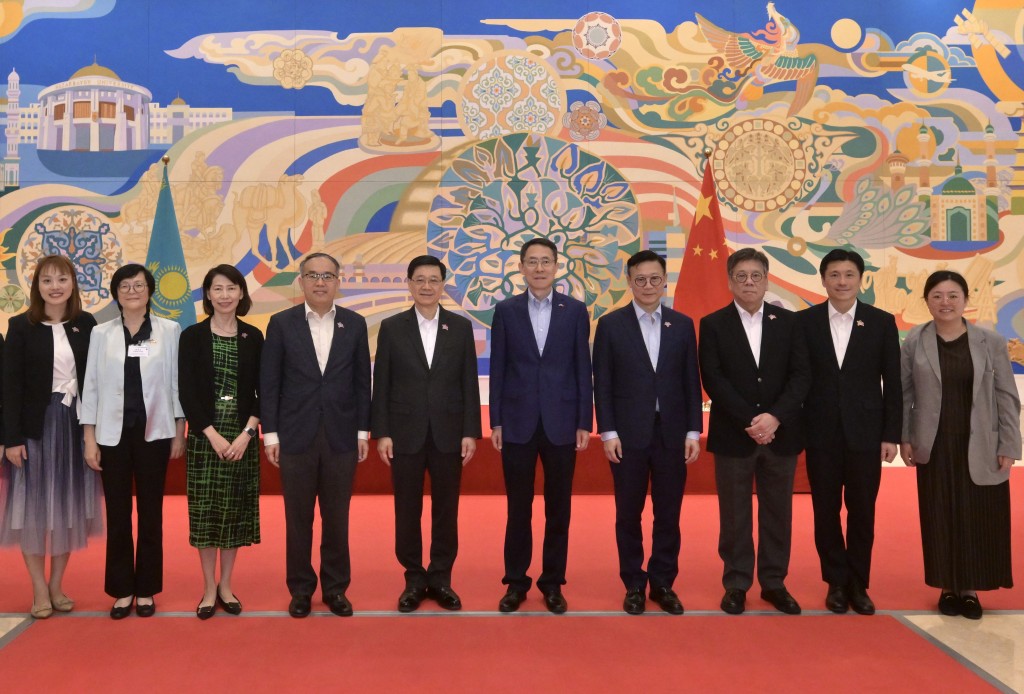
Lee also attended a luncheon hosted by the Ambassador Extraordinary and Plenipotentiary of the People’s Republic of China to the Republic of Kazakhstan Han Chunlin.