Read More



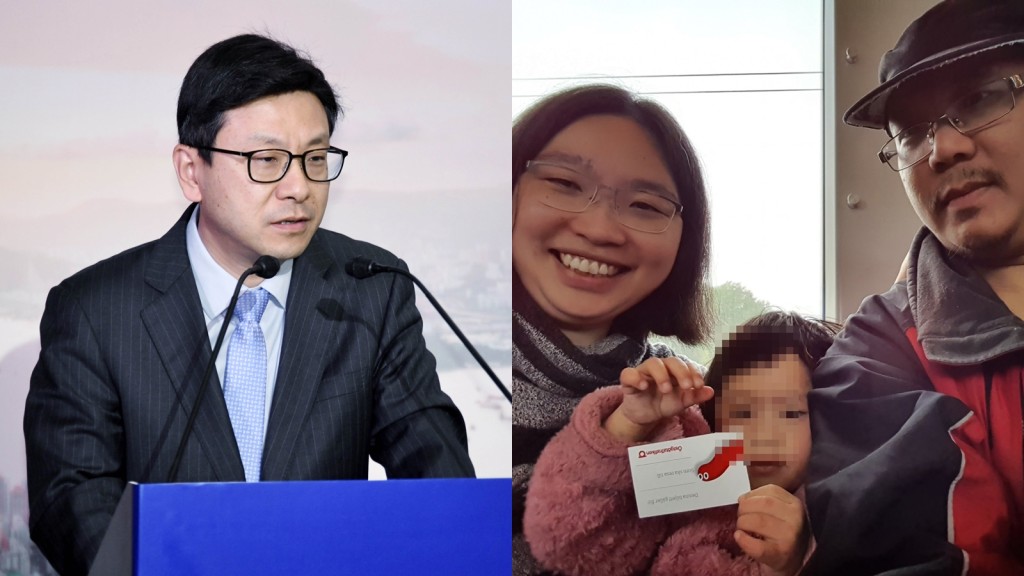


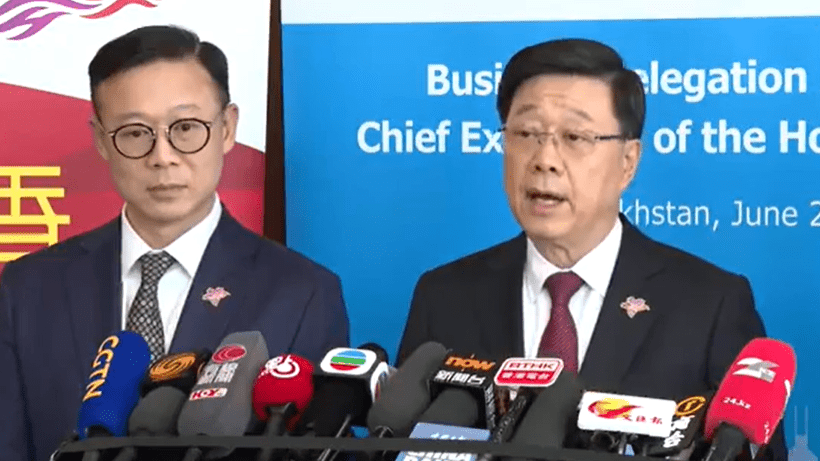
Chief Executive John Lee Ka-chiu said Hong Kong and Kazakhstan will sign 43 memoranda of understanding and cooperation agreements as he continued his visit to Kazakhstan on Tuesday, including an arrangement for a Hong Kong airline to launch direct flights to Almaty in the first quarter of next year.
Speaking to the media in Astana, Lee said his visit had yielded 43 memoranda of understanding and cooperation agreements covering trade, investment, financial services, technology, education, aviation and green finance.
Lee thanked the Kazakh government, President Kassym-Jomart Tokayev and Prime Minister Olzhas Bektenov for their high-level reception and arrangements. He also expressed gratitude to Chinese Ambassador to Kazakhstan Han Chunlin and the embassy team for their support.
Lee said this was his first visit to Central Asia as Chief Executive, noting that the region is an important node under the national Belt and Road Initiative. He said Kazakhstan carries special significance as the place where President Xi Jinping first proposed the Silk Road Economic Belt in 2013.
He added that Kazakhstan is a major Central Asian economy, accounting for about 60 percent of the region’s gross domestic product, and has set an economic growth target of 7 percent. Lee also said Kazakhstan is Hong Kong’s largest trading partner in Central Asia, with broad room for cooperation.
Lee said the visit had three main objectives: to tap emerging markets and lay the foundation for long-term trade ties, strengthen government-to-government links, and build a “hub-to-hub” cooperation model.
During the visit, Lee met Tokayev, Bektenov, Deputy Prime Minister and Minister of National Economy Serik Zhumangarin, and Deputy Prime Minister and Minister of Artificial Intelligence and Digital Development Zhaslan Madiyev. He also met Nurlan Zhakupov, chief executive of Kazakhstan’s sovereign wealth fund Samruk-Kazyna, and held talks with Minister of Trade and Integration Arman Shakkaliyev on deepening economic and trade cooperation.
Lee said the two sides had made substantive progress at the government level. Kazakhstan has agreed to move ahead at full speed with talks on a comprehensive avoidance of double taxation agreement with Hong Kong, and to formally start negotiations on an investment promotion and protection agreement as soon as possible.
The delegation also visited Astana Hub, the largest international technology park in Central Asia, and its key project, the International Artificial Intelligence Center of Kazakhstan, to learn more about the country’s Data Center Valley development.
They also visited the Astana International Financial Centre, which was established in 2016 and operates under a common law framework, with an independent court and international arbitration center.
Lee said Kazakhstan has made clear its intention to strengthen cooperation with Hong Kong in areas including finance, trade, innovation and technology, aviation and infrastructure.
Among the agreements reached, Lee said Hong Kong’s three major innovation and technology parks — Cyberport, Hong Kong Science Park and the Hong Kong-Shenzhen Innovation and Technology Park — will strengthen links with Astana Hub. Hong Kong Exchanges and Clearing will also work with the Astana International Financial Centre to explore cross-border listings and the development of a green finance ecosystem.
He added that a Hong Kong investment company and Samruk-Kazyna will jointly invest US$100 million to set up a regional blood purification product manufacturing center in Kazakhstan.
Lee and the delegation will visit the National Museum of Kazakhstan and Nazarbayev University on Wednesday. The university is where Xi proposed the Silk Road Economic Belt in 2013.
Two Hong Kong universities are expected to sign cooperation memoranda with Nazarbayev University to strengthen higher education exchanges.
The delegation will then travel to Uzbekistan to continue its Central Asia visit.