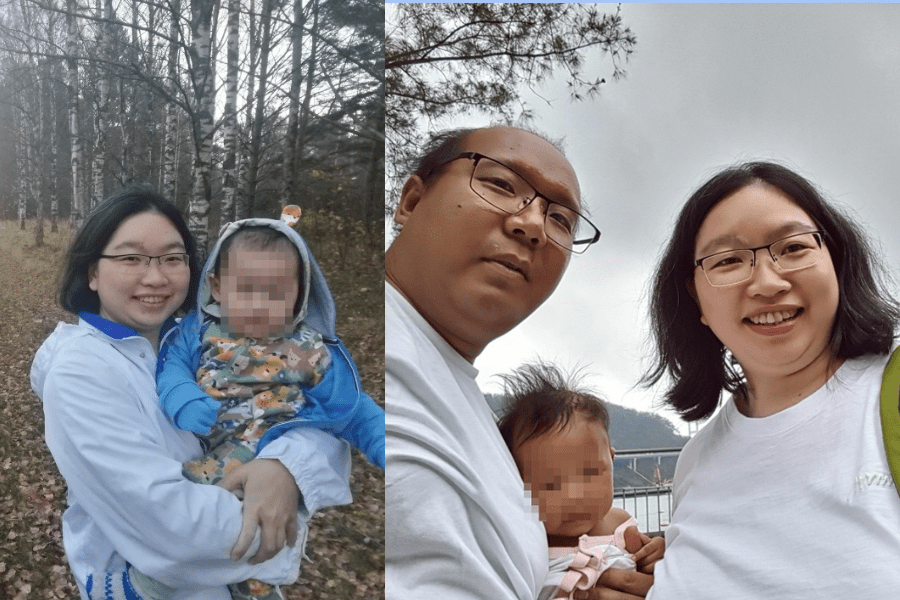
A two-month-old Hong Kong baby remains without a birth certificate, medical records, or legal identity after his parents—whose two-year-old daughter is currently under Swedish care—refused mandatory DNA testing on religious grounds.
The couple, identified only as Tsang and Kwan, recently sparked public debate after revealing that Swedish authorities had barred them from seeing their daughter, Lily, during an illegal stay in the country in late 2023.
A history of legal limbo
On their social media page "Save Lily," the couple claimed they gave birth to Lily at their Finland home in 2021. However, she was later placed under a formal care order and moved to a Swedish foster family after authorities raised concerns about their caregiving ability.
After returning to Hong Kong earlier this year, the pair sought assistance from the Immigration Department. Their appeal to bring Lily back to the city was ultimately rejected due to her unclear background.
Continuing the practice they used for their daughter, the couple recently delivered their son at home in Hong Kong. This decision has left both children trapped in a similar legal limbo without official birth certificates.
While Hong Kong law requires parents to register a birth within 42 days—a deadline that has already passed for the two-month-old boy—the couple has flatly refused the Immigration Department's request for DNA testing, citing religious reasons.
Lawmakers raise child neglect concerns
Speaking on a radio program this morning, lawmaker Peter Douglas Koon Ho-ming described the case as unprecedented, stating that the parents' treatment of the newborn defied common sense.
He stressed that without a birth certificate, the child cannot access healthcare or education, nor can his very existence be legally proven.
Koon argued that the situation could already be considered child neglect, particularly because the baby received no follow-up medical check-ups after the family cut the umbilical cord themselves. He strongly urged authorities to intervene.
Although there is currently no law banning home births, Koon indicated that any parents who deliver at home should immediately seek medical assistance, raising concerns that the relevant law might be outdated.
He further noted that the parents' irresponsible actions have left DNA testing as the only viable way to establish parentage, explaining that verifying birth certificates is crucial for preventing crimes such as human trafficking and illegal surrogacy.
Regarding the couple's separation from Lily, Koon urged the public to await more information from authorities.
He expressed belief that the matter falls under Swedish jurisdiction since she was not born in Hong Kong, adding that the care order was likely issued following careful evaluations designed to protect the child under local regulations.
A blank medical history
Social welfare sector lawmaker Grace Chan Man-yee, who appeared on the same radio program, warned that the baby boy, reportedly named Danny, is currently living without any protection due to his lack of identity in Hong Kong.
Describing his medical record as "a blank sheet of paper," Chan raised concerns over the baby's health, as she has never seen a doctor, received any vaccines, or undergone required newborn screenings.
She agreed that the case exposes a loophole in the city's regulations concerning home births, suggesting that authorities should consider mandating medical evaluations and check-ups for such cases.
Addressing the issue of parental rights, Chan argued that a child's basic protections must not be compromised, emphasizing that the child's well-being must always be the top priority.
"A child without identity cannot be protected by the city’s law and medical service,” she said.
Previous tragedy and parents' defense
In an earlier interview, the pair disclosed that they are not legally married but developed a close partnership after meeting a decade ago.
The duo moved to Finland in 2016 when Tsang decided to pursue further studies at a local university. In 2019, they welcomed their firstborn daughter, who tragically died after just one month.
Following her death, the couple was prosecuted by Finnish authorities for alleged neglect.
However, after a series of thorough investigations, authorities dropped the charges in October last year, determining that the infant's cause of death was heart disease and meningitis.
In response to online criticism labeling their home births and refusal of vaccines as irresponsible, Tsang defended their actions.
He stated he had previously taken nursing courses and was capable of monitoring a pregnant woman's vital signs daily.
Echoing a similar view, Kwan expressed her belief that as long as fetal health is ensured and proper birth preparations are made, home births are not as dangerous as commonly perceived.
Citing religious beliefs, the couple expressed reluctance over invasive treatments, including injections, as well as the potential side effects.
Tsang added that securing Lily's return to Hong Kong would not only facilitate a family reunion but also place her under the city's comprehensive child protection laws, noting that they would welcome follow-ups from social workers even if outsiders view their family dynamic as dangerous.