
Read More
A pilot program promoting “micro-inclusion” is being rolled out in Hong Kong schools to address subtle forms of discrimination and social exclusion among increasingly diverse student groups.
ADVERTISEMENT
SCROLL TO CONTINUE WITH CONTENT
Launched by Resolve Foundation in collaboration with six secondary schools, the “Stand By Me” initiative encourages students and teachers to foster inclusion through small, everyday actions, aiming to reduce bias and prevent conflict at its root.
The program comes as local campuses see growing diversity, including non-Chinese-speaking students, ethnic minorities, newly arrived children, and those with special educational needs.
While interaction between groups is common, meaningful communication is often lacking, leading to what organizers describe as “invisible barriers.”
Initial results from the pilot have been encouraging. Around 63 percent of participating students said they had applied inclusion skills in their daily lives, while nearly 90 percent of teachers reported greater motivation to promote inclusivity in classrooms and school environments.
Research cited by the group highlights ongoing challenges, with about 30 percent of students with special educational needs experiencing some form of bullying. Ethnic minority and non-Chinese-speaking students also face barriers such as language gaps and limited support.
Resolve Foundation’s founder and chief executive Victoria Wisniewski Otero said the initiative focuses on raising awareness of “microaggressions,” such as subtle gestures or comments that may appear harmless but can affect a student’s sense of belonging.
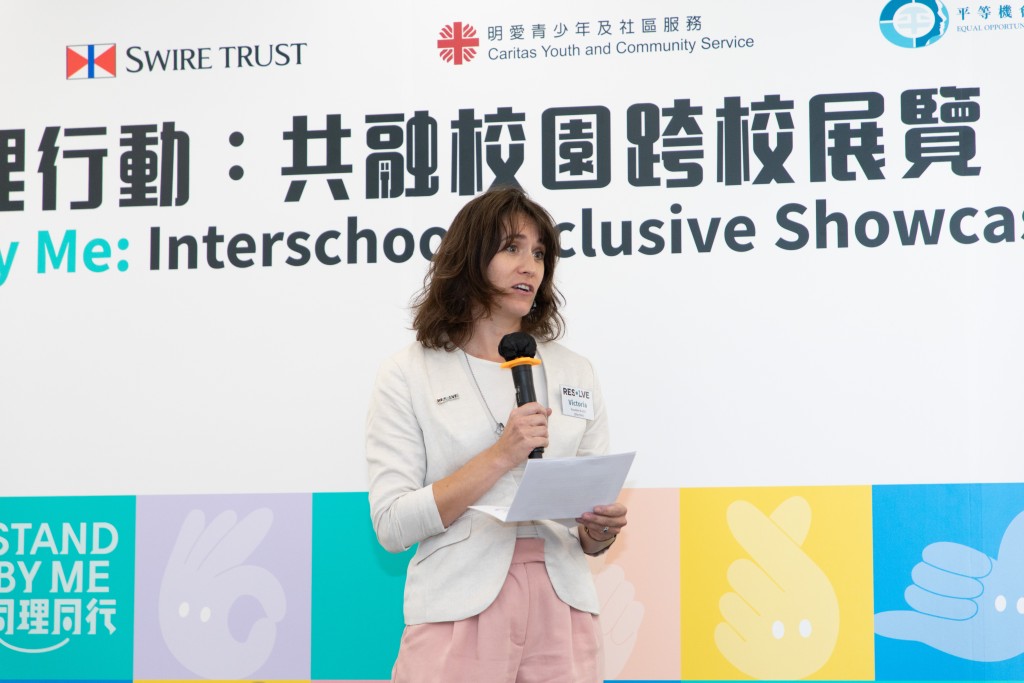
Resolve Foundation’s founder and chief executive Victoria Wisniewski Otero.
“Through ‘Stand By Me’, we hope to introduce the concepts of micro-inclusion and unconscious bias to both educators and students, encouraging them to start with small daily actions and become active bystanders,” she said.
The program includes student assemblies, teacher training and mentorship activities, with a dual focus on students and staff. Students are also taught practical intervention methods, known as the “5D” approach - distract, delegate, document, direct, and delay, to respond to unfair situations and conflicts.
Teachers who joined the program said it helped them better understand how minor, unintended actions could influence students, prompting reflection on their own behavior and classroom practices.
To further promote inclusion, participating students developed projects addressing issues such as racial inclusion, neurodiversity, gender stereotypes and mental health.
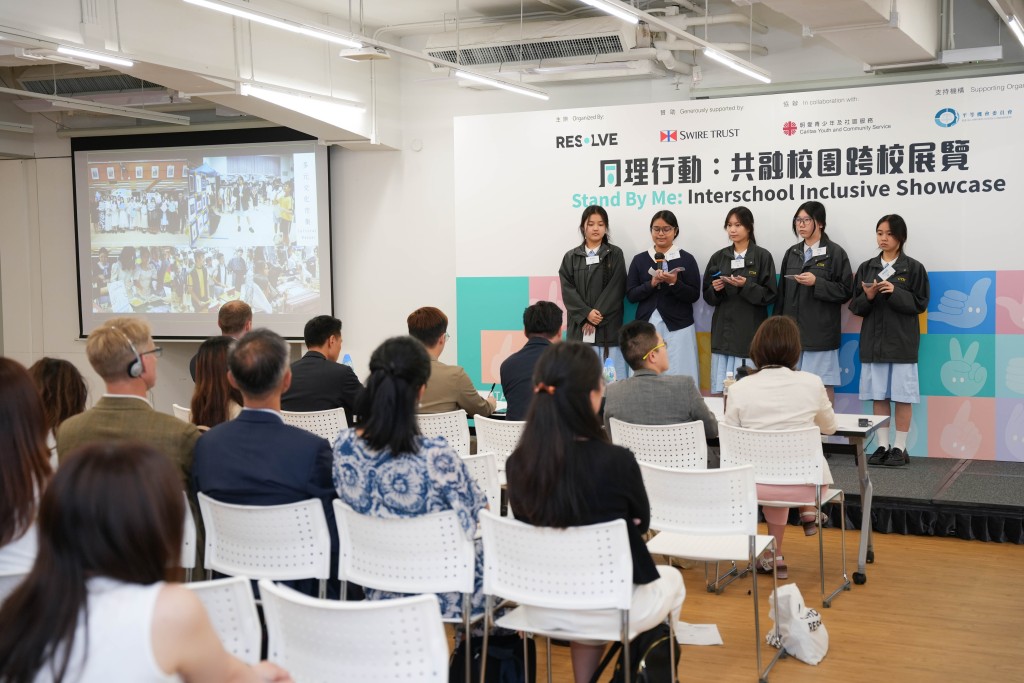
Six student teams received seed funding to implement their ideas, with outcomes presented at a cross-school exhibition earlier this month.
Resolve Foundation said building an inclusive school culture requires sustained effort rather than one-off campaigns. By encouraging daily practice and shared understanding, the initiative aims to create a more supportive environment where students of different backgrounds feel respected and included.