






Read More










Night Recap - September 21, 2026
5 hours ago


John Lee and CY Leung lead pallbearers for Tung Chee-hwa
20-09-2026 15:54 HKT


Law Society proposes allowing solicitors to be appointed Senior Counsel
21-09-2026 01:56 HKT


A research team from The Chinese University of Hong Kong (CUHK) has achieved a major breakthrough in understanding how the brain forms and retains memories.
The study, conducted by experts from the Faculty of Medicine and the Gerald Choa Neuroscience Institute, identifies a specific type of molecule that acts as a vital link in the brain's communication system.
These findings, recently published in the scientific journal Science Advances, offer promising new directions for treating devastating neurodegenerative conditions such as Alzheimer’s disease and amyotrophic lateral sclerosis (ALS).
The discovery centers on circular RNA, a unique type of genetic material that forms a closed loop. While these molecules were previously dismissed by scientists as insignificant biological by-products, the new research proves they are essential for brain function.
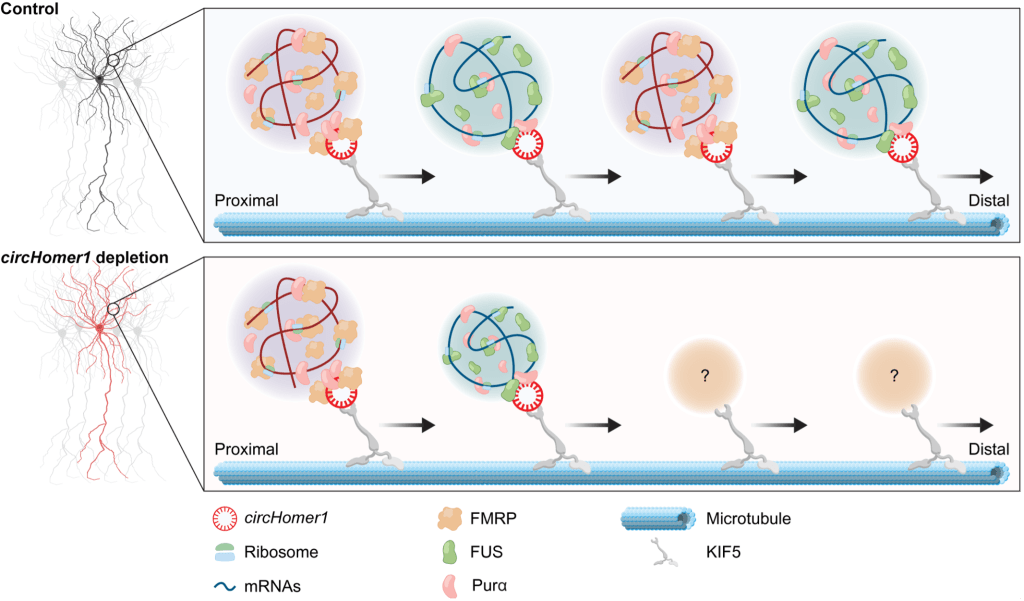
Specifically, a molecule named circHomer1 has been identified as a critical regulator that helps the brain translate temporary electrical signals into the lasting structural changes required to store a memory.
To form a memory, neurons must build new proteins at their connection points, known as synapses.
The researchers found that circHomer1 serves as a molecular bridge, transporting the necessary genetic instructions to the far reaches of the neurons where these proteins are assembled.
When this molecule is missing or depleted, the "sockets" of the synapses become deformed, leading to a breakdown in communication between brain cells.
The team’s findings were supported by experiments involving spatial learning tasks.
Mice with reduced levels of this specific circular RNA struggled significantly more than healthy mice, taking longer to navigate challenges and making more frequent errors.
These results confirmed that the molecule is indispensable for the type of learning and memory managed by the hippocampus, the brain’s primary memory center.
Professor Jacque Ip Pak-kan, a lead investigator on the study, noted that these results fundamentally change the scientific understanding of how the brain maintains its health.
He suggested that because these circular molecules are stable and detectable, they could eventually be used as biomarkers to help doctors diagnose neurological disorders earlier.
Looking toward future treatments, the research team believes that finding ways to restore the function of these molecular bridges could provide a powerful new strategy for protecting memory.
By maintaining the health of synapses, it may be possible to slow or prevent the cognitive decline associated with aging and disease, even when other pathological factors are present.