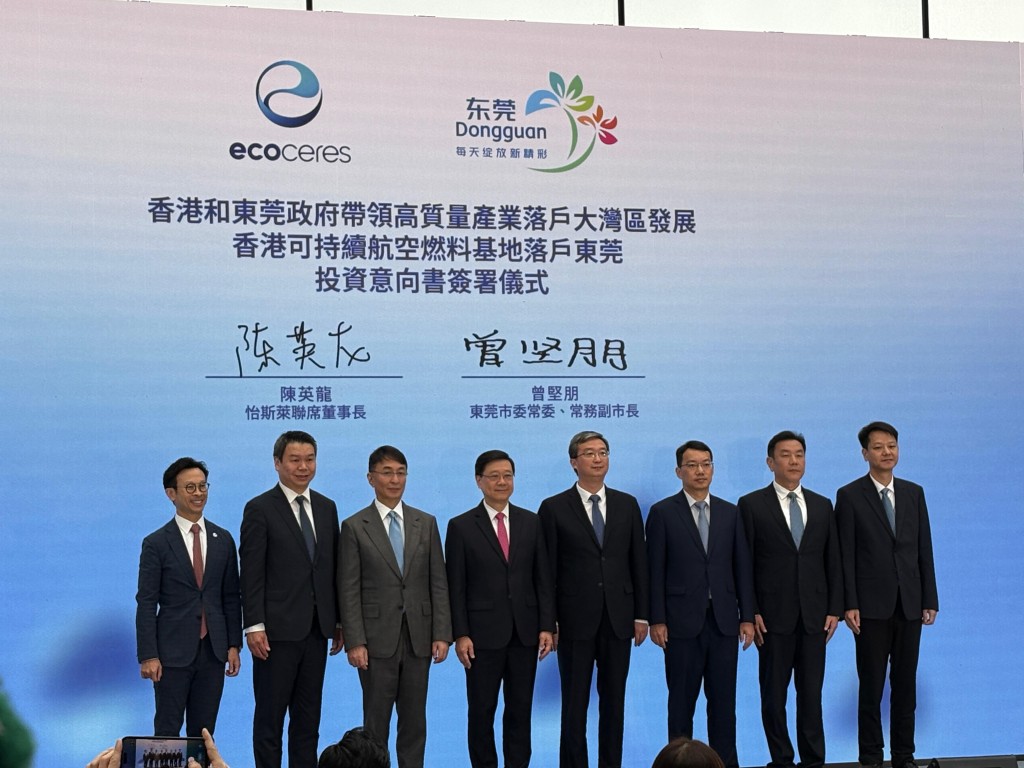
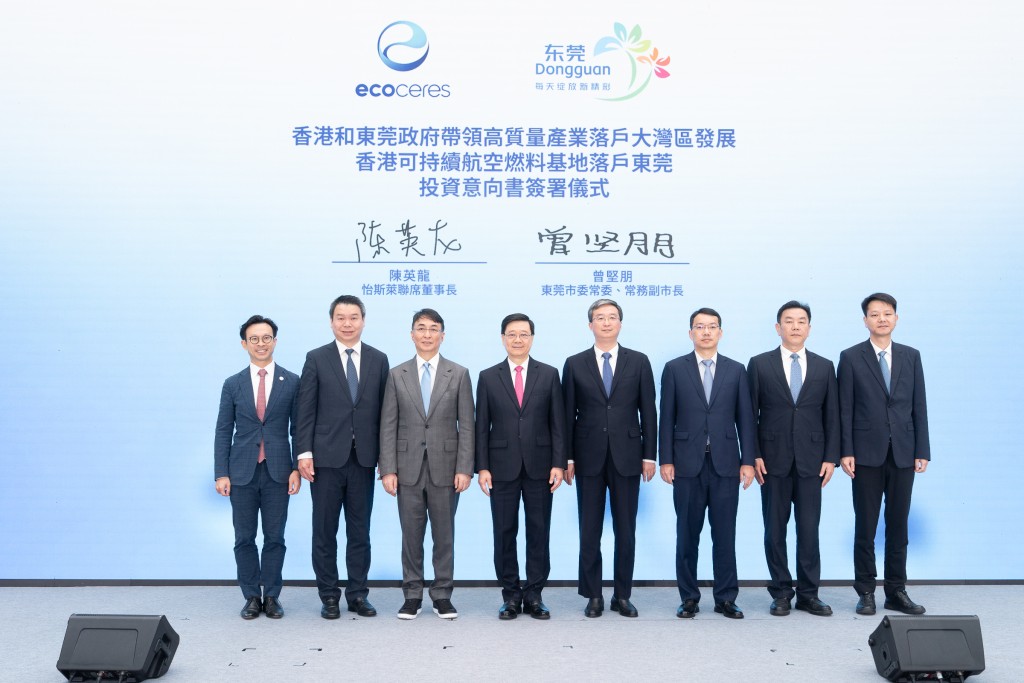
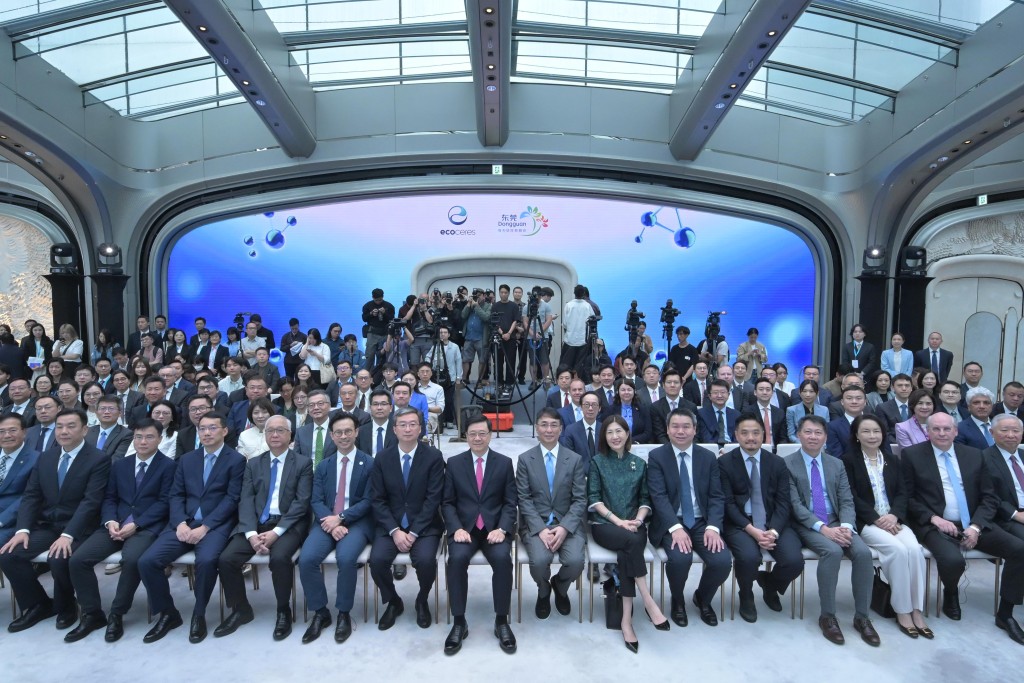
A Hong Kong-incubated sustainable fuel and green molecules producer, EcoCeres, will build the first complete sustainable aviation fuel (SAF) supply chain across the Greater Bay Area, backed by the Hong Kong and Dongguan governments, as it will establish a SAF base in Dongguan.
Incubated and founded by Towngas, EcoCeres enables the transformation of wasted cooking oil into internationally certified SAF, which can reduce lifecycle carbon emissions by more than 80 percent compared with traditional aviation fuel.
The Hong Kong-Dongguan collaboration will establish a comprehensive SAF supply chain centered on EcoCeres' new Dongguan facility, which is expected to produce approximately 450,000 tonnes annually of SAF and Hydrotreated Vegetable Oil. The partnership will create an integrated end-to-end model –waste-based feedstock collection across the GBA, refining and production in Dongguan, and blending, refueling, and trading operations in Hong Kong.
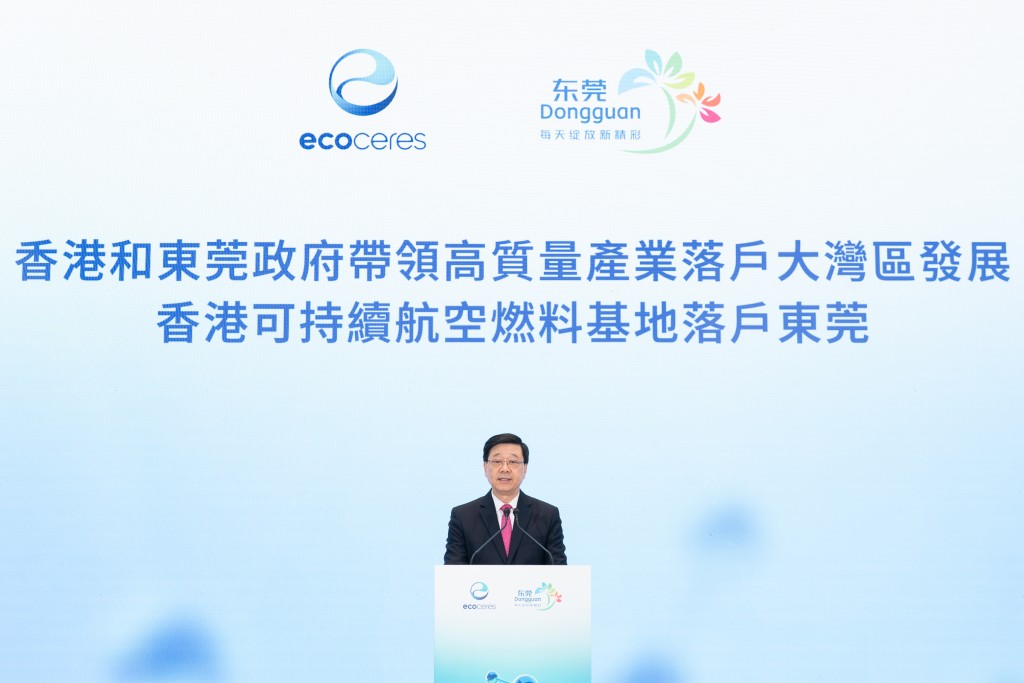
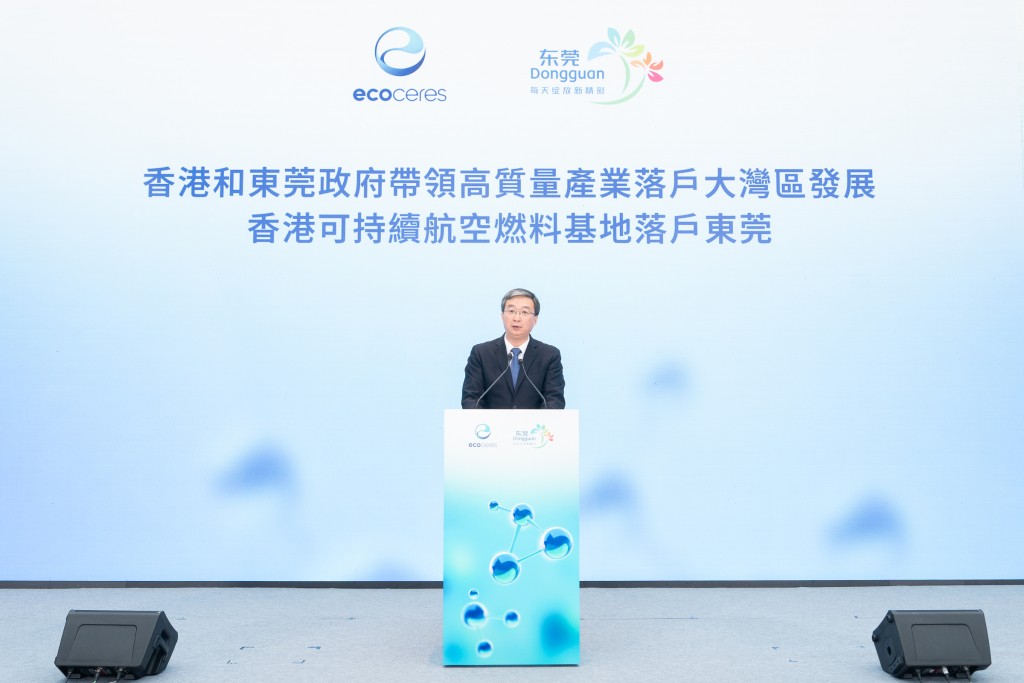
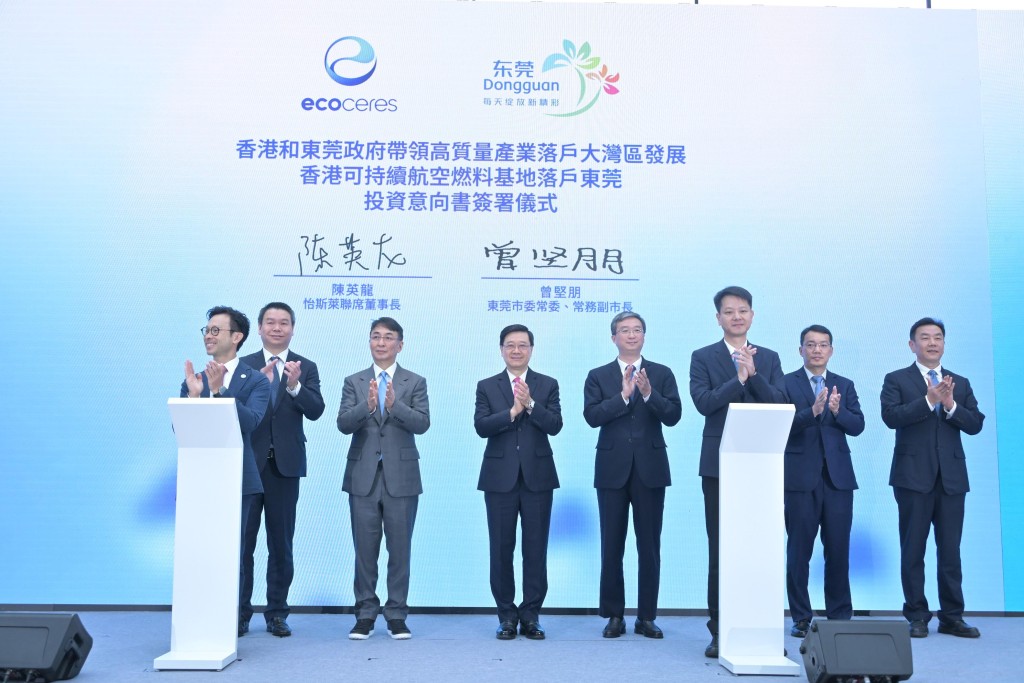
Speaking at the memorandum of understanding signing ceremony on Tuesday, Chief Executive John Lee Ka-chiu said the cross-regional collaboration between Hong Kong and Dongguan demonstrated an excellent example of executive-led governance of Hong Kong, joint working of effective government and efficient market, and also the synergy of the two places.
“Developing SAF value chain aligns with the National 15th Five-Year Plan and is a concrete action to implement the national green development strategy," Lee said. "Hong Kong SAR government and Dongguan government leading EcoCeres to build in Dongguan a sustainable aviation fuel value chain is a real milestone."
He added that Hong Kong will contribute global finance, professional services and research capabilities, while Dongguan provides mature chemical industry parks, logistics, and a steady supply of used cooking oil -- the essential raw material for SAF.
The Secretary of the CPC Dongguan Municipal Committee Wei Hao noted that the Greater Bay Area’s population of more than 80 million generates a large and stable supply of used cooking oil, which will provide a key feedstock for SAF production.
Wei also said that the SAF base will be located on Lisha Island, a specialized industrial island with complete facilities, which is located close to major ports, providing strong logistics connectivity and a solid foundation for large-scale SAF production and distribution.
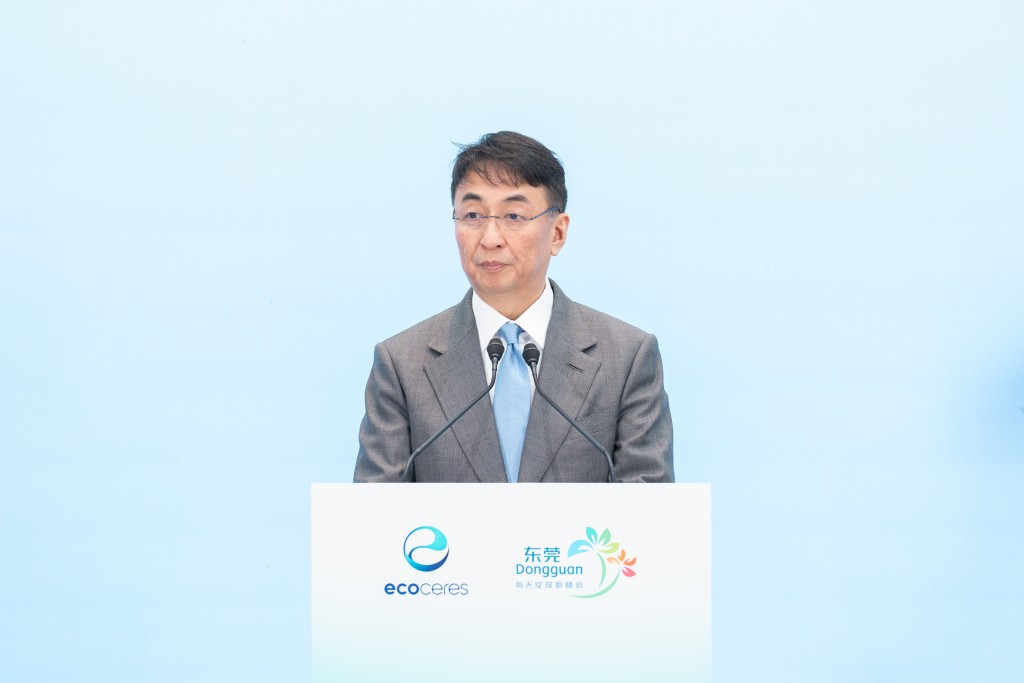
"We are delighted that EcoCeres, a homegrown Hong Kong green unicorn, has grown to become the world's second-largest SAF producer," Peter Lee Ka-kit, chairman of Towngas, said. He highlighted EcoCeres' commitment to independent research, development, and innovation and noted that the new partnership with Dongguan significantly advances China’s ambition to become a global leader in the SAF sector. "This will not only meet rising global demand for SAF, but also inject new momentum into regional and national economic development."
Peter Lee Ka-kit
Co-chairman of EcoCeres, Alan Chan Ying-lung, said the company selected Dongguan after a thorough evaluation of its production environment and policy support.
He added that Dongguan, with a population of over 10 million, will also provide a large and stable supply of used cooking oil.
Co-chairman James Tam Chor-kiu added that Dongguan offers a well-developed industrial base, port facilities and logistics network, while being close to major aviation hubs including Hong Kong International Airport, which helps reduce both production and transportation costs.
Chan said the new Dongguan plant is expected to produce around 450,000 tonnes of SAF and hydrotreated vegetable oil annually.
He said that the project plans to invest more than HK$10 billion over the next five to 10 years to build a full end-to-end SAF ecosystem covering feedstock collection, production, logistics and application.
He added that the company’s current customers are mainly airlines. It has expanded into partnerships with banks and data centers for Scope 3 emission reduction products.
EcoCeres currently operates two sustainable fuel production plants: one in Zhangjiagang, Jiangsu with an annual production capacity of 350,000 tonnes; and another in Malaysia, with an annual production capacity of 420,000 tonnes.
In addition, Cathay Pacific said it is delighted to see the Hong Kong and Dongguan governments working with EcoCeres to accelerate sustainable aviation fuel development. “We look forward to working closely with all parties to ensure this supports our long-term sustainability objectives, the continued success of the Hong Kong aviation hub as well as national carbon neutral goals.”
(Updated at 6.59pm)