The government is set to trial faster procedures for investigating water seepage in private buildings, cutting the testing process from 71 working days to 14 working days after a surge in complaints to 46,000 last year.
The new arrangement also stipulates that the responsible owner must complete repairs within 28 days.
Speaking on a radio program on Wednesday, Director of Food and Environmental Hygiene Donald Ng Man-kit described the water seepage issue as a long-standing, deep-rooted problem. He said that the new procedure is designed to encourage owners of leaking units to carry out repairs more quickly.
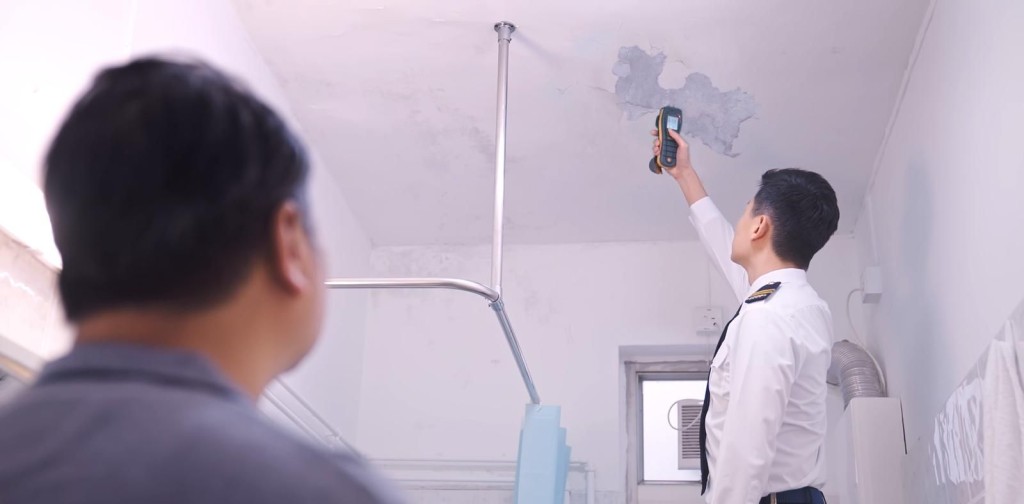
He also noted that under the new arrangement, investigations would be conducted in parallel — dye testing would be carried out alongside microwave tomography scanning.
He believes the 28-day timeframe is sufficient, and any extensions will be considered on a case-by-case basis.
“We will look at individual circumstances. For instance, whether more time is needed to start the works or if the project scope is large. We will also consider situations encountered during the repair process, such as bad weather delaying completion, and whether the deadline should be extended accordingly,” he said.
On another radio program, Ng noted that of the 15,000 seepage cases investigated last year, around 10,000 could not have their source pinpointed. He explained that during the handling process, owners of the upper and lower flats had resolved the problem through mediation, bringing the probe to an end and requiring no further follow-up.
Ng said that the joint office of the Food and Environmental Hygiene Department and the Buildings Department now relies on non-intrusive investigation methods that do not involve chiselling floors to locate leaks, meaning some cases remain unresolved.
He stressed, however, that in most cases, the problem is more likely to originate from upper-floor units.