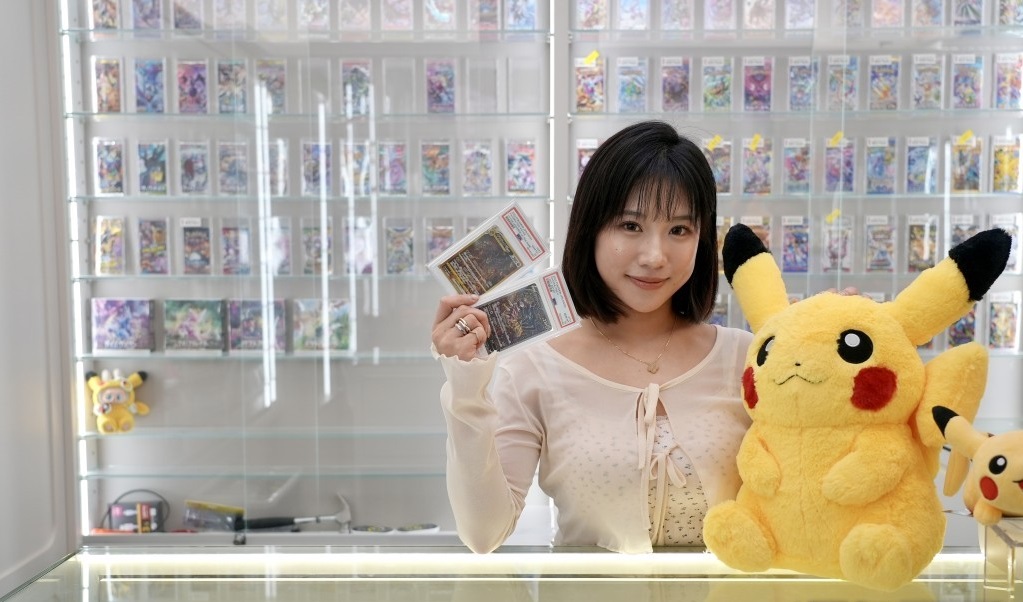
In a small shop now based in Causeway Bay, a childhood pastime has become a full-time business for a young entrepreneur who left behind a stable banking career to pursue an unlikely path in Pokémon trading cards.
For Molly, a woman in her 20s, the decision to step into the fast-growing — and often unpredictable — world of collectible cards began with curiosity and evolved into conviction. Today, her store has recorded peak revenues in the seven-figure range, a result she describes simply: “I made the right bet.”
An accidental entry into a new world
Molly’s introduction to the Pokémon card market came by chance. At the time, she was working a typical office job in banking, with little knowledge of the trading card scene.
“I didn’t even know Pokémon had cards,” she said.
That changed when she met her current business partner, who was already running a card shop in Mong Kok. Through helping out and observing the daily business, she was gradually drawn into the culture of collecting and trading.
At first, her connection to Pokémon was limited to childhood memories of the animated series. But handling physical cards — and watching others open packs — opened up a new dimension.
“I slowly realized this was interesting. You could play with it, and you could also make money,” she said.
The thrill of the unknown
What ultimately drew her in was the experience of opening card packs — a process she likens to unboxing a blind box.
“That moment gives you a real rush,” she said.
At the time, prices were relatively accessible, with a full box costing just a few hundred Hong Kong dollars, allowing her to buy in bulk and explore the market more freely. As her interest deepened, she began collecting specific characters and gradually developed the idea of turning the hobby into a business.
Early struggles and skepticism
Two years ago, Molly made the decision to leave her banking job and open a shop with her partner in Wan Chai. The timing, however, proved challenging, as the city was emerging from the pandemic and outbound travel resumed, dampening local demand.
“The beginning was very tough… there were days when revenue was only a few hundred dollars,” she said.
Support from those around her was also limited.
“My family really didn’t support me… they thought I was just buying pieces of paper,” she said.
Despite the doubts, she remained committed, navigating a market she describes as volatile and constantly shifting, with price swings comparable to the stock market.
Learning to survive in a volatile market
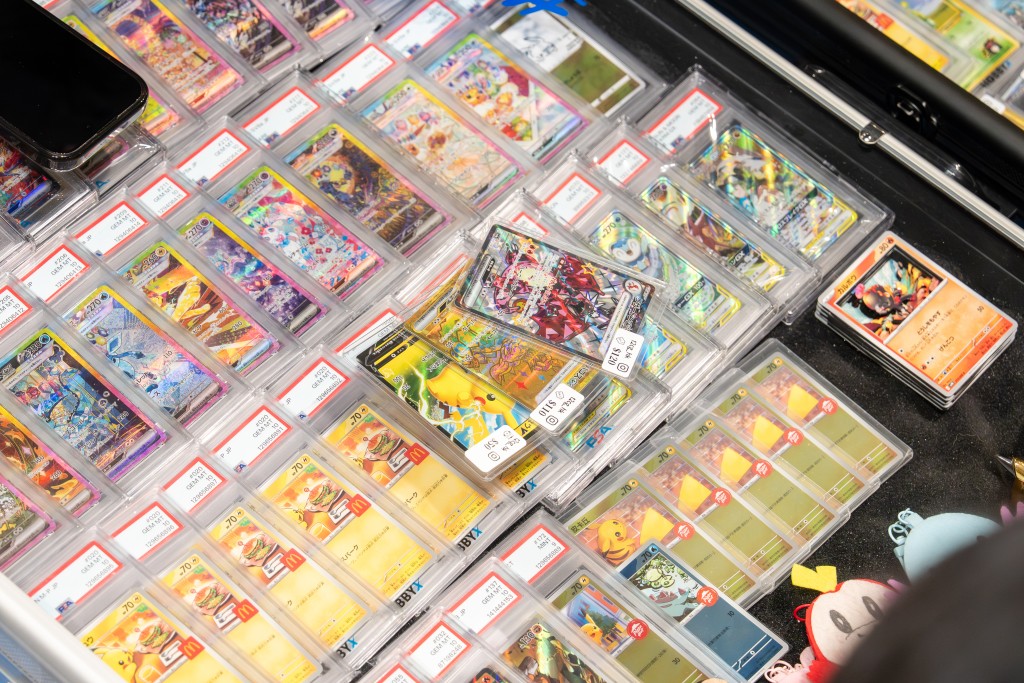
Over time, Molly developed her own approach to managing the business and its risks. The shop not only sells cards but also acquires them, sometimes uncovering unexpected value.
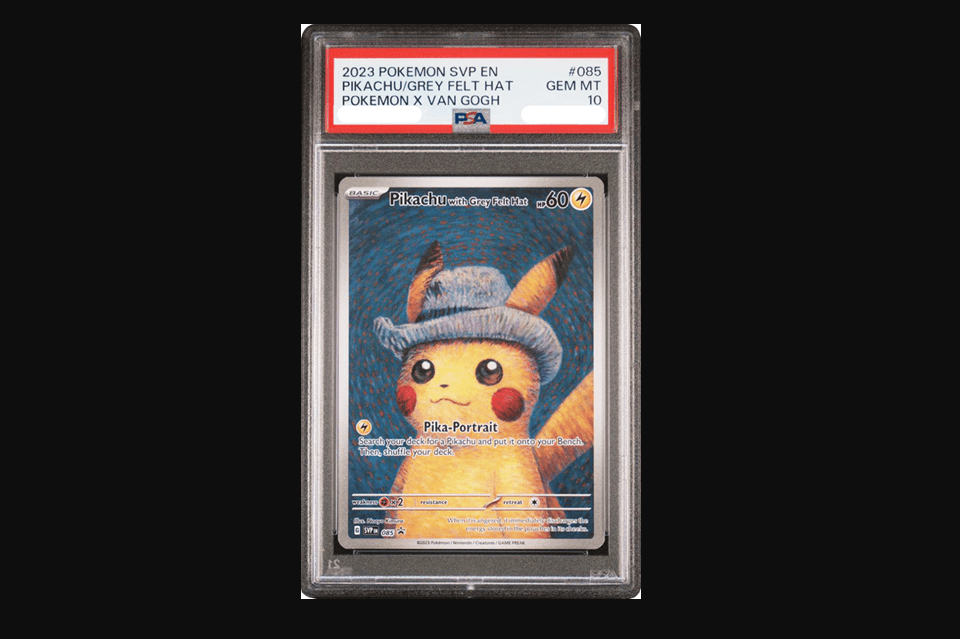
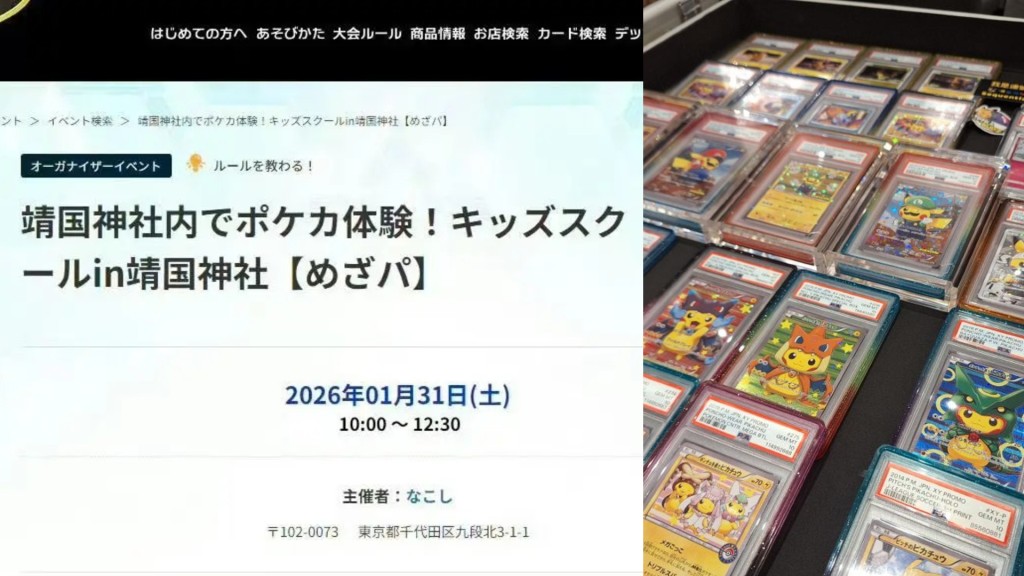
She recalled one instance when a collection purchased for HK$10,000 was later valued in the hundreds of thousands after grading, with a single top-grade card now worth HK$800,000.
Such opportunities have become rarer as market information becomes more transparent, but Molly continues to adapt. Her strategy centers on what she calls “using cards to sustain cards” — buying, holding and selling based on market cycles.
“I still buy cards myself. When prices go up, I sell. When the market cools, I buy back what I like,” she said.
From doubt to acceptance
As the business gained traction, so too did the perception of those around her. The shop has since relocated to Causeway Bay, and while revenues have grown, Molly remains cautious about equating turnover with profit due to high inventory costs.
Perhaps more telling is the shift in her family’s attitude.
“My brother used to laugh at me… now he’s playing too, and even more than me,” she said.
Looking back, she sees her decision as a turning point.
“I think I made the right bet,” she said.
A sustainable passion
Despite the ups and downs of the market, Molly is confident that interest in Pokémon cards will endure. For her, the key lies not in speculation but in genuine interest.
Her advice to newcomers is straightforward: “Only spend what you can afford. Start with cards you like… enjoying the process is the most important.”
What began as a leap into the unknown has since become both a livelihood and a personal pursuit — one shaped as much by risk as by passion, and grounded in a belief that even in a volatile market, enjoyment can be sustained.