





Read More












John Lee and CY Leung lead pallbearers for Tung Chee-hwa
20-09-2026 15:54 HKT


Woman dies after suspected dog attack in Yuen Long
20-09-2026 17:27 HKT


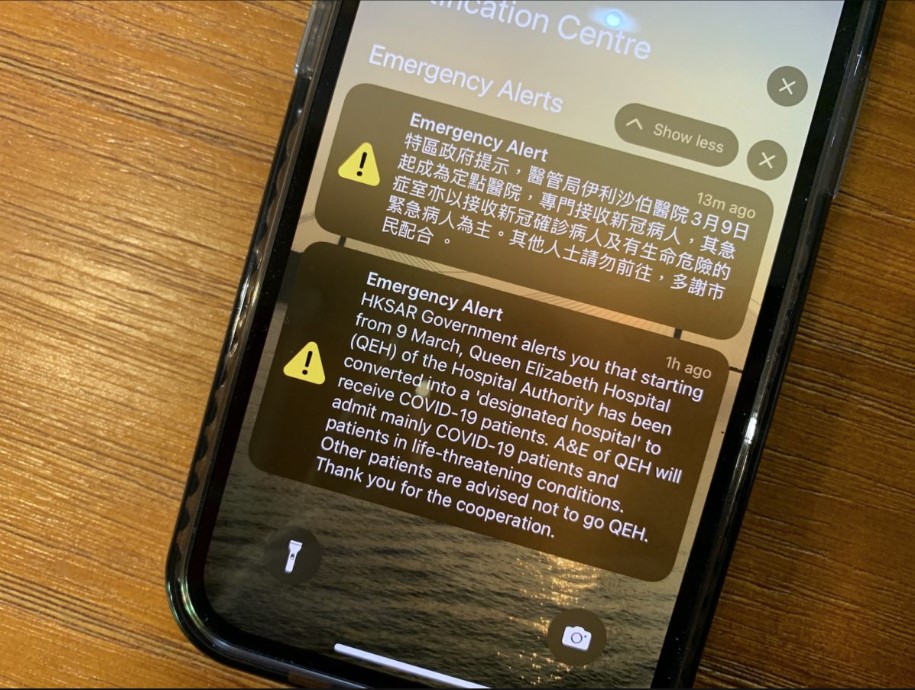
Hong Kong’s emergency alert system has been upgraded to allow authorities to issue more targeted warnings at the district level, Secretary for Security Chris Tang Ping-keung said, as the government seeks to improve precision while avoiding unnecessary public alarm.
In a written reply to the LegCo, Tang said “the government has recently upgraded the system to enable bureaux and departments to opt for issuing district-specific alerts to individual or multiple districts among the 18 Districts.” The move allows officials to tailor alerts to affected areas instead of broadcasting messages citywide, he said.
He stressed that the use of the system remains limited to serious emergencies.
“Both territory-wide and district-specific alerts are applicable only to major incidents, such as nuclear accidents, earthquakes and tsunamis.”
Tang added that “when considering the deployment of this alert system, the Government must carefully assess the actual circumstances to determine whether it is necessary to disseminate important alerts through the system.”
Addressing concerns from lawmaker Ray Wong Wing-wai over whether clearer criteria would be set for issuing district-level alerts in fire incidents, Tang said fires would rarely justify such large-scale notifications.
“In general, fires rarely affect an entire district or require the immediate response of all residents within a district,” he said.
He explained that activating a district-wide alert could notify hundreds of thousands of users, far exceeding the number of people directly affected. He said the move would be disproportionate and would also cause unnecessary public panic.
As a result, authorities would generally rely on on-site measures to warn those affected, including fire alarm systems, warning sounds from fire engines and police vehicles at the scene, and on-site public address systems, said Tang.
Tang also clarified that fire classifications are based on the resources required and the scale of response, rather than their direct impact on the public.
“Furthermore, the fire alarm level is determined based on the resources and scale of mobilisation required, and is not directly related to the level of impact on the public.” He added that “the decision to issue an emergency alert should not be linked to the fire alarm level.”
However, he noted that in exceptional circumstances, such as large-scale hill fires requiring immediate and widespread evacuations, authorities may still activate the system.
“In the event of a large-scale fire, such as an extensive hill fire, necessitating the immediate and large-scale evacuation of residents within an area, the Fire Services Department will exercise its professional judgement on a case-by-case basis and activate the Emergency Alert System to issue appropriate alerts as the situation requires.” Tang added.