Read More
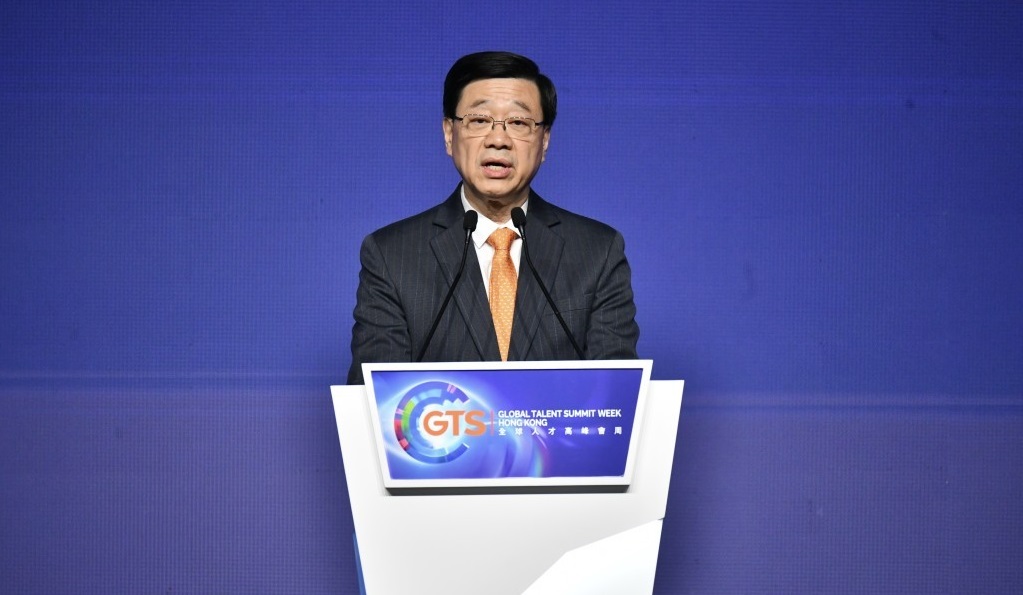
Hong Kong will deepen collaboration with cities across the Guangdong-Hong Kong-Macao Greater Bay Area (GBA) to create more opportunities for talent mobility, Chief Executive John Lee Ka-chiu said on Wednesday, as the city positions itself as a global hub for skilled professionals.
ADVERTISEMENT
SCROLL TO CONTINUE WITH CONTENT
Speaking at the opening ceremony of the Global Talent Summit Week Hong Kong at the Hong Kong Convention and Exhibition Centre in Wan Chai, Lee said that as of the end of last month, more than 410,000 applications had been approved under various talent admission schemes, with over 270,000 individuals already arriving in the city.
He noted that emerging technologies such as artificial intelligence and digital innovation are reshaping industries worldwide, intensifying global competition for talent.
In response, Hong Kong will continue to uphold an open approach, deepen international collaboration, and align closely with national development strategies, while further strengthening its education system, innovation ecosystem, and infrastructure, he said.
Lee added that the government is accelerating the development of the Northern Metropolis, aiming to establish it as an international innovation and technology center. He said closer cooperation with the 11 GBA cities would help facilitate greater cross-border talent mobility and create a more integrated regional talent pool.
Also addressing the summit, Yu Jiandong, China’s Vice Minister of Human Resources and Social Security, said the central government places strong emphasis on Hong Kong’s role in developing into an international talent hub and a gateway for national talent development.
Yu said mainland authorities would work closely with Hong Kong, particularly with counterparts in the GBA, to support the development of a high-level international talent cluster.
This includes exploring closer alignment in employment services, social security systems, professional qualifications, and skills training, as well as further enhancing policies to facilitate the movement of talent.
He added that authorities would actively leverage opportunities brought by technological innovation, strengthening the integration of artificial intelligence with education, technology, and talent development.
By accelerating innovation in application scenarios, these efforts aim to empower talent cultivation and support more holistic development, ultimately unlocking higher value, Yu added.