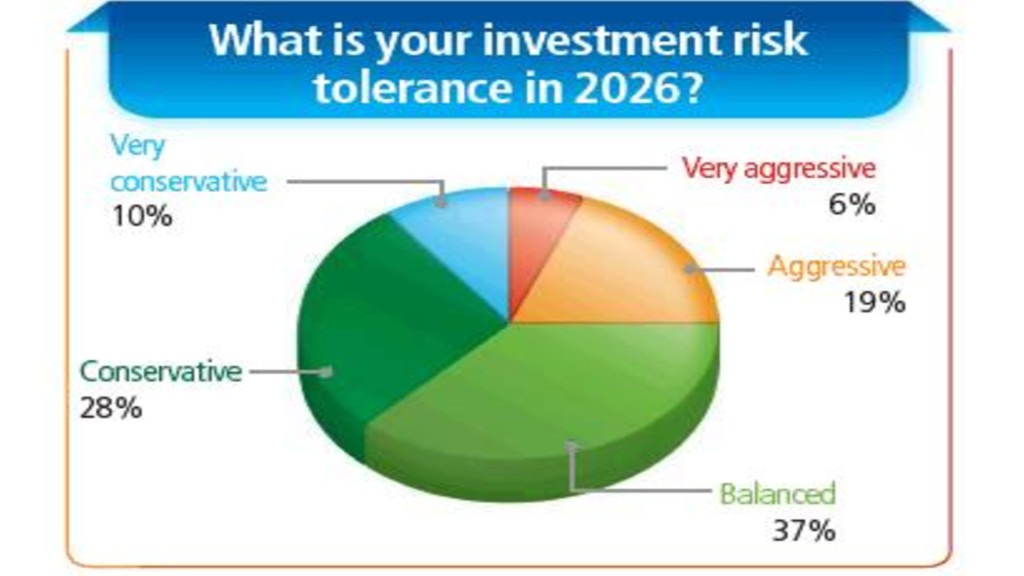
Hongkongers are taking a more conservative approach to investing at the start of the new year, with 38 percent planning to adopt low-risk or capital-preservation strategies, according to a recent survey.
The 2026 Hong Kong People’s Wealth Management Trends and Investment Outlook Survey, conducted by Sing Tao News Group between December 23, 2025, and January 2, 2026, collected responses from 4,251 residents.
The survey revealed a cautious tilt in local investment sentiment. About 37 percent of respondents said they would pursue balanced strategies in 2026, while only 25 percent plan to adopt aggressive or very aggressive investment approaches.
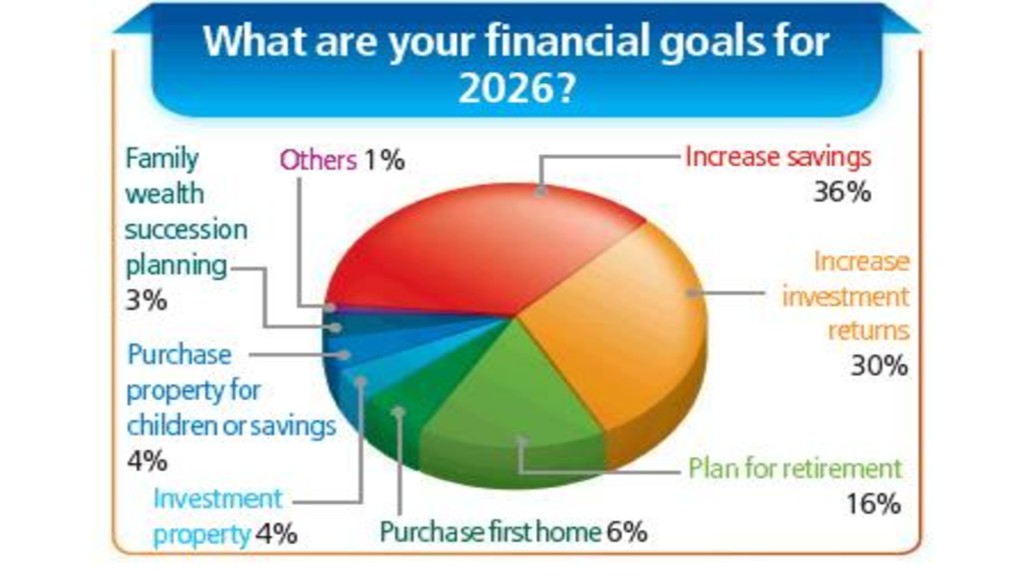
When asked about financial priorities, “increase savings” ranked first at 36 percent, followed by “increase investment returns” at 30 percent and “plan for retirement” at 16 percent.
Savings continue to play a central role in financial planning. The survey found that 16 percent of respondents save half of their monthly income, while 15 percent save between 30 and 50 percent. Another 22 percent save either 10 or 20 percent of their income, while 20 percent save less than 10 percent. Five percent reported having no savings at all.
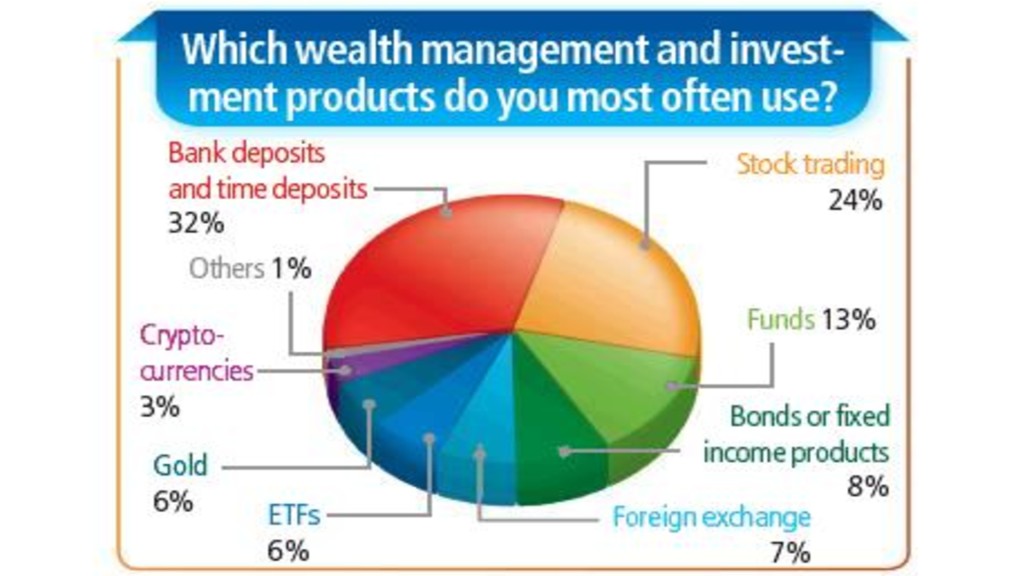
A preference for stability is also reflected in asset allocation. Bank deposits and time savings accounts were the most commonly held products, accounting for 32 percent of holdings, followed by stocks at 24 percent and investment funds at 13 percent.
Bonds and foreign exchange investments accounted for 8 percent and 7 percent respectively. Gold—despite rising more than 60 percent last year—made up just 6 percent of current holdings, tying with exchange-traded funds.
Survey respondents cited economic uncertainty and reports of shop closures as key reasons for their cautious stance, with many indicating plans to shift portfolios toward safer assets to limit potential losses.
Some said they would prioritize fixed deposits and bonds for passive income, while others outlined mixed strategies combining exposure to US and Chinese technology stocks with local blue-chip shares for dividends and gold as a form of “insurance.”
This conservative public sentiment contrasts with recent market performance. The Hang Seng Index climbed 28 percent last year, reaching a four-year high, while residential property prices stabilized and rose by 5 percent.
Government data also showed economic growth accelerated to 3.2 percent in 2025, exceeding earlier forecasts, while retail sales rose 6.5 percent in November for a seventh consecutive month.
Despite these indicators, financial expert Ray Lee Ching-hang said many residents remain uneasy about job prospects and the broader economy, pointing to a disconnect between public sentiment and market performance.
“People are seeking a sense of security through cash, even as markets advance,” Lee said.
With the US Federal Reserve cutting its benchmark interest rate in September, analysts have warned that excessive reliance on deposits may become less effective as returns decline.
Lee suggested investors adopt a more balanced approach in 2026, recommending that individuals keep savings equivalent to about one year of living expenses.
“Being overly conservative isn’t advisable in any economic cycle,” he said. “Investors should assess their risk tolerance and consider allocating assets to stocks and bonds, as global equities remain solid long-term investments.”