





Read More


Morning Recap - August 26, 2026
2 hours ago




Night Recap - August 25, 2026
11 hours ago
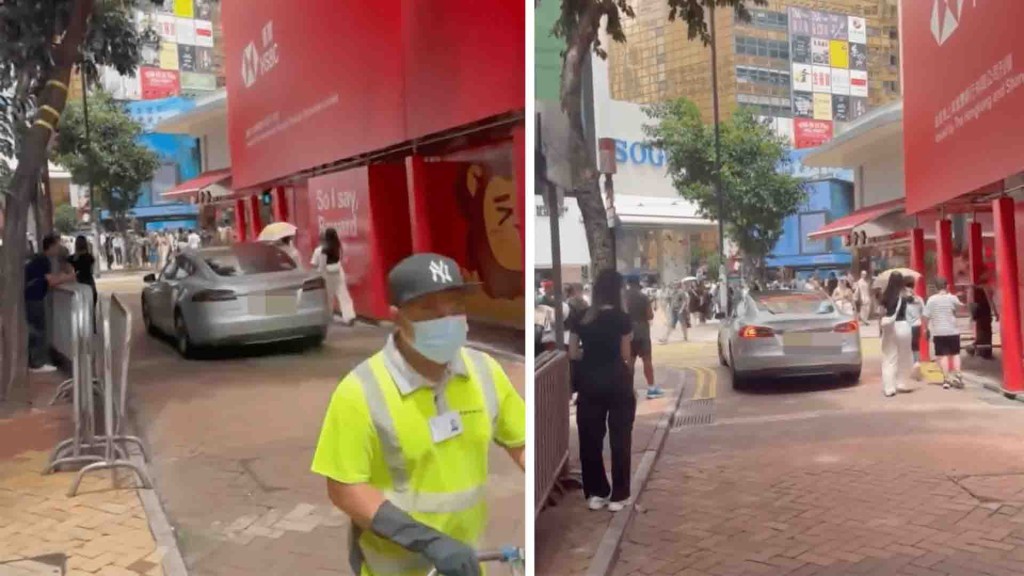


Taxi stuck sideways in narrow Central alley
24-08-2026 15:55 HKT


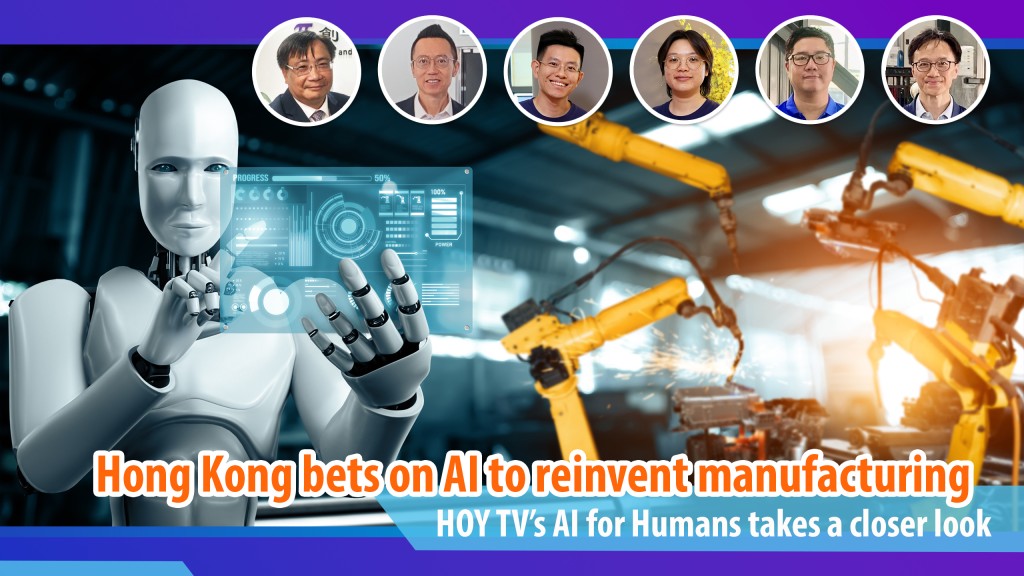
Artificial intelligence is reshaping global manufacturing, and Hong Kong is moving quickly to position itself at the centre of this transformation. The latest episode of AI for Humans examines how the city is building a comprehensive ecosystem for AI-enabled smart manufacturing—spanning government policy, research support, startup innovation and the digital upgrade of traditional industries.
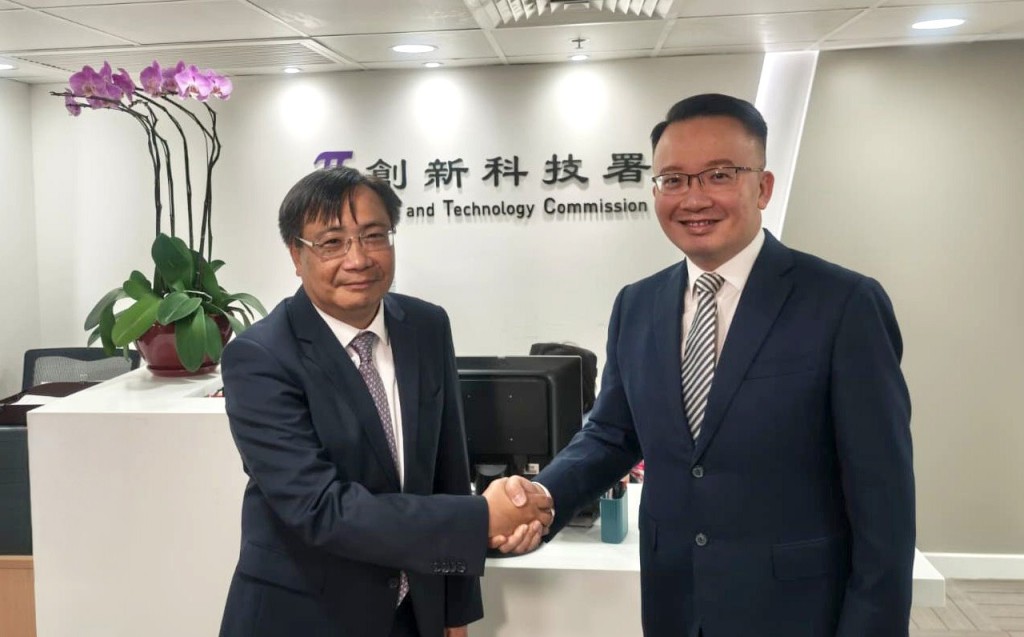
Speaking on the programme, Commissioner for Innovation and Technology Ivan Lee outlined the Innovation and Technology Commission’s (ITC) role in driving the city’s new industrialisation agenda. The ITC supports R&D across universities, research institutes and private I&T companies and oversees key platforms such as Hong Kong Science and Technology Parks Corporation and the Microelectronics Research and Development Institute.
“The Government is committed to promoting new industrialisation,” Lee said. “We want industries to set up advanced manufacturing lines in Hong Kong to contribute to a more diversified economy.” He noted that AI, real-time monitoring systems and sensor technology are now essential tools for boosting efficiency and improving production quality.
To spur investment, the Government launched the Innovation and Technology Venture Fund (ITVF), which co-invests in local I&T enterprises. More than 40 projects have received support to date, with over HK$400 million in public funding attracting more than HK$3 billion in private capital. An enhanced ITVF scheme and a new Industry-Oriented Fund are planned to further expand the city’s innovation ecosystem.
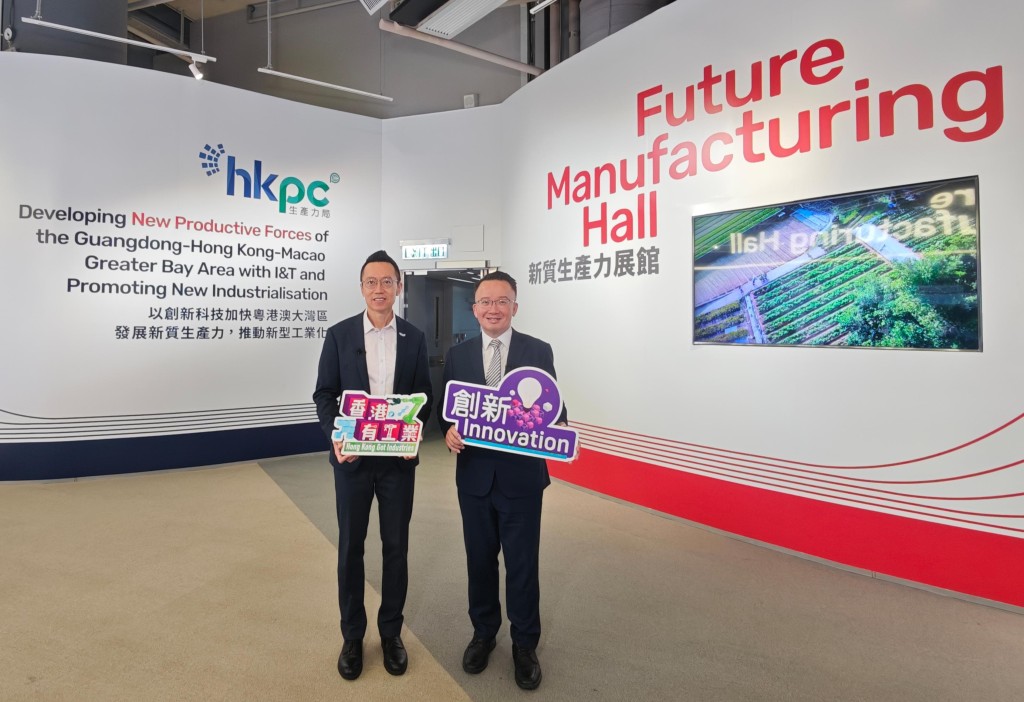
Hong Kong Productivity Council (HKPC) Chief Digital Officer Edmond Lai outlined the organisation’s three main roles: solving technical challenges for enterprises, strengthening talent training, and managing 10 government funding schemes. More than 50,000 organisations used HKPC services last year.
Lai cited the example of a local textile factory where HKPC helped integrate Japanese knitting machines onto a single digital platform, reducing staff needs from over 40 workers to just three and enabling round-the-clock production of small-batch and personalised orders.
HKPC has also launched “HKPC Picasso”, an AI platform that consolidates algorithms and industry expertise. “A client once made a request and we provided a sample solution within half a day,” Lai said.
In April, HKPC opened The Cradle – Go Global Service Centre to help Mainland enterprises expand overseas via Hong Kong, while supporting overseas companies entering the Mainland market. Lai noted that HKPC works closely with Cyberport to promote startup solutions and strengthen the innovation ecosystem.
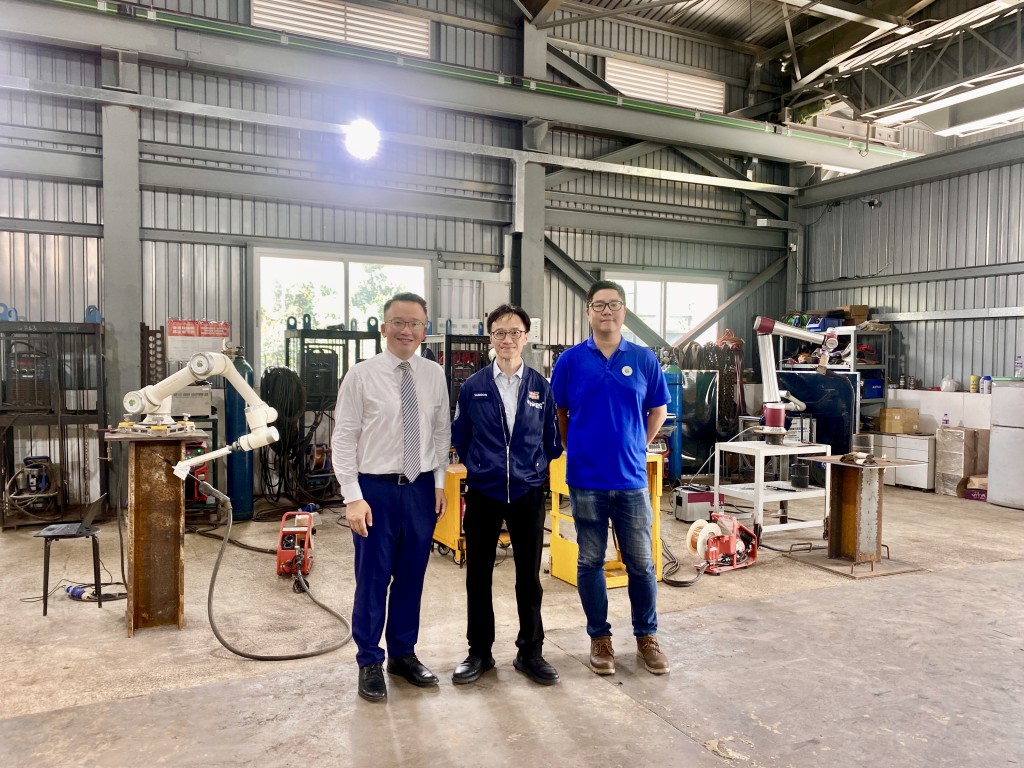
HKPC’s Smart Manufacturing Division General Manager Ir Samson Suen demonstrated how AI-enhanced welding robots are transforming a traditionally labour-intensive industry. By training robots using data from experienced welders, companies can achieve highly consistent, craftsmanship-level welds.
Suen emphasised that the robots preserve valuable expertise: “Welders and trainees may leave the industry, but AI data stays with the company.” Remote operation also greatly improves workplace safety.
He believes industry reliance on robotics will deepen with the advent of 6G and the rise of humanoid robots, allowing humans to focus on creative, high-value tasks and raising overall productivity.
Wong Tsz Yeung, General Manager of Wo Lee Green Solutions Limited, described the challenges facing the construction-sector steel industry, where the average welder is over 50 and younger workers are reluctant to join the trade. The company partnered with HKPC to industrialise and automate manufacturing processes.
According to Wong, intelligent welding robots can double productivity. “Robots don’t need rest,” he said. “In cramped worksites where manual welding is difficult, robots can take over these tasks.”
Wong stressed that the use of robotics is not about eliminating jobs but upgrading them. “Workers won’t only know how to weld—they’ll learn to combine welding skills with computer technology.” While the digital transformation encountered resistance and technical hurdles, persistence led to successful adoption.
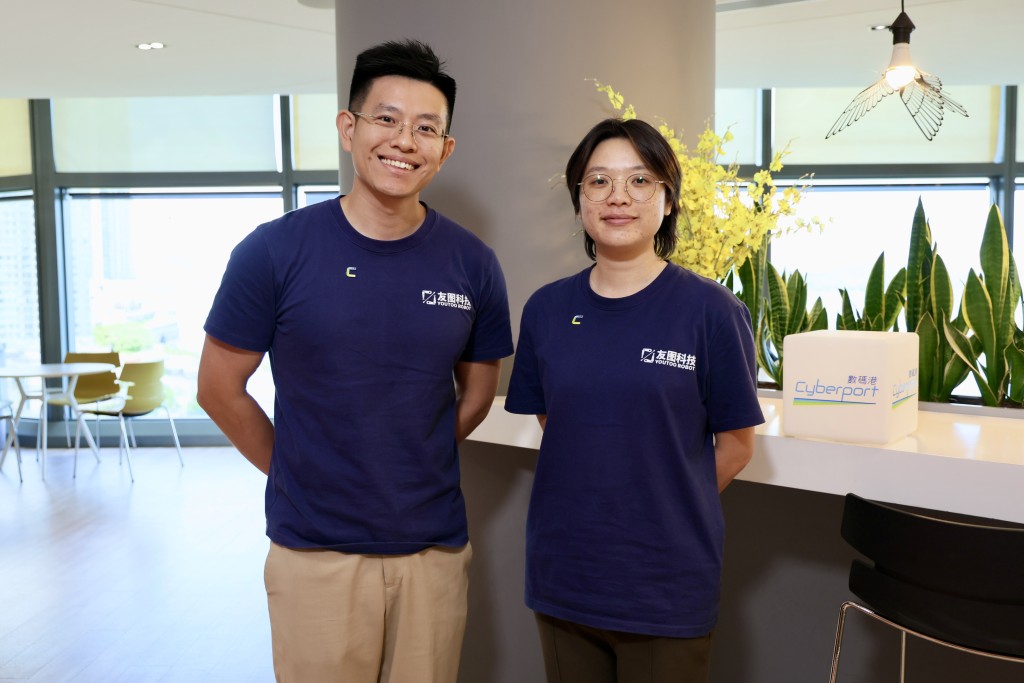
Startup YouToo Robot is tackling one of manufacturers’ biggest pain points: equipment downtime. Founder and CEO Parker Li said the company’s core product, NexFactory, functions as an “AI engineer”, helping factories manage and repair equipment more effectively.
“Every second of downtime translates into economic loss,” Li said. “Our product restores equipment quickly, and it keeps learning until it reaches expert level.”
COO Cherry Chen added that many factories depend heavily on master technicians, whose expertise takes years to develop. “Our AI Engineer addresses talent gaps and ensures continuity,” he said. The company already works with overseas instant noodle makers, a pre-IPO biopharmaceutical firm, and Greater Bay Area factories to support stable, 24-hour production.
As a Cyberport incubatee, YouToo Robot has received funding and mentorship and has benefited from investor-matching events and major exhibitions that showcase local AI innovation.
From government policy support to HKPC’s technical enablement, from startup ingenuity to the transformation of long-standing industrial players, Hong Kong is assembling the full architecture of an AI-driven manufacturing ecosystem. AI technologies are helping factories increase efficiency, enhance safety, address labour shortages and preserve industrial know-how—laying the groundwork for the city’s new industrialisation strategy.
Episode 15 of AI for Humans airs Saturday, 13 December 2025 at 8:30 pm on HOY TV Channel 78, with replays on Sunday at 6:30 pm (Channel 77) and Tuesday at 10pm (Channel 78). The episode will also be available on HOY TV’s online platform.