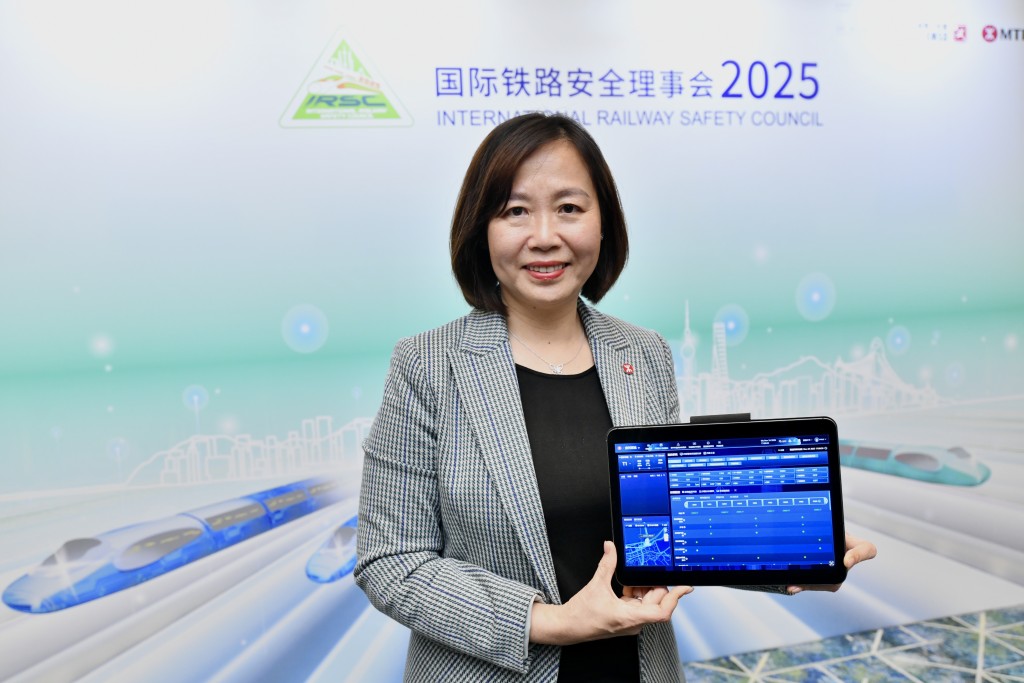
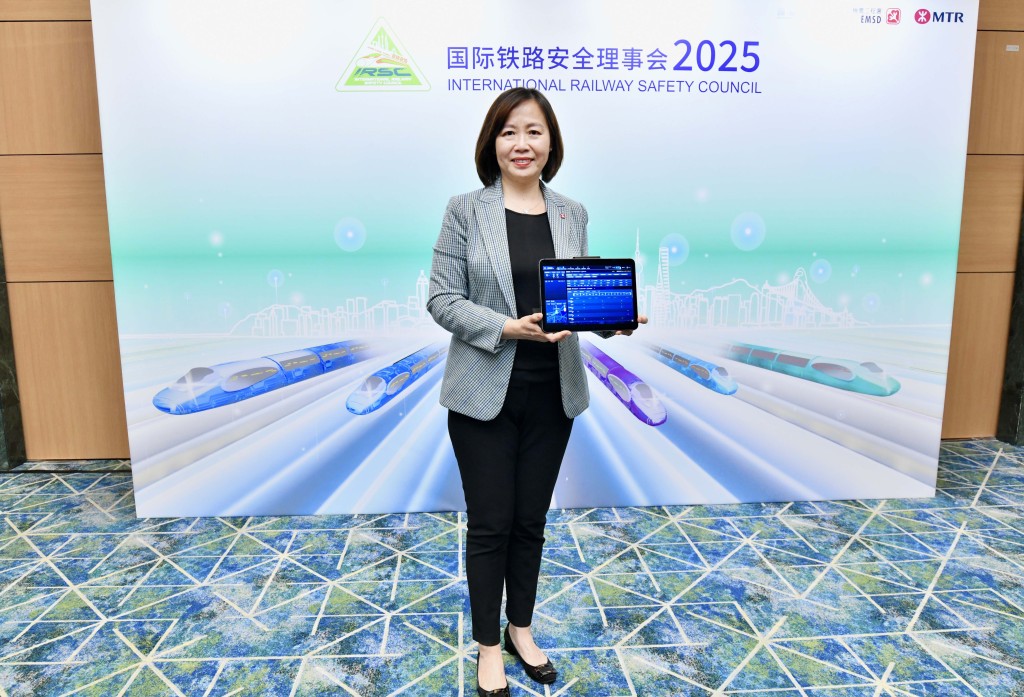
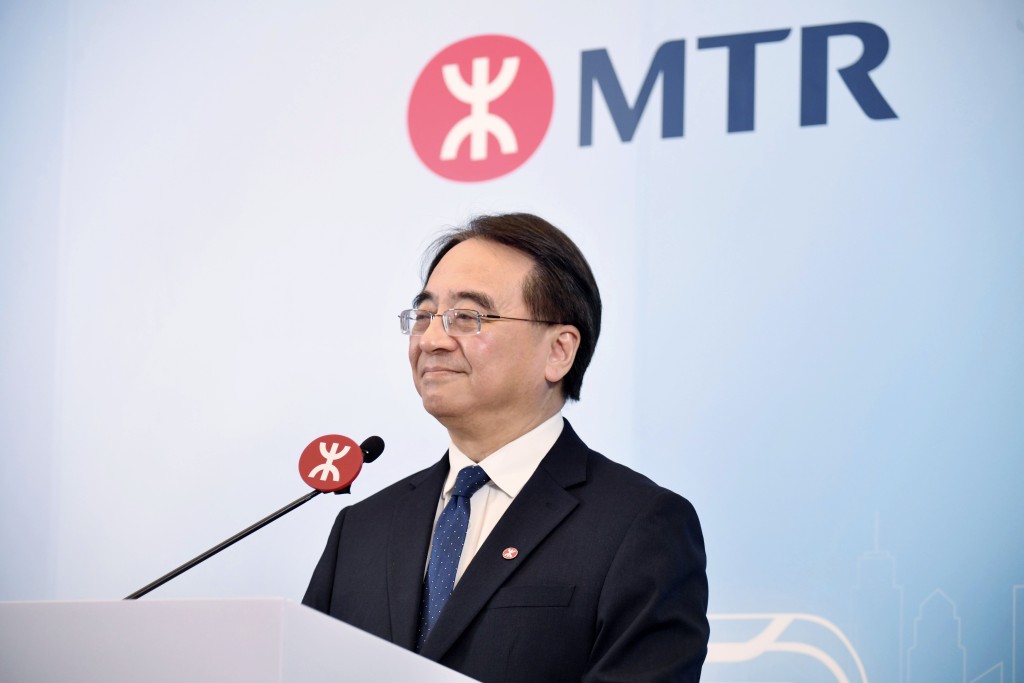
The MTR has consistently placed safety at the core of its operations—from railway infrastructure design to daily management and maintenance—said Jeny Yeung Mei-chun, Managing Director of Hong Kong Transport Services at the MTR Corporation.
Speaking to Sing Tao Daily, The Standard’s sister publication, after the opening of the 35th International Railway Safety Council Annual Conference on Wednesday, Yeung said the corporation remains committed to upholding its “Safety First, Quality Always” principle in all aspects of its work.
Yeung said she was honored that Hong Kong is hosting the major industry event for the fourth time. This year’s conference is jointly organized by the National Railway Administration (NRA), the Electrical and Mechanical Services Department (EMSD), and the MTR.
With innovation and technology as the conference’s key themes, Yeung noted that the MTR has increasingly adopted “smart operations” across the network. One example is the use of CCTV systems with image-analysis capabilities at Light Rail stations to monitor platform conditions.
The system can recognize nearby traffic light signals and detect pedestrians crossing roads near the station, she said.
“If a pedestrian or an object remains on the track, the system will promptly alert the train captain and broadcast warnings to passengers and pedestrians to prevent accidents and enhance operational safety,” she said.
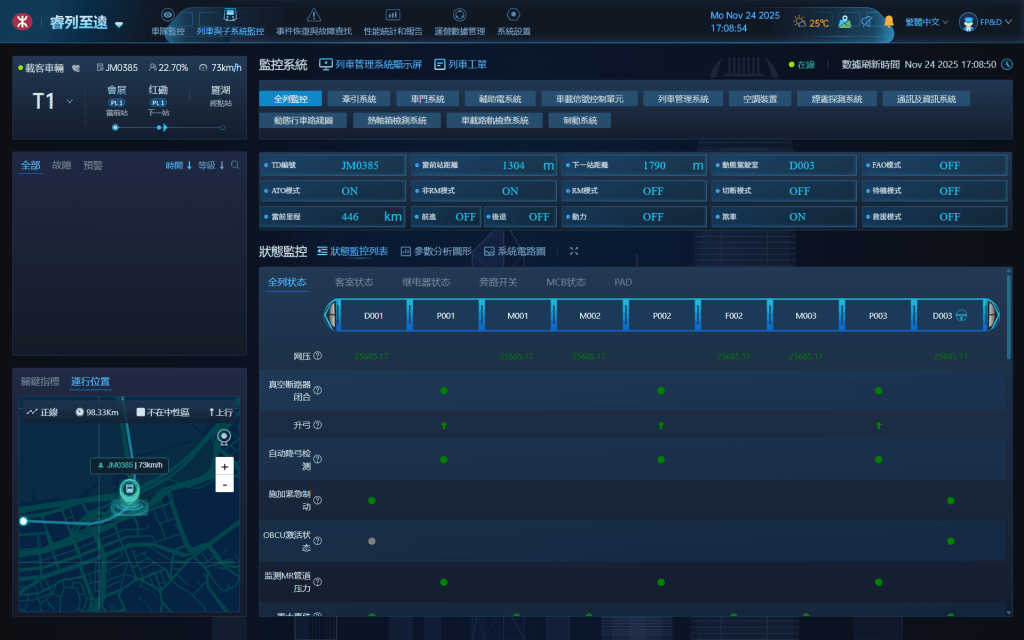
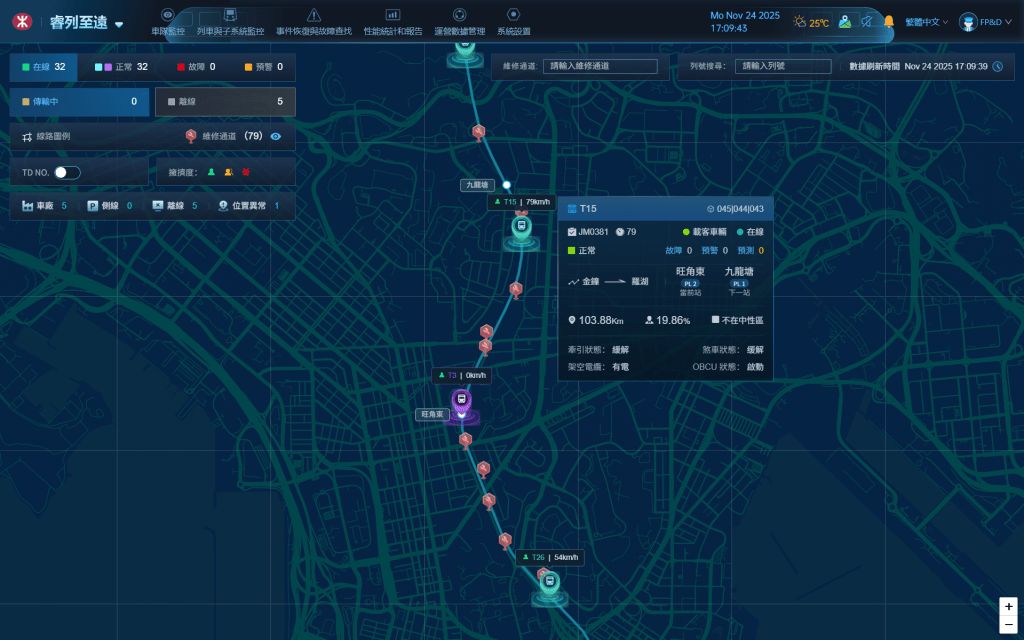
Yeung also highlighted the “Train Performance and Health Monitoring System” (PHM), which monitors the real-time condition of each train and its subsystems—including critical safety components such as braking systems and doors. Staff at the train depot and operations control center can monitor the system around the clock.
She added that PHM uses big data analysis to consolidate and analyze train information, enabling early warnings and quick responses.
“If a train encounters operational problems, our team can quickly identify the affected subsystems via PHM and take targeted measures to resume normal services swiftly, minimizing disruption for passengers,” she said.
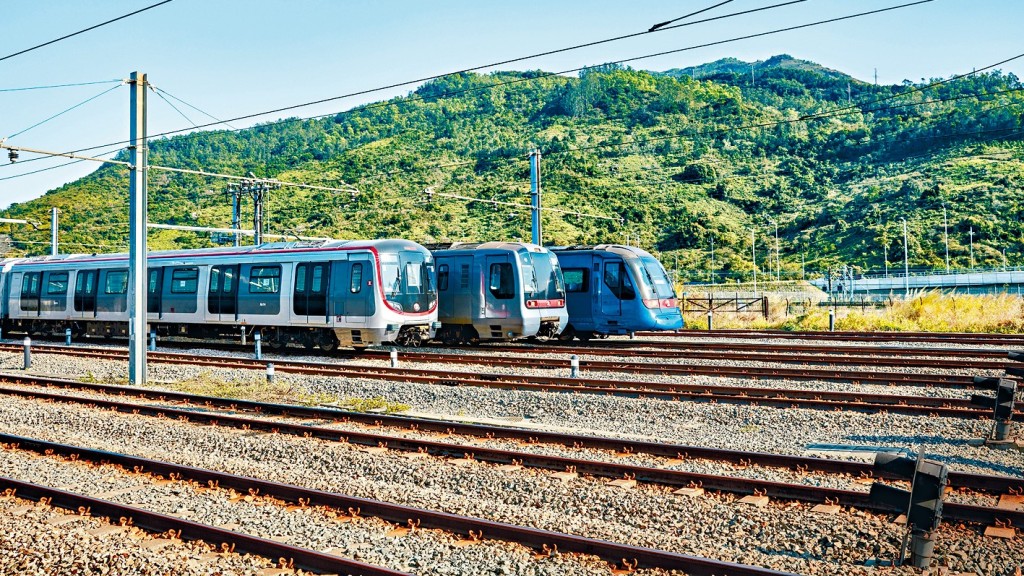
PHM has already been deployed on the East Rail Line, the South Island Line, and on Q-Trains serving the urban network, with plans to expand its use to additional railway lines.
Yeung added that the MTR is also advancing “smart maintenance” initiatives, including the establishment of a Data Studio that uses the Smart Passenger Instrumented Revenue Train system to monitor and analyze large volumes of railway facility data in real time. This helps strengthen preventive maintenance and enhance operational safety.