Read More


Night Recap - June 26, 2026
6 hours ago





Swedish court moves to strip HK parents of 'Save Lily' custody
25-06-2026 06:10 HKT

Star monkey Panchi-kun targeted by lasers; Japan zoo alerts police
25-06-2026 04:14 HKT
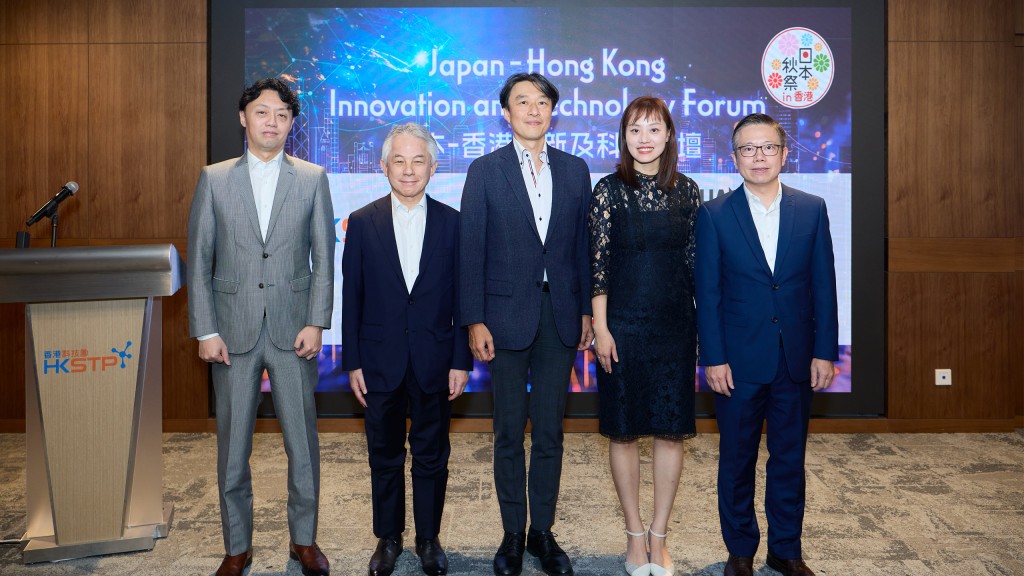
HKSTP forum brings together policymakers, investors and scientists to connect Japan’s research excellence with Hong Kong’s global gateway advantages
Speaking at the Japan-Hong Kong Innovation and Technology Forum on Friday, Yutaka Matsuo, professor at the University of Tokyo, said the two economies could “create together – discover in Japan, commercialise in Hong Kong and serve the world”.
Co-hosted by the Hong Kong Science and Technology Parks Corporation (HKSTP), the Consulate-General of Japan in Hong Kong, DEFTA Partners and the Alliance Forum Foundation, the forum drew senior policymakers, investors and scientists from both sides.
Guests included Jun Miura, Japan’s Consul-General in Hong Kong; Lillian Cheong, Under Secretary for Innovation, Technology and Industry; George Hara, group chairman and CEO of DEFTA Partners; and Terry Wong, CEO of HKSTP.
Matsuo, who also chairs Japan’s AI Strategy Council under the Prime Minister’s Office, said the country’s technological depth has not always translated into global competitiveness.
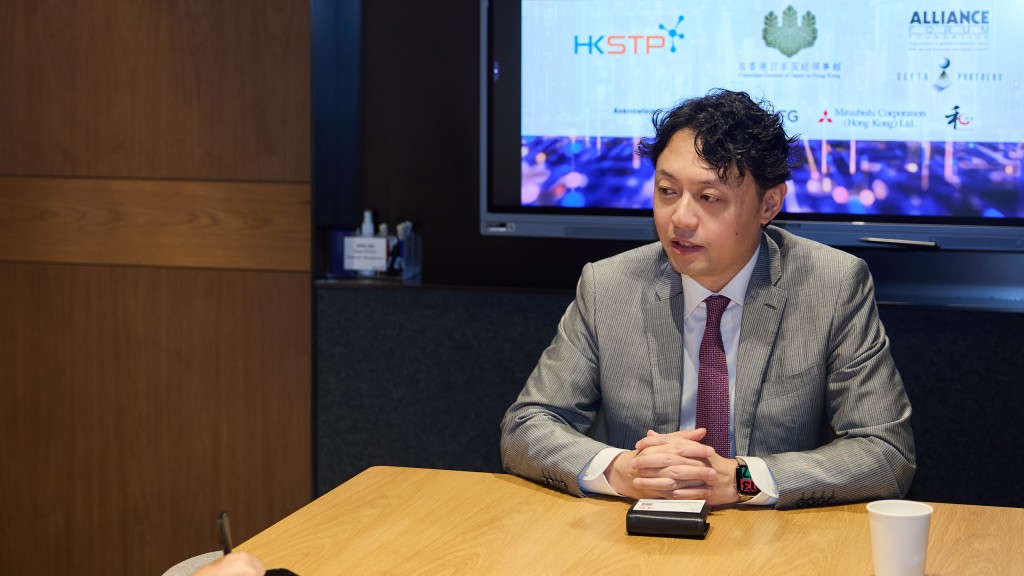
“Once an industry is very mature and advanced, industry players often don’t take new innovations,” he told The Standard, adding that despite Japan’s dominance in industrial robotics, it lags behind the US and China in commercialising AI.
He believes Hong Kong is an ideal partner to change that. “Some Japanese AI start-ups should come here and do research to expand internationally. Hong Kong offers openness, access to global capital and a strong talent pool. That’s what Japan’s deep tech sector needs.”
Matsuo outlined Japan’s latest policy milestone – the AI Promotion Act, passed in May 2025, which is intended to balance innovation and risk while setting out Japan’s ambition to become “the world’s most AI-friendly nation”.
His University of Tokyo laboratory, known as Matsuo Lab, plays a major role in this top-down agenda. It helped establish the AI Robot Association to collect robotic data from global partners for public use and train Japan’s first open-source robotic foundation model.
On talent development, more than 27,000 students joined the lab’s free online AI courses in 2024, with enrolment expected to reach 200,000 by 2026, said Erin Hirakawa, the lab’s international relations officer.
“We want to empower young people to innovate locally instead of migrating abroad. That’s how AI benefits everyone,” she said.
Amb Jun Miura, Consul-General of Japan in Hong Kong, says the increasing importance of Hong Kong and HK-Shenzhen-Guangzhou cluster as a hub for innovation and technology based on their capital, information, universities and talent is becoming clear, especially as the pace of technological advancement, including AI, and changes in the business environment, accelerates.
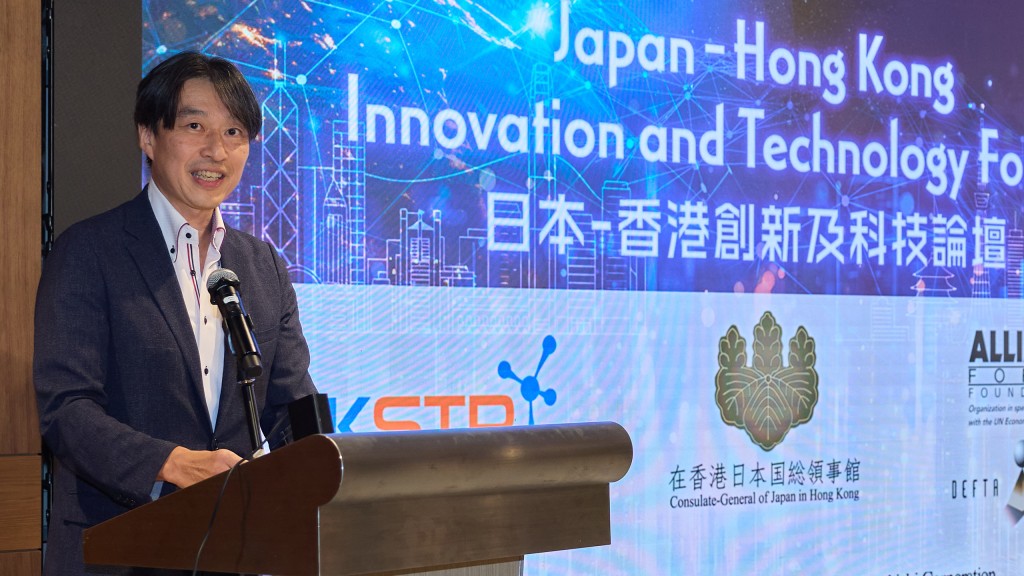
According to Cheong, the Hong Kong government has introduced incentives including the HK$10 billion Research, Academic and Industry Sectors One-plus Scheme (RAISe+), a HK$180 million Pilot I&T Accelerator Scheme and additional industrialisation funds to strengthen technology transfer.
“Japanese enterprises can benefit greatly from setting up in Hong Kong to tap both the Chinese mainland and global markets,” she said.
HKSTP CEO Terry Wong noted that more than 150 tech companies have joined HKSTP’s outreach programmes in Japan, generating US$5 million in commercialisation value.
The organisation is also developing INNOPOLE, the new 20-hectare of I&T land at San Tin Technopole in the Northern Metropolis. It is envisioned as an economic engine that provides space for emerging tech and pioneering development like AI, and cross-border collaborations in and out of the Greater Bay Area.
In order for innovation to serve the wider public good, DEFTA’s George Hara called for the adoption of “public interest capitalism”, a model that he believes rewards long-term investment and sustained research over short-term speculation.
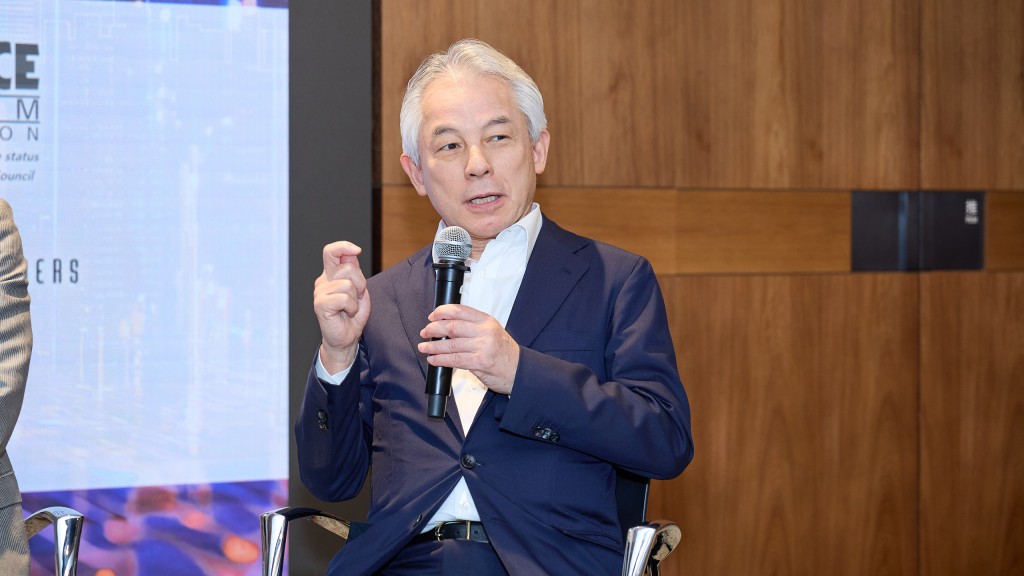
He cautioned that many investors focus on short-term financial gains, leaving companies with little incentive to invest in long-term research and development.
He suggested that exchanges, including Hong Kong’s, explore ways to incentivise long-term shareholders by giving them additional voting rights, a view that corresponds to Matsuo’s advocacy of responsible innovation.
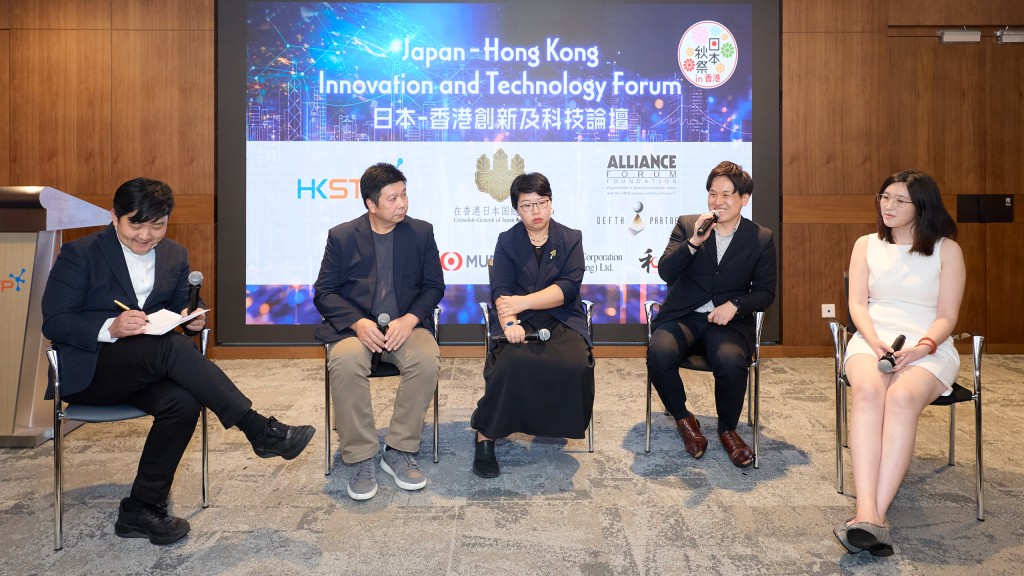
The first panel discussion, moderated by Han Shih Toh, brought together Hara, Matsuo and Professor Albert Yu, chairman of the Hong Kong Biotechnology Organisation.
The trio explored how Japan’s deep tech strength and Hong Kong’s global capital can reinforce each other – from AI-biotech collaboration to more agile regulation and long-term investment.
A second panel, led by Charles Li of DEFTA Partners, turned theory into practice.
Four entrepreneurs – Michael Chan of C2iTech, Gail Chang of Bo InnoHealth, Akira Higuchi of CogSmart Japan and Serena Yang of AILSI – represented a new generation linking Japanese science with Hong Kong’s start-up ecosystem.