Read More
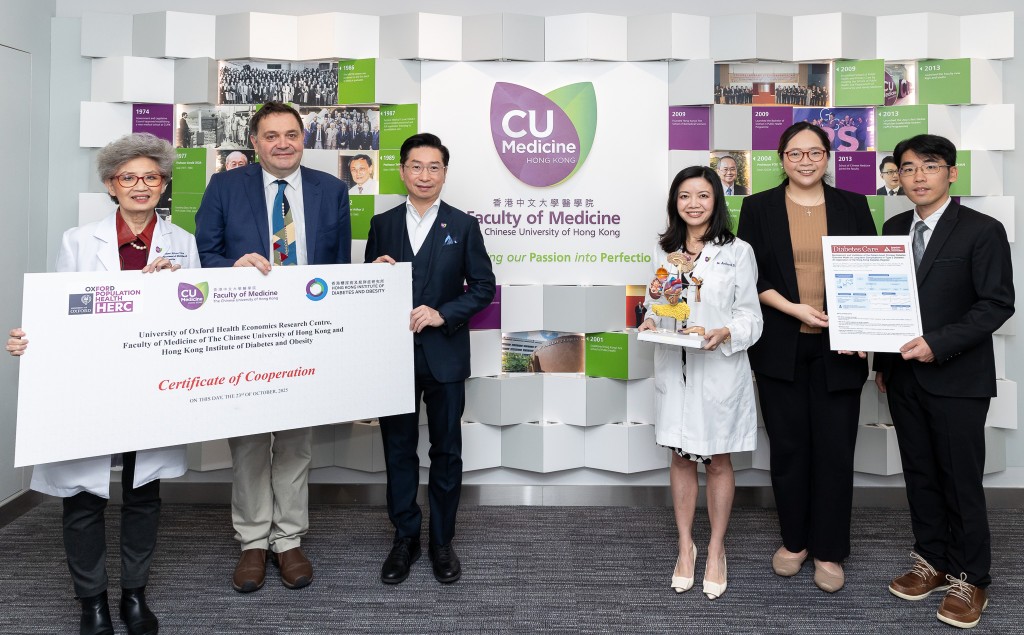
The Chinese University of Hong Kong (CUHK) has developed the first Chinese Diabetes Outcome Model (CDOM), following a decade-long research collaboration with the University of Oxford.
ADVERTISEMENT
SCROLL TO CONTINUE WITH CONTENT
CUHK announced on Thursday that the Faculty of Medicine (CU Medicine) research team used big data from the Hong Kong Diabetes Register (HKDR) to create the model, which predicts the lifetime risk of major complications in patients with type 2 diabetes.
Drawing on data from more than 21,000 patients, the model has been validated to estimate the likelihood of 10 key complications, including ischemic and haemorrhagic strokes, ischemic heart disease, heart failure, peripheral vascular disease, lower limb amputation, end-stage kidney disease, severe hypoglycaemia, cancer, and premature death.
The team found that among every 100 diabetes patients, 18 develop major complications each year. The CDOM demonstrated strong predictive accuracy for all complications except cancer.
To verify the model’s effectiveness, researchers used data from both the HKDR and an independent cohort of 170,000 patients, each with more than seven years of follow-up.
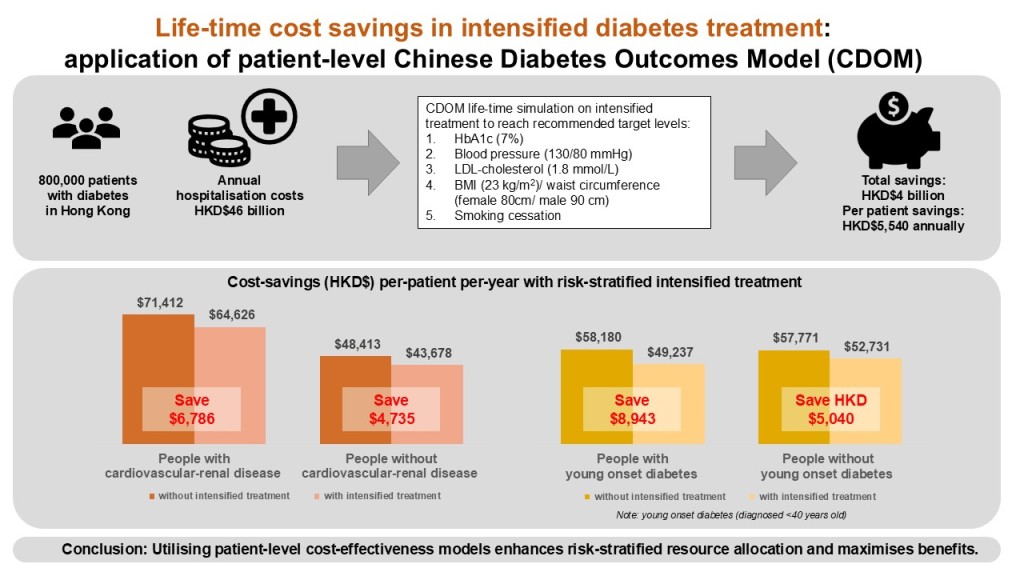
The results showed a high level of consistency between CDOM’s predictions and actual patient outcomes, confirming its value in forecasting long-term disease progression and healthcare burdens.
According to Juliana Lui Nga-man, Assistant Professor and health economist at CU Medicine, the complications with the highest treatment costs in the year of occurrence are lower limb amputation (US$31,302), haemorrhagic stroke (US$21,164), ischemic stroke (US$17,976), and end-stage kidney disease (US$14,774).
Lui added that CDOM can also be used to evaluate the cost-effectiveness of existing and new treatment strategies, helping inform policy decisions and guide resource allocation for diabetes care.
The research findings have been published in the international journal Diabetes Care.