Read More




Night Recap - July 27, 2026
2 hours ago

Ocean Park cable car sends passengers on swing as typhoon winds blow
26-07-2026 18:05 HKT


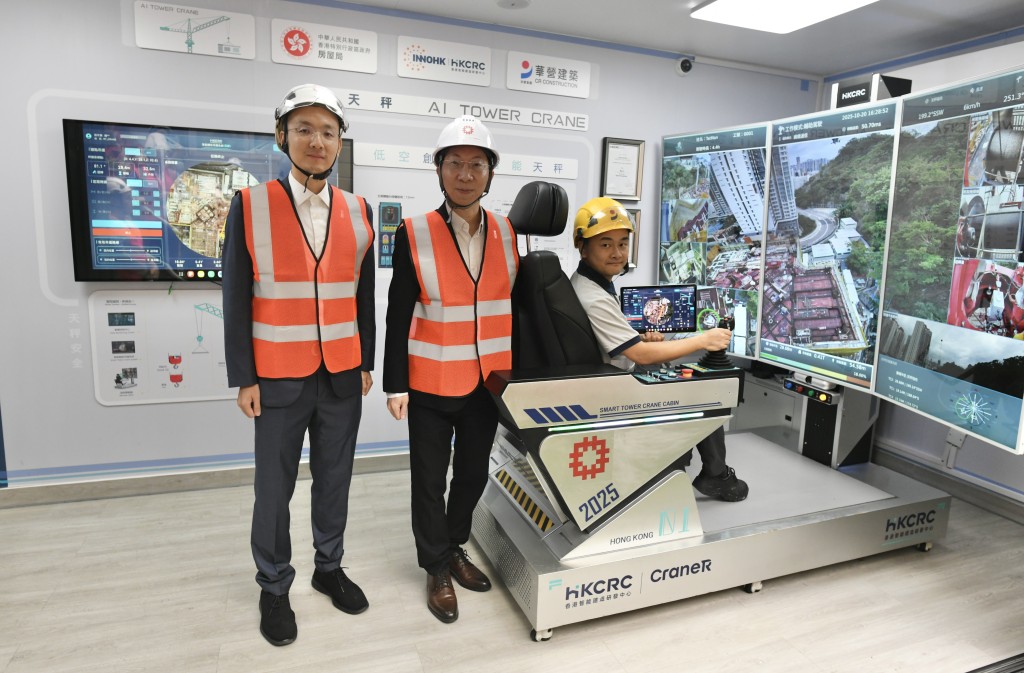
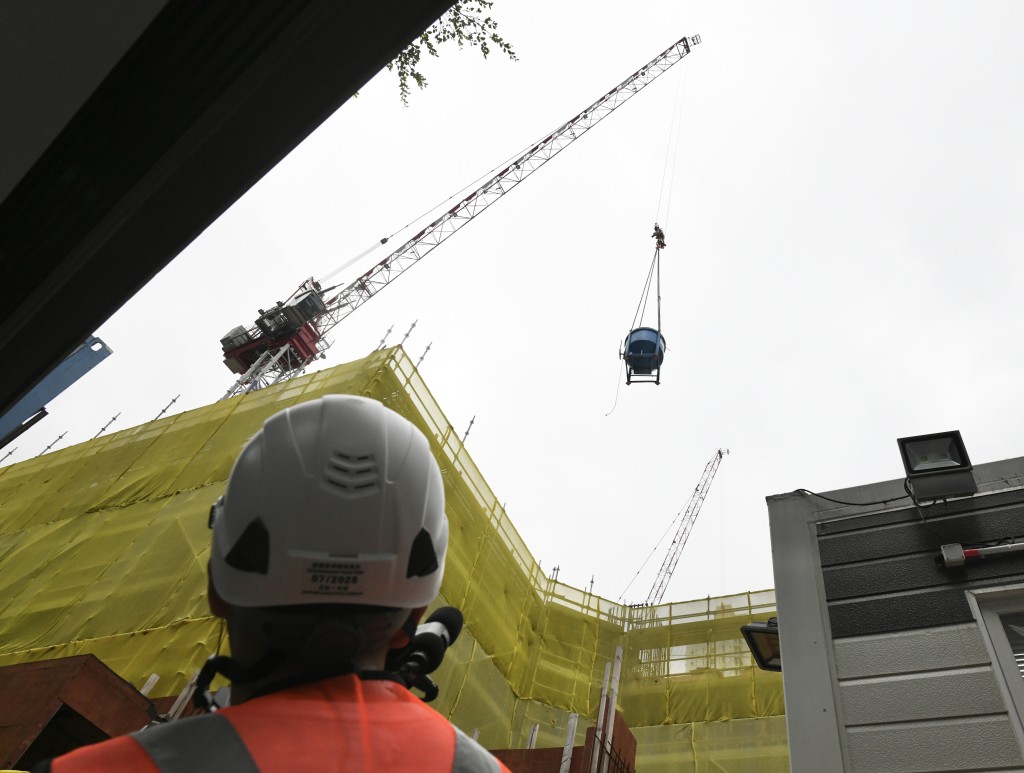
Hong Kong’s construction workers may soon bid farewell to one of the industry’s toughest jobs — climbing hundreds of metres daily to operate tower cranes under the blazing sun.
A new AI-powered crane control system developed under the Housing Authority’s public housing program now allows operators to stay safely on the ground — or in an air-conditioned control room — while remotely managing lifting operations.
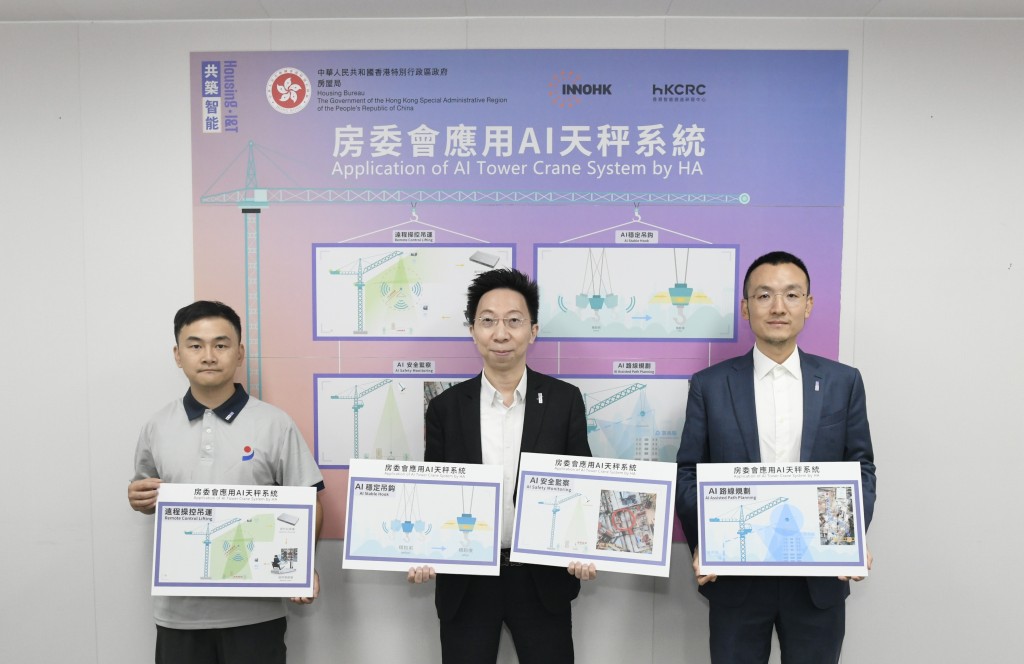
The innovation, dubbed the “AI Crane System,” combines remote-control technology, real-time AI safety monitoring, automatic route planning and anti-sway hook stabilisation.
According to Romeo Yiu Fan-hung, the Housing Department's head of the Development and Construction InnoTech, the system not only improves occupational safety but also boosts lifting efficiency by around 30 percent, helping shorten overall construction time.
The new system was jointly developed by the Housing Bureau and the Hong Kong Smart Construction Research & Development Centre, following a collaboration agreement signed last year to explore robotic technologies for public housing construction.
Yiu said the AI crane marks a major milestone in the partnership, featuring four key breakthroughs.
The first is relocating the crane’s control cabin from high above the site to ground level. The system records all operating data — similar to a flight recorder “black box” — allowing supervisors to review every lift and use the data to further train the AI model.
Once the AI learns from experienced operators’ stabilising techniques, it can automatically prevent hook swinging and ensure smoother lifting.
“A traditional tower crane can make about 100 lifts a day, while the AI-powered crane can perform around 130,” Yiu said. “It also saves operators the 30 minutes to an hour usually spent climbing up and down the crane each day.”
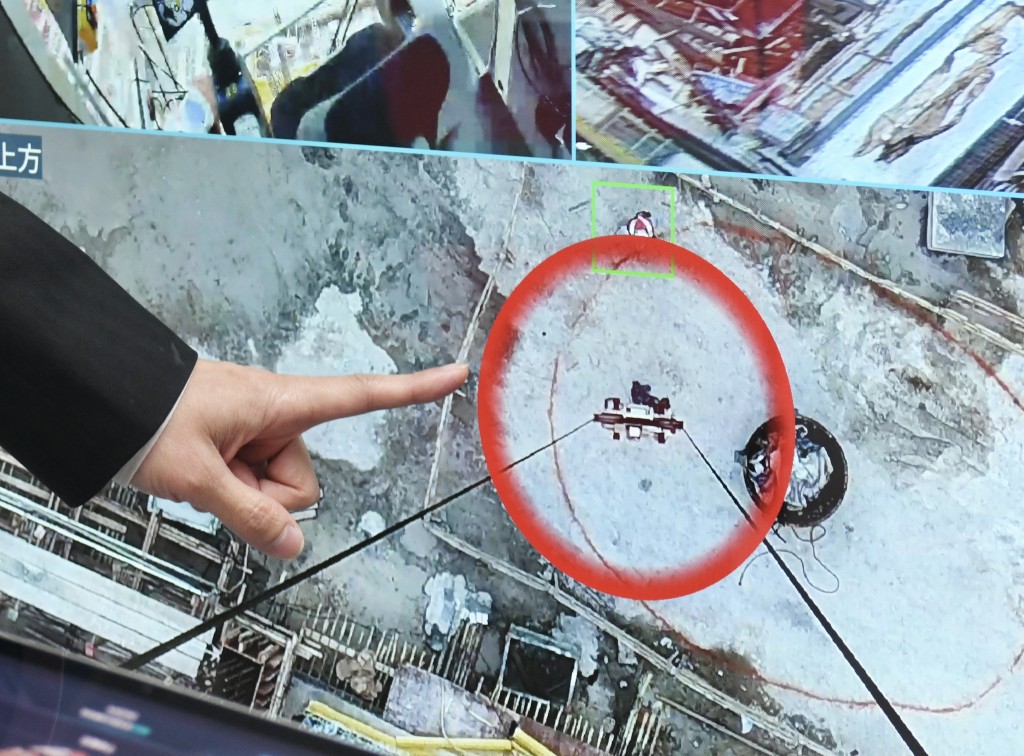
Another major innovation is the AI safety monitoring system. Cameras installed on the crane’s jib provide a vertical top-down view of the entire site. If a worker accidentally enters the lifting zone, the system highlights them with a red circle on the screen, prompting the operator to issue a warning using a foot-activated intercom — a design that lets operators keep both hands on the control levers.
The fourth advancement, Yiu said, is AI route planning. Operators can simply tap a starting and destination point on a control tablet, and the crane will automatically plot the most efficient path — enabling “one-click lifting.”
Operators remain in control for supervision and can manually intervene if necessary, significantly reducing workload and fatigue.
The AI crane has already been in use for six months at the Pak Tin Estate redevelopment site in Shek Kip Mei, with positive results.
The system will next be deployed at a public housing project in Tung Chung Area 42 by the end of the year, where more data will be collected to refine its performance.
If results remain promising, the Housing Authority plans to gradually include AI crane specifications in new contracts. While each unit currently costs HK$40,000 to HK$50,000 more than a conventional crane, Yiu said large-scale adoption should drive costs down — and faster project completion would offset the higher investment.
Liang Haobo, Associate Director of the Hong Kong Center for Construction Robotics, added that the AI system is compatible with different crane brands and adaptable to various site conditions.
Its AI recognition accuracy currently stands at 98 percent, with further improvements expected as more data is collected, he said.
As for operator training, Leung said existing certified crane operators can master the new system after about 40 hours of additional training. The center also plans to collaborate with training institutions to launch dedicated AI crane courses.
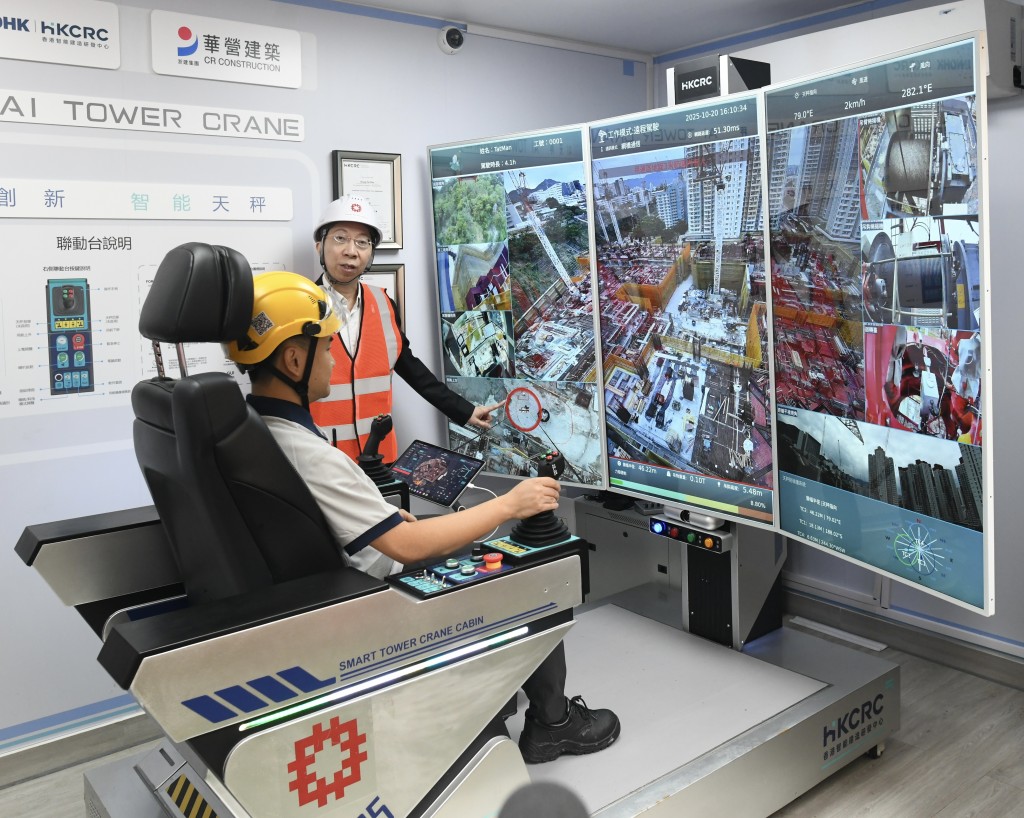
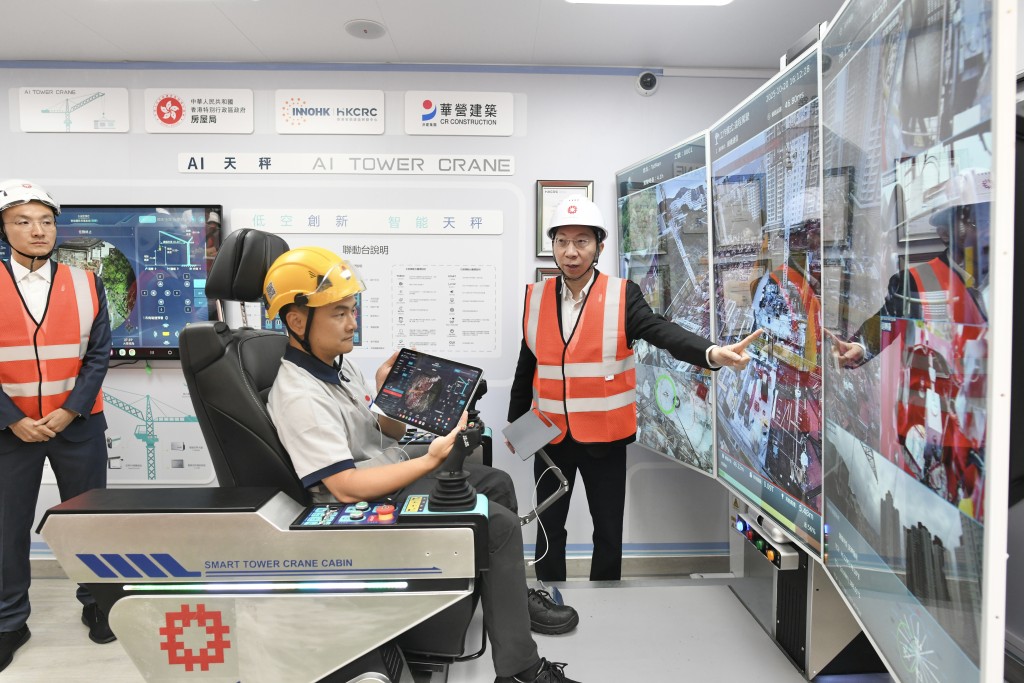
Veteran crane operator Man, who has four years of traditional crane experience, described the transition to AI control as smooth.
“Operating the AI crane is similar to driving with an auto-parking system,” he said. “With a traditional crane, you have to keep your eyes everywhere and manually align the hook — it’s exhausting. The AI crane does most of that for you, but I can still take over instantly if anything unexpected happens.”
With the success of the AI crane pilot, the Housing Authority hopes the technology will set a new standard for safe, efficient, and data-driven construction in Hong Kong — and allow crane operators to finally trade high winds for cool air.