Read More




HKO forecasts showers Tuesday, tracks possible cyclone east of Philippines
21-09-2026 17:31 HKT
John Lee and CY Leung lead pallbearers for Tung Chee-hwa
20-09-2026 15:54 HKT


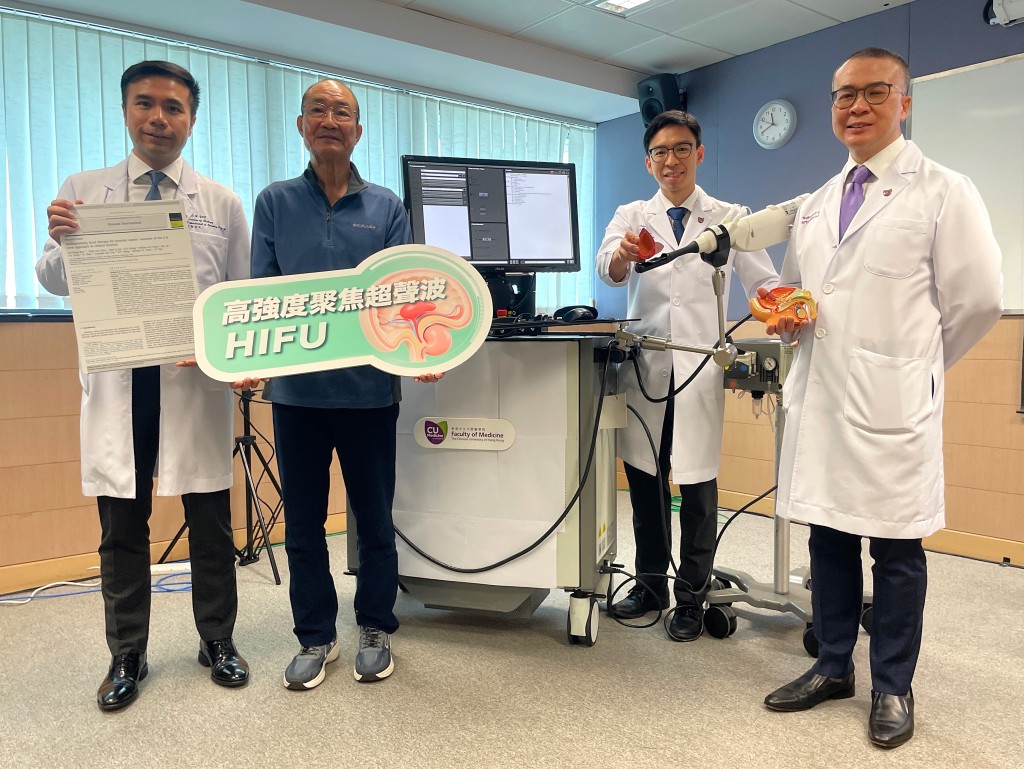
A new focal therapy introduced by the Chinese University of Hong Kong (CUHK) for treating localized prostate cancer has been shown to significantly reduce surgical time and hospital stays, while lowering the risks associated with conventional curative treatments.
Implemented in 2019, the innovative approach encompasses three techniques — high-intensity focused ultrasound (HIFU), cryotherapy, and targeted microwave ablation (TMA).
Over the past five years, CUHK has treated 102 patients with localized prostate cancer using these methods. The patients had an average age of around 70 and were categorized as having intermediate to low risk.
Among them, more than 40 percent received HIFU, nearly 40 percent underwent TMA, and about 20 percent were treated with cryotherapy.
Follow-up analyses showed that focal therapy halved surgical time and allowed more than 85 percent of patients to be discharged within 24 hours of the procedure — a notable improvement compared with the typical three-day hospital stay required for traditional treatments.
Meanwhile, while conventional curative treatments often cause complications such as urinary incontinence, patients who underwent focal therapy showed no significant decline in urinary function after surgery.
Within six to twelve months after treatment, the recurrence rate was about 20 percent. Patients treated with cryotherapy or TMA also reported marked improvements in urinary discomfort and obstruction within a year of the procedure.