





Read More










HK movie producer Raymond Wong Pak-ming convicted of insider dealing
22-05-2026 17:10 HKT

Swire Properties wins compulsory auction for $2.02b Quarry Bay property
22-05-2026 20:36 HKT


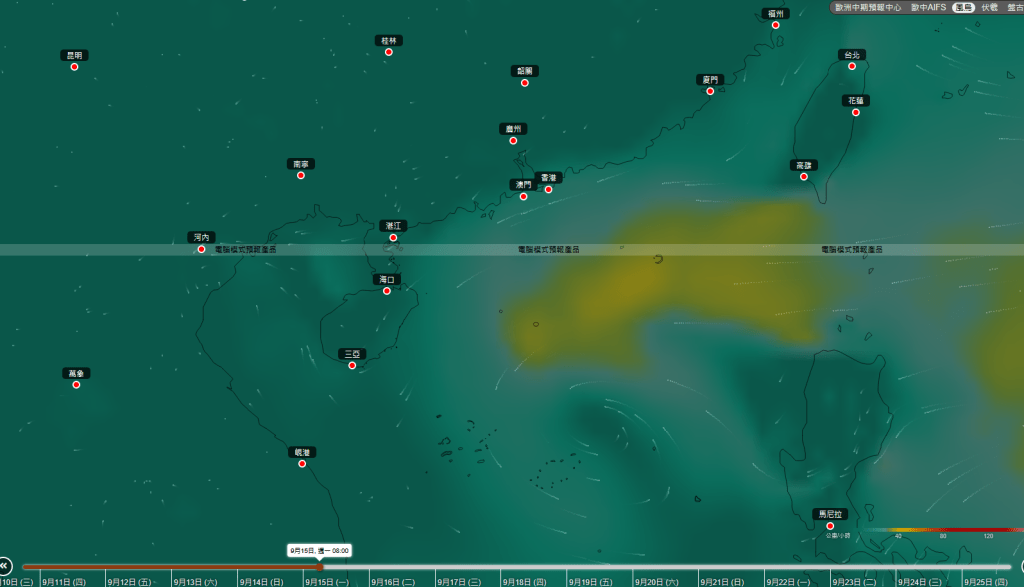
Hong Kong may face another tropical cyclone as the wind season shows no signs of abating, even after Typhoon Tapah moved away earlier this week.
The Hong Kong Observatory has warned that a broad low-pressure trough stretching from the northern South China Sea to east of the Philippines could bring unstable weather, with the potential for a low-pressure area to develop.
This system is expected to move northward toward the southern Chinese coast in the latter half of next week, increasing the likelihood of heavy showers.
Computer models, including the Pangu system, suggest that a tropical cyclone could form in the northern South China Sea by early next week, influencing Hong Kong’s weather.
Another trough east of the Philippines is projected to enter the South China Sea midweek, gradually approaching the city. Pangu forecasts this could escalate into a tropical cyclone, potentially making landfall in Hong Kong on Friday, September 19.
Meanwhile, the Fengwu model predicts the low-pressure area will affect the region early next week, with the trough reaching the Philippines by Tuesday, September 16, before forming a cyclone in the South China Sea by Thursday, September 18, and landing near Zhanjiang on Friday.
Over the next two to three days, a high-altitude anticyclone will keep southern China mostly clear and hot, with light winds and occasional inland showers triggered by high temperatures.
However, the approaching low-pressure system could bring thunderstorms to the Guangdong coast early next week.
The Observatory’s nine-day forecast indicates scattered showers from Monday to Friday, with winds reaching Force 4, occasionally strengthening to Force 5.
According to the Beaufort Scale, Force 4 winds blow at 20 to 30 kilometers per hour, while Force 5 reaches 31 to 40 kilometers per hour, nearing the threshold for a Strong Wind Signal 3, which requires sustained winds of 41 to 62 kilometers per hour.