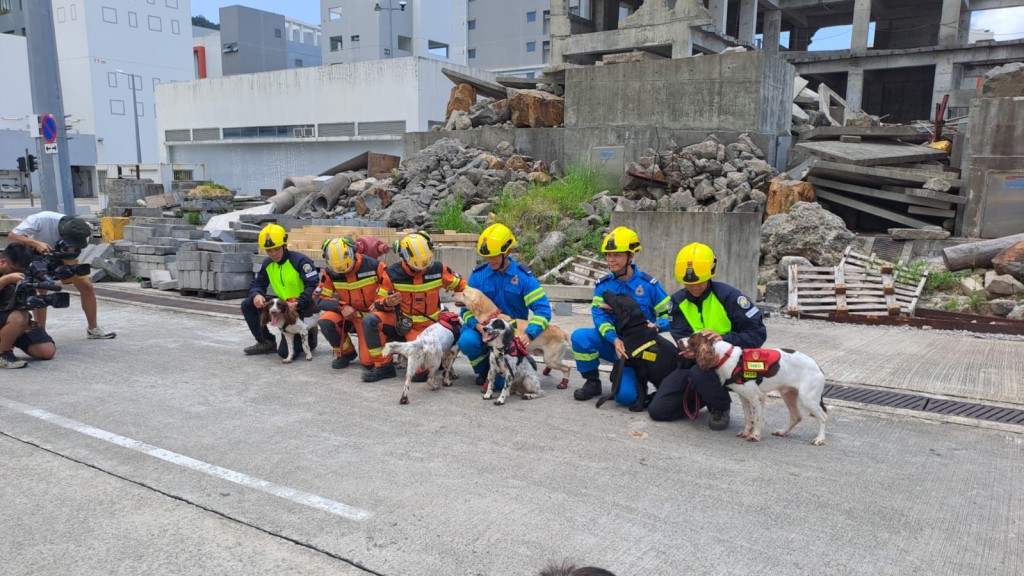
The HKSAR Search and Rescue team was recently awarded the Chief Executive’s Award for Exemplary Performance for its fearless rescue efforts in the devastating Myanmar earthquake earlier this year. Alongside the team were two springer spaniel rescue dogs Umi and Twix, whose services greatly optimized the team’s search and rescue mission.
To further enhance both the dogs’ and the teams’ abilities, the Fire Services Canine Unit plans to visit the Yunnan Search and Rescue Canine Mobile Professional Unit this year for exchange and training purposes at their national search and rescue dog training base.
Umi and Twix's Story
Umi, handled by senior fireman Chan Chu-hong, is one of the first successfully bred working dogs from the inaugural collaboration between the Fire Services Department (FSD) and Hong Kong Customs. She was also one of the Department’s first in-house trained search and rescue canines.
Twix, on the other hand, handled by fireman Chiang Tin-long, participated in the search and rescue operations following the fatal Anderson Road industrial accident in August 2022 where a tower train had collapsed.
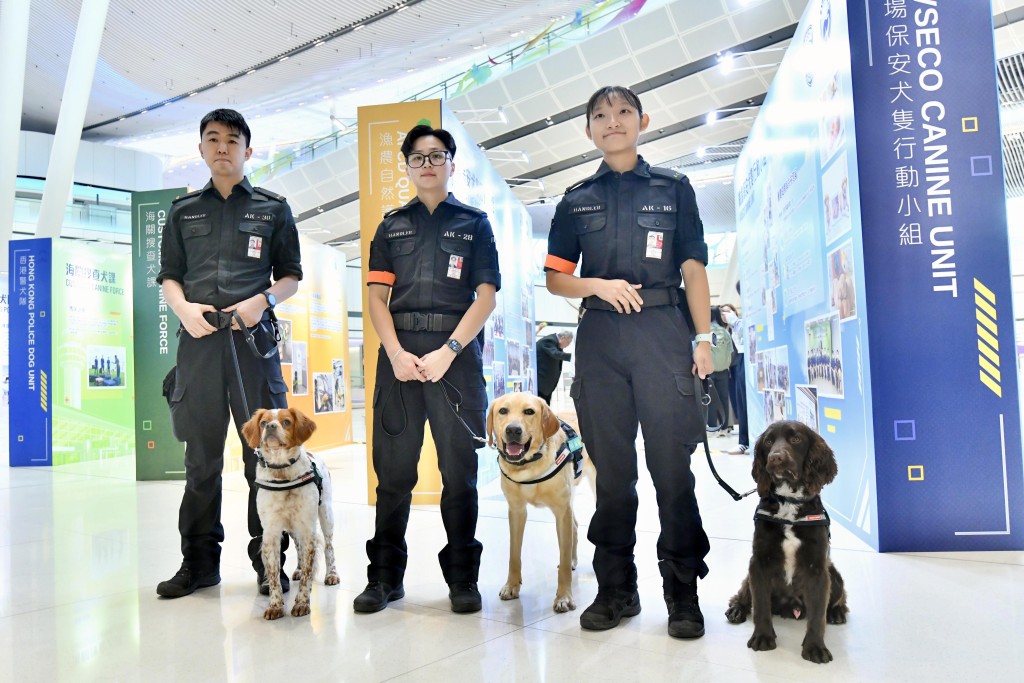
The FSD first began employing canines as a part of their search and rescue team, as well as the arson investigation unit in 2021. Currently, the Department has seven working dogs in service, comprising five search and rescue dogs and two arson investigation dogs.
The canines train for around nine months, a period that begins shortly after their birth. During this time, the dogs stay with their handler almost 24/7, following them everywhere. The standards abided by the Department are according to international search and rescue dog certification requirements.
How Overseas Missions Benefit Local Rescue Efforts
When asked about what their process is when handling disaster responses overseas alongside the canines, senior station officer of the high angle rescue team Juk Shan-heng responded that they first have to assess critical threats before deploying teams.
They evaluate “risks like compromised immune systems, rodents, or venomous snakes,” he said. Only after evaluation do they send two search dogs – first to scout, then a second to confirm findings. “This dual-dog system minimizes errors,” said Juk. Search and rescue dogs like Umi and Twix have been trained to alert handlers when detecting targets by barking nonstop, whereas arson investigation dogs will indicate finds by only sitting.
Handling overseas missions with rescue dogs strengthens the rescue team’s adaptability, said Chan. “Overseas missions expose us to diverse scenarios that we adapt locally, like optimizing search areas which saves time in disaster zones.”
Raising Awareness through Public Participation
Citizens can also volunteer and interact with the rescue team if they wish to be more involved in disaster response efforts by joining monthly activities held by FSD. These activities aim to promote the public’s emergency response capabilities and include themes like flood disaster preparedness among others.
“Our primary goal is safety awareness through interactive activities, especially regarding floods and fire disasters,” said Juk. They also work with injured team members and have developed methods to overcome and raise awareness about disaster situations despite challenges faced.